


The OMTech Solis Duo offers strong metal marking, but its 25 kg enclosed frame, manual focusing, and limited cutting capacity may restrict users who need a more flexible laser engraver.
The LaserPecker LP5 combines 20W fiber and 20W diode lasers in a lightweight 6 kg modular design. It supports both desktop and handheld engraving, making it easier to process metal, wood, leather, acrylic, and large or irregular objects.This guide compares the two machines in design, laser performance, workflow, and versatility.

Why Look for an OMTech Solis Duo Alternative?
The OMTech Solis Duo is a capable metal engraver, but its heavy design, limited cutting capability, and manual focusing may not suit creators who need a more flexible workflow.
Limitation #1: Heavy and Difficult to Move
The Solis Duo weighs about 25 kg and is designed to stay on a dedicated workbench. Its enclosed build is less convenient for craft fairs, shared workspaces, or on-site engraving.
Limitation #2: Mainly Designed for Marking
The Solis Duo is primarily designed for metal marking, including logos, text, and detailed patterns. OMTech does not emphasize cutting as a main capability, making it less suitable for users who want one machine for both engraving and cutting.
Limitation #3: Manual Focusing on the 20W Model
The entry-level 20W model requires manual focusing whenever the material or object height changes. This adds setup time and can lead to inconsistent results. Autofocus is only available on the more expensive 30W and 50W models.
Limitation #4: Fixed Engraving Angle
The Solis Duo uses a fixed, top-down laser head. This makes it difficult to engrave bulky objects, vertical surfaces, furniture, or irregular items that do not fit inside the enclosure.
Limitation #5: Limited Color and Relief Engraving
The Solis Duo is designed mainly for standard marking. Its creative tools may feel limited for users who want to produce colorful metal designs, layered reliefs, or detailed 3D textures.
Why Choose the LaserPecker LP5?
The LaserPecker LP5 offers a flexible, compact solution for creators who work with different materials and project sizes.
Reason #1: Dual Fiber and Diode Lasers
The LP5 combines a 20W fiber laser and a 20W diode laser in one machine. The fiber laser processes metals and plastics, while the diode laser engraves and cuts materials such as wood, leather, and dark acrylic.

Reason #2: Compact and Lightweight
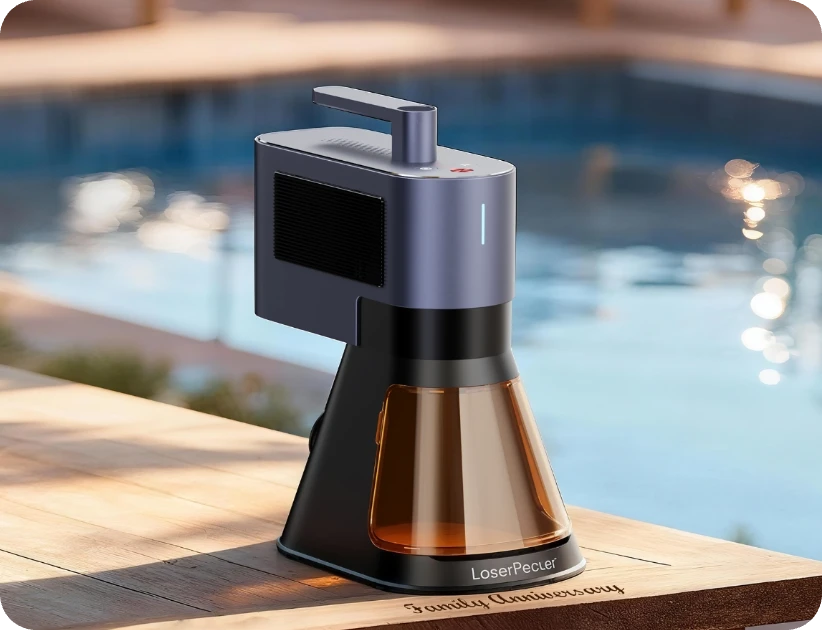
The LP5 weighs about 6 kg and uses a compact modular design. It is easy to move or store, making it suitable for home workshops, small studios, and mobile businesses.
Reason #3: Flexible Engraving Angles
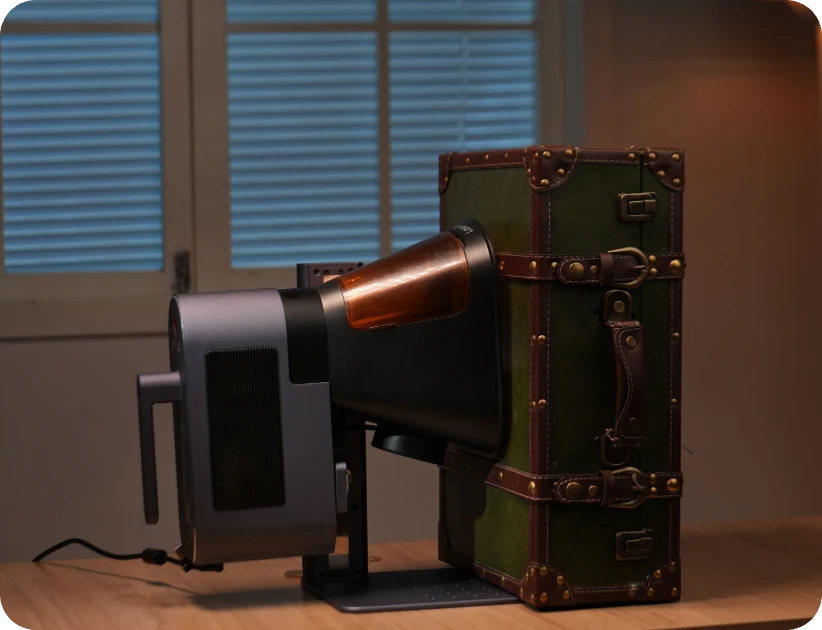
The LP5 has an adjustable stand for engraving flat, angled, and vertical surfaces. Its open base can also be placed over large or assembled objects that may not fit inside an enclosed machine.
Reason #4: Offline Processing via USB Drive
The LP5 can process project files from a USB drive, so a computer does not need to remain connected during every job. This is useful for workshops, events, and mobile engraving setups.

Reason #5: Engraving Large Objects
The LP5 laser head can be removed from its stand for handheld engraving on large or fixed objects, such as doors, wooden panels, furniture, and signs. The Slide Extension can also expand the working area for long designs and batch projects.
Reason #6: Smarter and Safer with the Safety Enclosure
The optional LP5 Safety Enclosure adds a smart camera for visual positioning and automatic object recognition, making batch engraving easier and faster.
Its motorized base plate adjusts the working height for thicker objects and works with the LP5 autofocus system to simplify setup.
The enclosure also provides Class 1 laser safety and automatically pauses engraving when the cover is opened, making it suitable for homes, workshops, and shared maker spaces.

OMTech Solis Duo vs LaserPecker LP5: Key Comparison Table
To help you see how these two systems stack up side-by-side, we have compiled a detailed breakdown of their technical specifications and real-world capabilities.
| OMTech Solis Duo 20W Fiber & 20W Diode | LaserPecker LP5 | |
|---|---|---|
| Laser System Type | 20W Fiber + 20W Diode Dual Lase | 20W Fiber + 20W Diode Dual Lase |
| Material Compatibility | 1064 nm fiber Laser: Gold, silver, copper, brass,
stainless steel,
titanium and more; 455 nm Diode Laser: Wood, acrylic, leather, paper, rubber, fabric and more |
1064nm Fiber Laser: Stainless steel,
aluminum, brass, silver,
plastic, platinum, titanium 450nm Diode Laser: Wood, acrylic, leather, glass, rock, paper, rubber |
| Working Area | 249 mm × 249 mm | 120 x 160 mm (Ellipse) 100 x 100 mm (Square) 160 x 300 mm (with the Slide Extension) |
| Max. Working Speed | 10,000 mm/s | 10,000 mm/s |
| Engraving Accuracy | 0.002 mm | 0.0027 mm |
| Weight & Portability | 25.1 kg | 6.02 kg |
| Software | OMTech Lab, LightBurn | LaserPecker Design Space Mobile App & LaserPecker Design Space PC Software & LightBurn |
| Safety Certification | Class 1 Laser Safety | Class 1 Enclosed Laser System (with LP5 Safety Enclosure) |
| Price | $2,899.99 | Start from $2,499.00 |
Where the OMTech Solis Duo Still Has an Advantage
The OMTech Solis Duo remains a practical choice for fixed production environments focused on repetitive metal marking.
Advantage #1: High-Volume Metal Marking
The Solis Duo is well suited for continuously marking batches of identical small metal parts. Its heavy, rigid frame provides stability during long production runs.
Advantage #2: Stable Industrial Production
The Solis Duo works well as a permanent machine in factories with dedicated operators and fixed workflows. It is a solid option when production focuses on repetitive metal marking and does not require portability or multi-material processing.
FAQ About OMTech Solis Duo Alternatives
Q1: What Makes the LP5 Different from the OMTech Solis Duo?
The LaserPecker LP5 combines a 20W fiber laser and a 20W diode laser in a compact, lightweight machine. Unlike the marking-focused Solis Duo, it can process metals and non-metal materials such as wood, leather, and dark acrylic, making it more versatile for creators and small businesses.
Q2: How Do You Run a Material Test with the LaserPecker LP5?
Create a power and speed test grid in LaserPecker Design Space or LightBurn, then engrave it on a scrap piece of the target material. Compare the results to find suitable settings before starting the final project.
Q3: Which Laser Is Better for a Small Custom Business?
The LP5 is generally more suitable for small custom businesses that need to make different products. Its dual lasers, autofocus, and compact design allow users to engrave metal items and process materials such as wood and leather with one machine.
Q4: Can the LaserPecker LP5 Engrave Metal Directly?
Yes. Its 20W fiber laser can create permanent marks directly on metals such as stainless steel, aluminum, brass, copper, and titanium. It is suitable for engraving logos, text, serial numbers, and personalized designs.
Q5: What Is the Working Area of the LaserPecker LP5?
The LP5 has a standard working area of up to 120 × 160 mm. Adding the Slide Extension expands it to 160 × 300 mm for longer designs and batch engraving.
Conclusion
The OMTech Solis Duo is a solid option for fixed workshops focused on repetitive metal marking. However, its heavy frame, manual setup, and limited material range may not suit creators who need greater flexibility.
The LaserPecker LP5 combines fiber and diode lasers in a lightweight, modular design with autofocus and flexible engraving angles. It is a practical alternative for small businesses and creators who want to process more materials, work on different surfaces, and move the machine when needed.


