


Aluminum laser cutting is one of the most accurate ways to create clean, detailed metal parts for hobby, commercial, and industrial projects. Whether you're new to laser cutting aluminum or looking to improve your results, understanding the right materials, laser types, and cutting techniques is essential.
If you've ever wondered, "Can you laser cut aluminum?", the answer is yes. However, achieving smooth, precise cuts depends on choosing the correct laser, using suitable aluminum materials, and applying the right settings.
In this guide, you'll learn how laser cutting aluminium works, which aluminum alloys are best for cutting, and practical tips to help you produce professional-quality results.

In this article:
Part 1: What is Aluminum Laser Cutting?
Aluminum laser cutting is a precision manufacturing process that uses a highly focused laser beam to cut aluminum sheets into accurate shapes with smooth, clean edges. It is widely used in industries such as electronics, automotive, aerospace, signage, and custom fabrication because it delivers fast production, tight tolerances, and minimal material waste.

Source: Project from LaserPecker CraftZone
1.1 How Does Laser Cutting Work on Aluminum?
During the laser cutting aluminum process, a concentrated laser beam heats a small area of the metal until it melts or vaporizes. An assist gas, such as nitrogen or compressed air, then removes the molten material from the cut, producing a narrow kerf and a clean edge.
Because aluminum reflects infrared light and dissipates heat quickly, selecting a laser designed for reflective metals is essential. Anodized or coated aluminum generally absorbs laser energy more efficiently, making it easier to cut than highly polished aluminum.
1.2 What Laser Power and Type is Best for Cutting Aluminum?
The best laser for cutting aluminum depends on the material thickness and your application. For most projects, fiber lasers provide the highest cutting efficiency because their wavelength is readily absorbed by metal surfaces.
- Fiber Lasers (1064 nm): The preferred choice for cutting aluminum sheets. They deliver fast cutting speeds, excellent edge quality, and reliable performance on reflective metals.
- Medium-power fiber lasers (20W–100W): Suitable for cutting very thin aluminum sheets and detailed craft projects.
- High-power fiber lasers (150W+): Better suited for thicker aluminum, industrial fabrication, and continuous production.
Matching the laser power, focal settings, and cutting speed to your aluminum thickness is the key to achieving clean cuts with minimal dross and consistent results.
Recommended Laser Engraver for Aluminum Laser Cutting: LaserPecker LP5
The LaserPecker LP5 is a professional dual-laser engraver designed for precision aluminum processing, including engraving, color engraving, deep engraving, and cutting thin anodized aluminum sheets.
For makers, small businesses, and product designers working with anodized aluminum, the LP5 combines precision, speed, and versatility in one compact machine, making it ideal for custom nameplates, tags, signage, decorative panels, and personalized metal products.
-
Cuts Anodized Aluminum Sheets up to 1 mm Thick
The LP5 can cut anodized aluminum sheets up to 1 mm thick, making it suitable for custom tags, decorative panels, lightweight metal components, and creative fabrication projects. -
Precision Cutting for Complex Aluminum Designs
The LP5 accurately processes intricate patterns, fine openings, and detailed contours on thin anodized aluminum sheets, helping reduce post-processing and material waste. -
10,000 mm/s Ultra-Fast Processing Speed
The high-speed galvo system delivers fast engraving and efficient production, making it suitable for both one-off custom projects and small-batch manufacturing.

Part 2: Which Aluminum Materials Are Suitable for Laser Cutting?
Not all aluminum is created equal when it comes to laser cutting. The success of the cut depends on several factors, including the thickness of the sheet, the type of aluminum alloy, and the surface finish. Understanding these variables helps ensure cleaner cuts, reduced waste, and better project outcomes.
Sheet Thickness
Laser power must match the thickness of the aluminum sheet for effective cutting:
- Thin Sheets (≤1 mm): Easy to cut with medium-power fiber lasers (20W–100W). Ideal for detailed designs or lightweight components.
- Medium Sheets (1–3 mm): Require stronger fiber lasers (150W–300W). Common in signage, enclosures, and brackets.
- Thick Sheets (3 mm and above): Best handled by high-power industrial fiber lasers (500W+). Precision may decrease slightly, and assist gas becomes more critical.
As thickness increases, so does the need for more laser power and slower cutting speeds to ensure smooth edges without burn marks or dross.
Alloy Types (e.g. 6061, 5052)
Different aluminum alloys react differently to laser cutting:
- Pure Aluminum (e.g., 1100 series): Soft and highly reflective. While it cuts easily, the reflectivity demands more care and often requires higher laser power or specific coatings.
- 5052 Aluminum: Highly laser-friendly. Excellent corrosion resistance and weldability. Cuts cleanly and is a popular choice for many fabrication projects.
- 6061 Aluminum: More rigid but contains more silicon and magnesium, which can make it slightly harder to cut cleanly. Best cut with higher-power fiber lasers.
Surface Finish Considerations
The surface of aluminum can affect how the laser interacts with the material:
- Painted or Coated Surfaces: May require additional cleanup after cutting. The coating can also produce fumes, so proper ventilation is essential.
- Polished or Reflective Surfaces: These can reflect the laser beam, reducing efficiency and potentially damaging the laser source. A matte or anodized finish is more suitable.
- Anodized Aluminum: Cuts and engraves very well. The anodized layer improves absorption and helps reduce reflectivity.
In some cases, a light application of laser-safe marking spray or tape can reduce reflection on highly polished surfaces.
Case Study: How to Cut an Anodized Aluminum Sheet with a Fiber Laser?
Items Required:
- Engraving Material: Anodized Aluminum Business Sheet
- Engraving Machine: Fiber Laser Cutter - LP5
- Cutting Design : Text, Images, Patterns and their outlines
Step 1: Choose the Right Aluminum Sheet
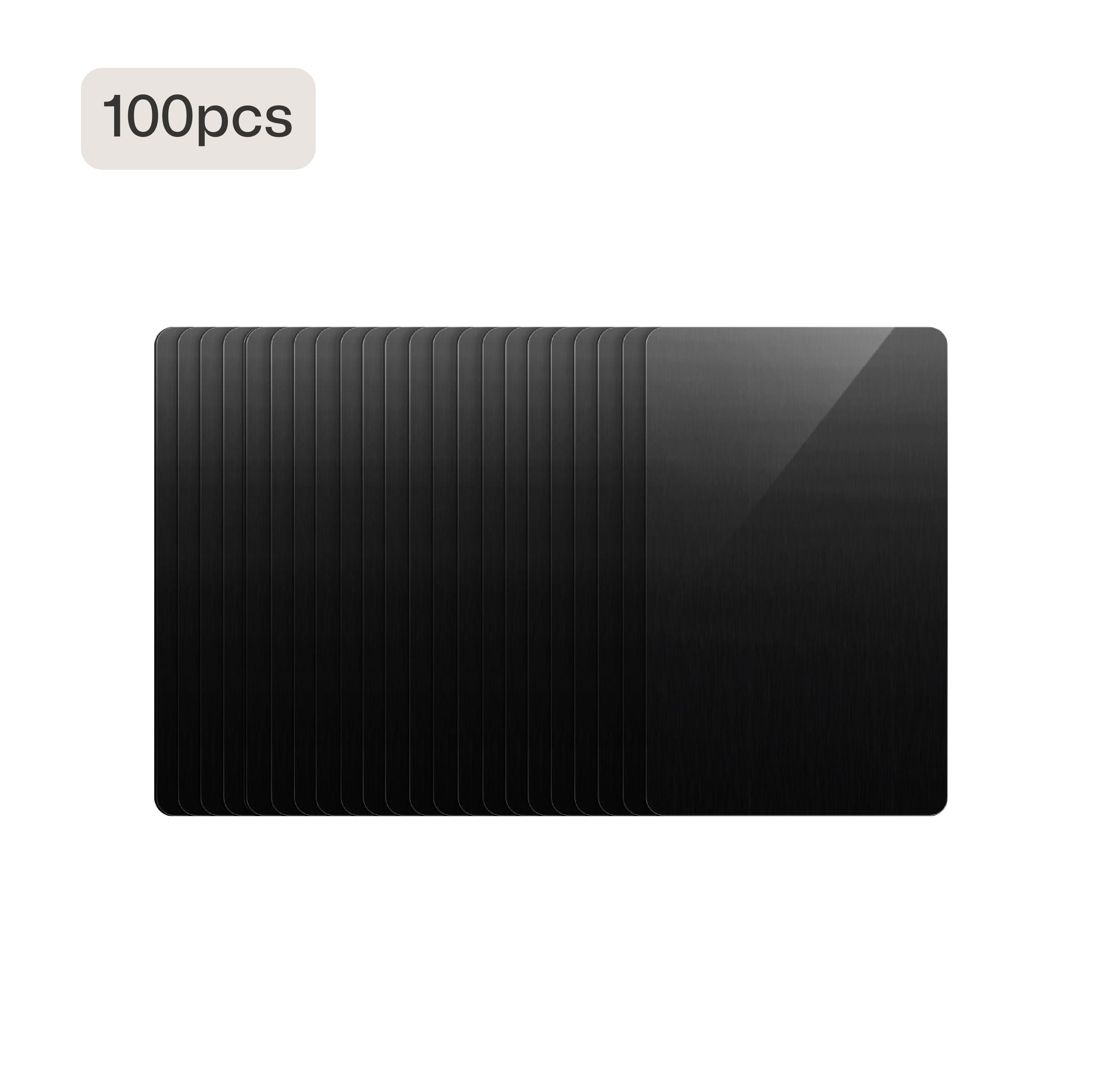
Selecting the right Aluminum material for laser cutting is crucial for achieving desired results. In this guide, we'll conduct a case study on laser cutting anodized aluminum business card.
Step 2: Select a Suitable Fiber Laser
Here, we choose LaserPecker LP5, which is a dual-laser and multi-functional laser engraver that excels in thin aluminum cutting.
Step 3: Prepare Your Design
Use the LDS app/software to create or import the image or pattern you want to engrave on the aluminum business card. Then, define the outline and cut the card into your desired shape.
Step 4: Configure the Laser Settings
To get the best result, the recommended laserpecker 5 material settings for aluminum cutting is 20W 1064nm; Resolution: 2k; Power: 100%; Depth: 100%; Pass: 3 ;Laser frequency: 26
To explore other laserpecker material settings, refer to the settings table that applies to any laserpecker engraving and cutting machines, including LP1, LP2, LP3, LP4 and LP5.
Step 5: Start Cutting
Double-check everything to avoid mistakes. Then, hit the start button and watch the magic happen.

Source: Project from LaserPecker CraftZone
Conclusion
Aluminum laser cutting offers an efficient and precise way to produce high-quality metal parts for hobby, commercial, and industrial applications. While aluminum's high reflectivity and thermal conductivity can make it more challenging to process than other materials, the right equipment and settings can consistently deliver excellent results.
Whether you're laser cutting aluminum for custom signs, business cards, jewelry, prototypes, or production components, mastering these fundamentals will help you achieve cleaner cuts, minimize waste, and improve efficiency.
With practice, proper machine setup, and the techniques covered in this guide, you'll be well on your way to producing professional-quality results in every laser cutting aluminium project.


