


Wooden advent calendars are popular holiday decorations that combine Christmas countdown traditions with creative woodworking and crafting.
Depending on your tools, skill level, and design preferences, wooden advent calendars can be made using traditional woodworking methods or modern digital fabrication technologies.
In this guide, we will compare three practical methods for making a wooden advent calendar and explore their tools, processes, advantages, and ideal applications.

In this article:
Method 1: Make a Wooden Advent Calendar with Electric Tools
Using electric tools is one of the most practical and efficient ways to make a wooden advent calendar. This method is suitable for reusable Christmas countdown calendars, holiday decorations, family DIY projects, and handcrafted seasonal gifts.
Electric tools such as saws, drills, sanders, and nailers help improve cutting accuracy and speed up the assembly process. This method works well for both simple rustic advent calendars and more detailed drawer-style or compartment-based designs.
Materials and Tools Needed
- Plywood, MDF, or solid wood boards
- Jigsaw, circular saw, or miter saw
- Drill or drill press
- Brad nailer or screws
- Orbital sander or sandpaper
- Wood glue
- Measuring tape and ruler
- Paint, stain, or holiday decorations
- Drawer knobs, hooks, or small containers (optional)
- Safety glasses and hearing protection
Steps to Make a Wooden Advent Calendar with Electric Tools
- Plan the Advent Calendar Design: Decide the size, layout, and style of the advent calendar, including drawers, boxes, shelves, or hanging compartments.
- Cut the Wood Pieces: Use electric saws to cut the frame panels, divider pieces, drawer parts, and decorative shapes according to the design.
- Prepare Assembly Areas: Drill holes for handles, hooks, or fasteners if needed before assembling the structure.
- Assemble the Calendar Structure: Use wood glue, screws, or a nailer to assemble the main frame and compartment sections.
- Sand the Surfaces: Smooth rough edges and surfaces using a sander or sandpaper for a cleaner and safer finish.
- Decorate the Calendar: Paint, stain, or decorate the advent calendar with numbers, Christmas patterns, ribbons, or festive ornaments.
- Add Final Accessories: Install drawer knobs, hooks, mini containers, or hanging decorations if included in the design.
Pros and Cons of Making a Wooden Advent Calendar with Electric Tools
Pros: Strong wooden structure, faster assembly, suitable for larger projects, and flexible customization options.
Cons: Requires power tools, creates dust and noise, and detailed decorative work may still require manual finishing.
Method 2: Make a Wooden Advent Calendar with a CNC Machine
A CNC machine is a precise and efficient way to make a wooden advent calendar with detailed shapes, engraved numbers, and consistent compartment sizing. Unlike manual woodworking methods, CNC routers follow digital design files to automatically cut and carve wood with high accuracy.
This method is ideal for decorative Christmas countdown calendars, drawer-style advent calendars, personalized holiday gifts, and small-batch production projects. CNC cutting also makes it easier to create repeated components and intricate decorative details.
Materials and Tools Needed
- CNC router machine
- Plywood, MDF, or solid wood boards
- CAD or vector design software
- CNC control software
- Router bits
- Wood clamps or vacuum table
- Wood glue or screws
- Sandpaper or orbital sander
- Paint, stain, or holiday decorations
- Safety glasses and hearing protection
Steps to Make a Wooden Advent Calendar with a CNC Machine
- Create the Advent Calendar Design: Design the calendar frame, compartments, drawers, numbers, and decorative patterns using CAD or vector software.
- Prepare the Wood Material: Secure the plywood or wood board onto the CNC machine bed using clamps or hold-down fixtures.
- Configure the CNC Toolpath: Import the design file into CNC software and adjust the cutting depth, feed rate, and router bit settings.
- Cut and Carve the Components: Use the CNC machine to cut the calendar panels, drawer parts, engraved numbers, and decorative details.
- Sand the Surfaces: Smooth rough edges and remove machining marks using sandpaper or a sander.
- Assemble the Calendar: Use wood glue or screws to assemble the frame, drawers, and compartment sections.
- Decorate and Finish the Calendar: Paint, stain, or decorate the advent calendar with Christmas-themed colors and accessories.
Pros and Cons of Making a Wooden Advent Calendar with a CNC Machine
Pros: High precision, repeatable production, detailed carving capability, and excellent customization options.
Cons: Higher equipment cost, requires CNC software knowledge, and setup may be more complex for beginners.
Method 3: Make a Wooden Advent Calendar with a Laser Cutter
Laser cutting is one of the most precise and efficient ways to make a wooden advent calendar. Instead of manually cutting and carving wood, a laser cutter follows a digital design file to create clean edges, engraved numbers, and detailed holiday decorations with high consistency.
This method is ideal for decorative Christmas countdown calendars, personalized holiday gifts, layered wooden designs, and small-batch production projects. Laser cutting also makes it easier to create intricate patterns, repeated drawer components, and engraved holiday artwork with minimal manual finishing.
Materials and Tools Needed
- Laser cutter
- Plywood, basswood, MDF, or acrylic sheets
- Vector design software
- Wood glue or fasteners
- Sandpaper
- Paint, stain, or Christmas decorations
- Ventilation system or air assist
- Protective glasses and mask
Steps to Make a Wooden Advent Calendar with a Laser Cutter
- Create the Advent Calendar Design: Design the frame, compartments, drawers, numbers, and decorative holiday patterns using vector software such as SVG or DXF format.
- Prepare the Material: Place the wood or acrylic sheet onto the laser cutter bed and ensure the material is flat and properly aligned.
- Adjust the Laser Settings: Configure the laser power, speed, and pass settings according to the material type and thickness.
- Cut and Engrave the Components: Start the laser cutting process to cut the calendar panels, drawer parts, engraved numbers, and decorative Christmas artwork.
- Assemble the Advent Calendar: Use wood glue or fasteners to assemble the frame, compartments, drawers, and layered decorative sections.
- Clean and Finish the Surface: Remove residue, lightly sand the edges if necessary, and apply paint, stain, or holiday decorations.
- Add Final Accessories: Install drawer knobs, hooks, LED lights, ribbons, or small ornaments if included in the design.
Pros and Cons of Making a Wooden Advent Calendar with a Laser Cutter
Pros: High precision, detailed engraving capability, fast repeat production, and excellent customization options.
Cons: Requires a laser cutter and design software, limited by material thickness, and may leave slight burn marks on wood edges.
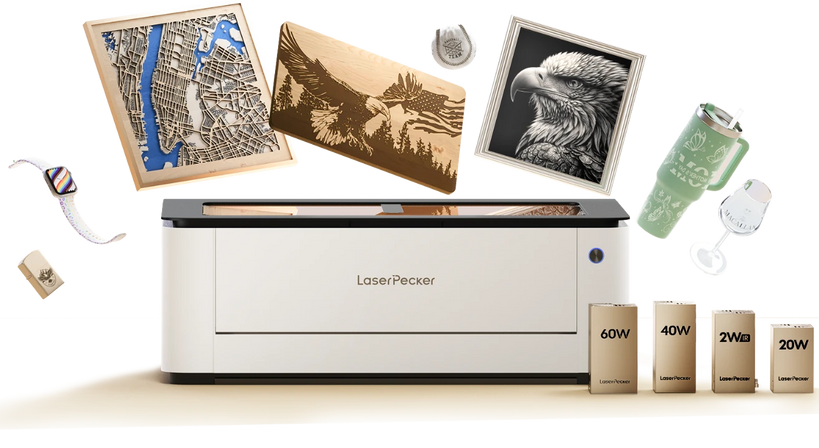
Recommended Laser Cutter for Wooden Advent Calendar Projects: LaserPecker LX2
The LaserPecker LX2 is designed for makers who need precise cutting, detailed engraving, and efficient production for holiday décor and wooden craft projects.
With its enclosed desktop design, interchangeable laser modules, and large working area, the LX2 is suitable for creating engraved Christmas calendars, layered wooden decorations, custom holiday gifts, and small business production.
-
500 × 305 mm (19.7" × 12") Large Working Area
The spacious workspace allows larger calendar panels and multiple drawer components to be processed in a single run. -
20W / 40W / 60W Interchangeable Diode Laser Modules
Flexible laser module options support cutting and engraving on wood, acrylic, leather, and other decorative materials. -
Up to 1000 mm/s Processing Speed
High-speed engraving and cutting improve efficiency for batch production and custom holiday projects. -
0.01 mm Positioning Precision
High positioning accuracy helps create cleaner outlines, sharper engravings, and more consistent decorative details. -
12 MP Camera Positioning System
The built-in camera system improves material alignment and simplifies precise engraving placement. -
Wide Material Compatibility
Supports wood, acrylic, leather, cardboard, and many other maker materials for decorative holiday craft applications.
Hot Questions about Making a Wood Advent Calendar
Q1: How Big Should a Wooden Advent Calendar Be?
A common size for a wooden advent calendar is around 15 inches tall and 12 inches wide.
This size usually provides enough space for small compartments or drawers measuring approximately 2 × 2 inches, which are large enough for candies, small gifts, notes, or holiday treats.
Q2: Is Plywood Good for an Advent Calendar?
Yes, plywood is one of the most popular materials for wooden advent calendar projects.
Baltic birch plywood in the 3 mm to 6 mm thickness range is especially popular because it is stable, easy to cut, and works well for CNC machining and laser cutting projects.
Q3: How Long Does It Take to Make a Wooden Advent Calendar?
The production time depends on the method being used and the complexity of the design.
Handmade wooden advent calendars may take 10 to 15 hours or more when cutting, sanding, assembling, and decorating manually. Using CNC machines or laser cutters can significantly reduce the production time before final assembly.
Q4: What Can You Put Inside an Advent Calendar?
Wooden advent calendars can hold many different small items besides chocolate and candy.
Popular choices include mini toys, LEGO figures, tea bags, essential oils, crystals, jewelry, handwritten notes, activity coupons, or personalized holiday gifts.
Q5: Can You Make a Wooden Advent Calendar Without Power Tools?
Yes, it is possible to make a wooden advent calendar without using large power tools.
Simple hand tools or pre-cut wooden kits can be used for assembly and decoration. Portable laser cutters and other compact fabrication tools can also simplify engraving and customization without requiring a full woodworking workshop.
Conclusion
Making a wooden advent calendar can range from a simple DIY woodworking project to a highly detailed digital fabrication process depending on the tools you choose.
Electric tools are practical for traditional woodworking, while CNC machines and laser cutters provide higher precision, better consistency, and more customization options for decorative holiday designs.
Whether you are creating a reusable Christmas countdown calendar for your family, holiday gifts, or seasonal products for sale, choosing the right method will help you achieve cleaner results and a more efficient workflow.


