


Cutting felt may look simple, but the soft, flexible material can shift, compress, or stretch during processing. The wrong tool may leave uneven edges, distorted shapes, or incomplete cuts—especially when working with thick felt or detailed patterns.
Choosing the right felt cutting machine can make a major difference in cut quality, production speed, and ease of use. Options range from affordable rotary cutters to digital blade machines, CNC systems, and precision laser cutters.
In this guide, we compare the most common machines for cutting felt, explain their advantages and limitations, and help you find the best machine for cutting felt based on your materials, projects, workspace, and budget.

In this article:
- Part 1: Four Popular Types of Felt Cutting Machines
- Type 1: Handheld Rotary Cutters
- Type 2: Manual and Electric Round Knife Cutters
- Type 3: CNC Knife Cutting Machines
- Type 4: Laser Felt Cutting Machines
- Part 2: Why Laser Cutting Machine Is a Great Choice for Felt
- Part 3: Beginner Tips for Cutting Felt Cleanly at Home
- Part 4: FAQs about Felt Cutting Machine
Part 1: Four Popular Types of Felt Cutting Machines
There is no single felt cutter that works best for every project. The right choice depends on the type and thickness of the felt, the complexity of your designs, production volume, available space, and budget. Below are four common options.
Type 1: Handheld Rotary Cutters
A handheld rotary cutter uses a circular blade that rolls across the material. It is affordable, portable, and easy to use for straight lines, gentle curves, and basic craft shapes. It also requires no electricity or software.

However, the quality of the cut depends heavily on hand control and blade sharpness. Soft felt can shift, while thick felt may compress under pressure. Rotary cutters are therefore best for occasional home crafts and simple patterns rather than detailed or repeat-production work.
Type 2: Manual and Electric Round Knife Cutters
Round knife cutters use a larger circular blade to cut felt and other fabrics. Manual versions are operated by hand, while electric models use a motor to reduce physical effort and increase cutting speed.
Compared with small rotary tools, a round knife felt cutter machine can process thicker material and multiple layers more efficiently. It is useful for straight cuts, broad curves, and repetitive fabric work. However, the blade still applies physical pressure, so soft felt may move or become compressed. Regular sharpening and blade replacement are also required.

Type 3: CNC Knife Cutting Machines
CNC knife cutters follow digital cutting paths and use an oscillating, drag, or rotary blade to process the material. They offer high repeatability and can cut large felt sheets, nested patterns, and complex shapes without relying on manual guidance.
These machines are commonly used in upholstery, automotive, filtration, apparel, and other industrial applications. Their main disadvantages are cost, machine size, setup requirements, and software complexity. A large CNC cutting machine for felt is generally better suited to established workshops and high-volume production than to casual home use.
Type 4: Laser Felt Cutting Machines
A laser cutter for felt uses a focused beam to cut the material along a software-controlled path. Because the process is contact-free, it does not drag a blade across the felt or apply pressure that could distort the design. This makes a laser felt cutter particularly useful for small holes, lettering, intricate patterns, and repeatable custom products.
Edge quality depends on the composition of the material. Synthetic felt may develop a fused edge that helps reduce fraying, while wool felt may show light browning or a noticeable odor if too much heat is applied. Always confirm the fiber composition and run a test cut before production.
Many laser machines can also engrave patterns, logos, assembly marks, or decorative textures on compatible felt. This allows users to cut and engrave a design within the same digital workflow.
Comparison of Felt Cutting Machines
| Machine Type | Precision | Edge Quality | Speed | Maintenance | Best For |
|---|---|---|---|---|---|
| Handheld Rotary Cutter | Low–Medium | Depends on user control | Low | Blade replacement | Simple home crafts |
| Round Knife Cutter | Medium | Good on basic shapes | Medium | Sharpening and blade replacement | Thicker felt and broad cuts |
| CNC Knife Cutter | High | Clean, non-thermal edges | High | Blade and machine maintenance | Large-format or industrial production |
| Laser Cutting Machine | High | Precise; varies by fiber type | High | Optics and exhaust maintenance | Detailed designs and custom production |
Part 2: Why a Laser Cutter Is a Great Choice for Felt
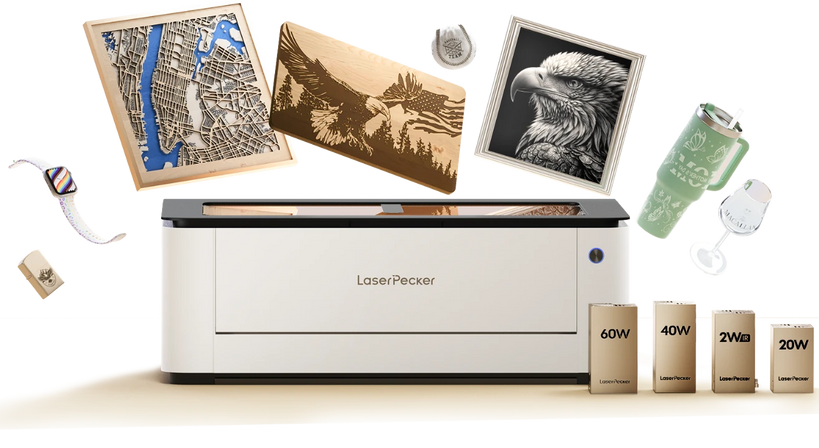
A laser cutter can be a practical choice for creators who need detailed designs, repeatable results, and a digital workflow. For example, the LaserPecker LX2 combines software-controlled positioning with a large working area, making it suitable for custom felt decorations, accessories, patches, toys, and small-batch products.
Because a laser cuts without physically pressing a blade against the material, soft felt is less likely to shift or become compressed during processing. This is especially useful for intricate cutouts, small holes, lettering, layered ornaments, and geometric patterns.
A felt laser cutter also eliminates routine blade sharpening and replacement. However, users still need to clean the optics and work area and maintain the exhaust or filtration system according to the manufacturer's instructions.
Another advantage is the ability to switch quickly between digital files. Once the material settings and layout have been tested, the same design can be reproduced consistently or resized and personalized for different orders.
Compatible laser machines can also cut and engrave felt in the same project. You may be able to cut the outer shape and add a logo, sewing guide, name, or decorative texture without transferring the material to a second machine.
How to Choose the Right Felt Cutting Machine
The best choice depends on the felt you use, the designs you want to make, how often you work, and the amount of space and budget available.
Consideration #1: Consider Your Project Type
For occasional straight cuts and basic craft shapes, scissors or a rotary cutter may be sufficient. For intricate designs, personalized products, or repeat orders, a digital blade machine or laser cutter usually provides better repeatability.
Consideration #2: Check the Felt Type and Thickness
Craft felt, wool felt, polyester felt, stiffened felt, and industrial felt do not cut in exactly the same way. Check the material composition and thickness against the machine manufacturer's recommendations. Never laser-cut felt with unknown ingredients or potentially hazardous coatings.
Consideration #3: Estimate Your Production Volume
Hand tools are economical for occasional projects, while powered or computer-controlled machines are more efficient for frequent cutting. Small businesses should also consider setup time, repeatability, working area, and the number of parts that can be arranged in one job.
Consideration #4: Measure Your Available Space
Industrial CNC machines require substantial floor space. A desktop system such as the LaserPecker LX2 is easier to place in a studio or small workshop, but it still requires a stable work surface and an appropriate exhaust or filtration setup.
Consideration #5: Compare the Total Cost
Do not compare purchase prices alone. Include replacement blades, cutting mats, maintenance, exhaust equipment, software, accessories, material waste, and production time when evaluating the long-term cost of a felt cutter machine.
Consideration #6: Evaluate Detail and Precision
A rotary cutter works well for broad shapes but is not designed for very small lettering or internal cutouts. Digital blade and laser machines provide better control for detailed patterns, although the minimum practical detail still depends on felt density, thickness, and design geometry.
Consideration #7: Plan for Custom or Small-Business Production
If you intend to sell custom products, prioritize repeatability, design flexibility, batch layout, working area, ventilation, and ease of setup. A digital cutting machine for felt can help reduce manual variation and make personalized orders easier to reproduce.
Part 3: Beginner Tips for Cutting Felt Cleanly at Home
Clean felt cutting depends on more than the price of the machine. Correct material preparation, suitable tools, secure placement, and test cuts are equally important.
Tip 1: Identify the Felt Before Cutting
Check whether the material is wool, polyester, acrylic, a blended craft felt, or another specialty product. Fiber composition affects blade performance, laser response, odor, edge appearance, and the settings you should use. If the composition is unknown, contact the supplier before laser processing it.
Tip 2: Match the Tool to the Design
Use scissors or a rotary cutter for simple shapes and short cuts. A digital blade cutter is useful for repeatable craft patterns, while a laser cutter for felt is better suited to intricate internal details and personalized designs on compatible materials.
Tip 3: Keep the Felt Flat and Secure
Wrinkles and raised areas can cause uneven cuts. When using a blade machine, place the felt on the recommended cutting mat and use a stabilizer if required. For laser cutting, keep the material flat using a machine-compatible method that will not interfere with the laser path.
Tip 4: Run a Small Test Cut
Test a small piece from the same sheet before processing the full design. Check whether the cut passes through cleanly and inspect the edge for dragging, melting, browning, or excessive residue. Adjust one setting at a time.
Tip 5: Use Proper Ventilation and Supervision
Laser cutting felt can create smoke, particles, and odors. Use the machine's recommended exhaust or filtration system, keep the work area clean, and never leave an operating laser unattended. Stop immediately if the material produces unusual fumes, excessive smoke, or sustained flames.
Part 4: FAQs About Felt Cutting Machines
Q1. What Is the Best Machine for Cutting Felt?
The best machine depends on the project. A rotary cutter is affordable and practical for simple shapes, while a digital blade machine is useful for repeatable craft patterns. A felt laser cutter is often the better choice for intricate designs, small holes, personalization, and small-batch production on laser-compatible felt. Industrial CNC knife cutters are more suitable for large sheets and high-volume manufacturing.
Q2. Can a Cricut or Other Cutting Machine Cut Felt?
Yes. Compatible Cricut and similar craft cutting machines can cut several types of felt, but the required blade, mat, stabilizer, and material setting vary by machine and felt type. Soft or unbonded felt may require a rotary blade, while stiffened or bonded felt may work with other recommended blades. Follow the machine manufacturer's material guide.
Q3. Can You Cut Felt with a Laser Cutter?
Yes, many wool, polyester, and other compatible felt products can be laser cut. However, results vary by fiber composition, thickness, color, density, and laser type. Verify the material ingredients, use effective exhaust or filtration, and test a small sample before processing the full design.
Q4. Is a Laser Cutter or Blade Cutter Better for Felt?
A blade cutter avoids heat-affected edges and may be preferable for materials that should not be exposed to heat. A laser cutter offers contact-free processing and greater control over intricate details. The better option depends on the desired edge appearance, material composition, design complexity, and production volume.
Q5. Does Laser-Cut Felt Burn or Smell?
It can. Wool felt may produce an odor similar to burnt hair and can develop brown edges if excessive heat is used. Some synthetic felts may melt or produce noticeable fumes. Appropriate settings, air assist where supported, effective exhaust, and a clean work area can help reduce residue and discoloration, but they may not eliminate odor completely.
Q6. What Thickness of Felt Can a Laser Cutter Cut?
There is no universal maximum thickness. Cutting capacity depends on the felt's density and composition as well as laser type, power, focus, speed, and airflow. Check the machine manufacturer's material guidance and run a test matrix on the actual felt rather than relying on a general thickness claim.
Q7. Can a Laser Machine Cut and Engrave Felt?
Many laser machines can both cut and engrave compatible felt. Cutting separates the material, while engraving modifies the surface to create logos, names, patterns, or alignment marks. Use lower-impact engraving parameters and test first, because excessive power may cut through or scorch the felt.
Q8. How Do You Cut Felt Without Fraying?
Use a sharp blade, keep the felt flat, and choose a tool suited to its thickness and density. Some synthetic felt develops a fused edge when laser cut, which can reduce fraying. Wool and blended felts respond differently, so a clean blade cut may be preferable when a natural, non-melted edge is required.
Conclusion
The best way to cut felt depends on the material, design, and production volume. Handheld rotary cutters are affordable and useful for simple crafts, while round knife and CNC systems are better suited to thicker materials or higher-volume work.
For creators who need intricate shapes, repeatable digital designs, and the ability to cut and engrave compatible materials, a laser felt cutter can provide greater flexibility. Its contact-free process is particularly valuable when cutting small internal details without pressing or dragging the felt.
For home studios and small businesses, LaserPecker LP2 Plus offers a compact option for compatible felt projects, while LaserPecker LX2 provides a larger working area for batch layouts and bigger designs. Whichever felt cutting machine you choose, confirm the material composition, follow the manufacturer's safety guidance, and test your settings before production.


