


A durable, easy-to-read pet ID tag can help a lost pet return home by displaying the owner's contact information and other essential details. For pet stores, engraving businesses, and independent makers, choosing the right pet tag engraving machine is key to producing clear, professional, and long-lasting tags.
In this guide, we'll compare the main types of pet tags engraving machines, including laser, rotary, dot peen, stamping, and handheld engraving tools. You'll learn how each option works, which materials are suitable for pet tags, and why the right laser engraver can be a practical choice for personalized tag production.

In this article:
- Part 1: Five Different types of engravers for dog tags
- Type 1: Laser engraving machine
- Type 2: Rotary engraving machine
- Type 3: Dot peen marking machine
- Type 4: Embossing / stamping machine
- Type 5: Handheld engraving pen
- Part 2: Why choose a laser engraver for pet tag engraving
- Part 3: Best materials for laser engraved pet tags
- Part 4: Perfect pet tag engraving machine - LaserPecker LP5
- Part 5: FAQ about pet tag engraving machine
Part 1: Five Different Types of Pet Tag Engraving Machines
The right engraving machine for pet tags depends on your tag material, production volume, design requirements, available workspace, and budget. Below are five common options, ranging from professional laser systems to simple handheld tools.
Type 1: Laser Engraving Machine
A laser engraver uses focused light to mark or remove material without a cutting bit touching the tag. Depending on the laser source, it can process stainless steel, aluminum, brass, titanium, acrylic, wood, leather, and selected plastics.
A dog tag laser engraving machine offers several advantages:
- Produces precise, repeatable results
- Engraves small text, logos, icons, and QR codes
- Supports fast personalization
- Requires no engraving bits
- Works well with jigs for batch production
For businesses offering detailed or highly customized tags, a laser system is generally the most versatile option.
Type 2: Rotary Engraving Machine
A rotary engraving machine uses a motor-driven cutting tool to remove material from the tag surface. This traditional method is widely used for metal nameplates, identification plates, trophies, and pet tags.
Advantages:
- Creates tactile, physically cut grooves
- Works well for straightforward text and line designs
- Produces a traditional engraved appearance
Limitations:
- Usually slower than laser marking
- Cutting bits wear out and require replacement
- Produces noise, chips, and tool vibration
- Offers less flexibility for photos and highly detailed graphics
A rotary pet ID tag engraver can be suitable for basic text-based tags, especially when a visibly cut groove is preferred.
Type 3: Dot Peen Marking Machine
A dot peen machine uses a hardened stylus to strike the surface repeatedly, creating a pattern of small indentations that forms text, numbers, or simple graphics.
Advantages:
- Creates permanent marks on many metals
- Handles serial numbers and identification codes efficiently
- Works well in demanding industrial environments
Limitations:
- Produces a dotted rather than smooth finish
- Can be noisy during operation
- Offers limited detail for decorative designs and photos
Dot peen marking is better suited to industrial identification than premium or highly decorative pet tags.
Type 4: Embossing or Stamping Machine
Embossing and stamping machines press characters into a metal tag using mechanical force. They are commonly associated with traditional military-style identification tags.
Advantages:
- Creates deep, durable characters
- Supports fast repetition of standardized layouts
- Works without inks or coatings
Limitations:
- Restricts font, character, and layout choices
- Is not suitable for detailed images or complex logos
- Requires dedicated dies or character sets
- Offers limited flexibility for one-off designs
Stamping works best for standardized metal tags rather than businesses centered on extensive personalization.
Type 5: Handheld Engraving Pen
A handheld engraving pen uses a vibrating or rotating tip that the operator guides across the tag by hand. Manual engraving tools are inexpensive but depend heavily on the user's control and experience.
Advantages:
- Low initial cost
- Compact and portable
- Suitable for occasional DIY projects
Limitations:
- Results may be uneven or difficult to repeat
- Small text can be challenging to engrave clearly
- Production is slow and labor-intensive
- Not ideal for consistent commercial output
A handheld tool is best for casual projects. A dedicated pet tag engraver is more suitable for producing professional tags for sale.
| Precision | Best For | Speed | Ease of Use | |
|---|---|---|---|---|
| Laser Engraver | ★★★★★ | Detailed text, graphics, QR codes, and custom designs | Fast | Easy to Medium |
| Rotary Engraving Machine | ★★★★☆ | Text and physically cut grooves on flat tags | Medium | Medium |
| Dot Peen Marking Machine | ★★★☆☆ | Industrial metal marking and identification codes | Medium | Medium |
| Embossing / Stamping Machine | ★★★☆☆ | Standardized metal tags and repeated layouts | Fast | Medium |
| Handheld Engraving Pen | ★★☆☆☆ | Occasional DIY tags and simple freehand work | Slow | Medium to Hard |
Part 2: Why Choose a Laser Engraver for Pet Tags?
A laser tag engraver machine combines precision, production speed, and design flexibility. It is particularly useful for businesses that need to personalize small tags while maintaining consistent, professional results.
Reason #1: High Precision
Pet tags offer limited engraving space, so every character must remain clear and readable. A laser can reproduce small names, phone numbers, addresses, icons, and QR codes with fine detail. This makes it easier to fit essential identification information onto compact tags.
Reason #2: Fast, Repeatable Production
Once the artwork and settings are prepared, a laser can reproduce the same layout across multiple tags with minimal manual adjustment. This is useful for:
- Pet stores offering on-demand personalization
- Veterinary clinics and adoption centers
- Market stalls and mobile engraving services
- Online stores processing customized orders
Actual processing time depends on the material, tag size, laser type, design, and selected settings.
Reason #3: Broad Material Compatibility
With the correct laser source and parameters, pet tags can be made from or marked on materials such as:
- Stainless steel
- Anodized or coated aluminum
- Brass
- Titanium
- Acrylic
- Wood
- Leather
- Selected laser-safe plastics
No single laser source is ideal for every material. Fiber and infrared lasers are generally suitable for metal marking, while diode and CO2 lasers are commonly used for compatible nonmetal materials. Always verify the material composition and laser safety before processing a plastic tag.
Reason #4: Durable, Legible Marks
Laser processing can create permanent surface marks or engraved recesses, depending on the material and settings. Properly processed tags can retain important identification details despite regular handling and outdoor exposure. However, durability also depends on the tag material, coating, engraving depth, and environment.
Reason #5: Flexible Customization
A pet tag engraver can produce more than names and phone numbers. Depending on the machine and material, businesses can add:
- Logos and brand marks
- Paw prints, bones, hearts, and other icons
- Decorative borders and patterns
- QR codes
- Simple portraits or photo-based graphics
- Custom tag shapes
This flexibility makes it possible to offer personalized collections for different pets, occasions, and customer preferences.
Reason #6: Digital Workflow
Laser engraving software allows users to import artwork, add variable text, adjust layouts, position designs, and save reusable project files. A jig can also hold several tags in fixed positions, improving alignment and repeatability during batch production.
Reason #7: Low Tool Wear
Because the laser processes the tag without a cutting bit contacting the surface, there are no engraving bits to sharpen or replace. This can reduce routine tool costs and downtime. Businesses must still account for ventilation, cleaning, maintenance, consumables, and safety equipment when calculating the total operating cost.
Part 3: Best Materials for Laser-Engraved Pet Tags
The best material for a pet tag depends on the pet's size and activity level, the desired appearance, your budget, and the available laser source. The following materials are commonly used for personalized pet ID tags.
Acrylic
Acrylic is lightweight, colorful, and easy to shape, making it popular for decorative pet tags. A compatible laser can cut the outline and engrave the design in a digital workflow.
Advantages:
- Available in many colors and finishes
- Suitable for custom shapes and detailed patterns
- Lightweight enough for small pets
- Generally affordable for short runs or batch production
Considerations: Acrylic is usually less resistant to scratches and impact than metal. Material formulations also vary, so use only acrylic confirmed to be suitable for your laser type.
Stainless Steel
Stainless steel is a durable option for active pets and long-term outdoor use.
- Offers good resistance to corrosion and weather
- Provides a clean, professional appearance
- Retains identification information well when properly marked
- Can be processed effectively with a suitable fiber or infrared laser
Because stainless steel is heavier than aluminum, the tag size and thickness should be appropriate for the pet.
Brass
Brass has a warm, gold-toned appearance that works well for traditional and premium tag designs.
- Offers an attractive, classic finish
- Supports high-contrast or recessed engraving with suitable settings
- Works well for decorative text and line artwork
- Develops a natural patina over time
Brass may tarnish with exposure to moisture and air. Customers who prefer a bright finish may need to clean or polish the tag periodically.
Aluminum
Anodized and coated aluminum tags are lightweight, affordable, and available in a wide range of colors.
- Produces strong contrast when the colored surface layer is removed
- Suitable for small pets because of its low weight
- Available in many shapes, sizes, and finishes
- Works well for fast personalization and batch orders
Thin aluminum can be more prone to bending than steel or titanium, so select the thickness according to the intended use.
Titanium
Titanium combines high strength with relatively low weight, making it a premium material for durable pet tags.
- Resists corrosion
- Offers a high strength-to-weight ratio
- Provides a modern, premium appearance
- Can be marked with a compatible fiber or infrared laser
Titanium blanks generally cost more than aluminum or stainless steel, but they can be a strong choice for premium product lines.
Part 4: LaserPecker LP5 for Pet Tag Engraving
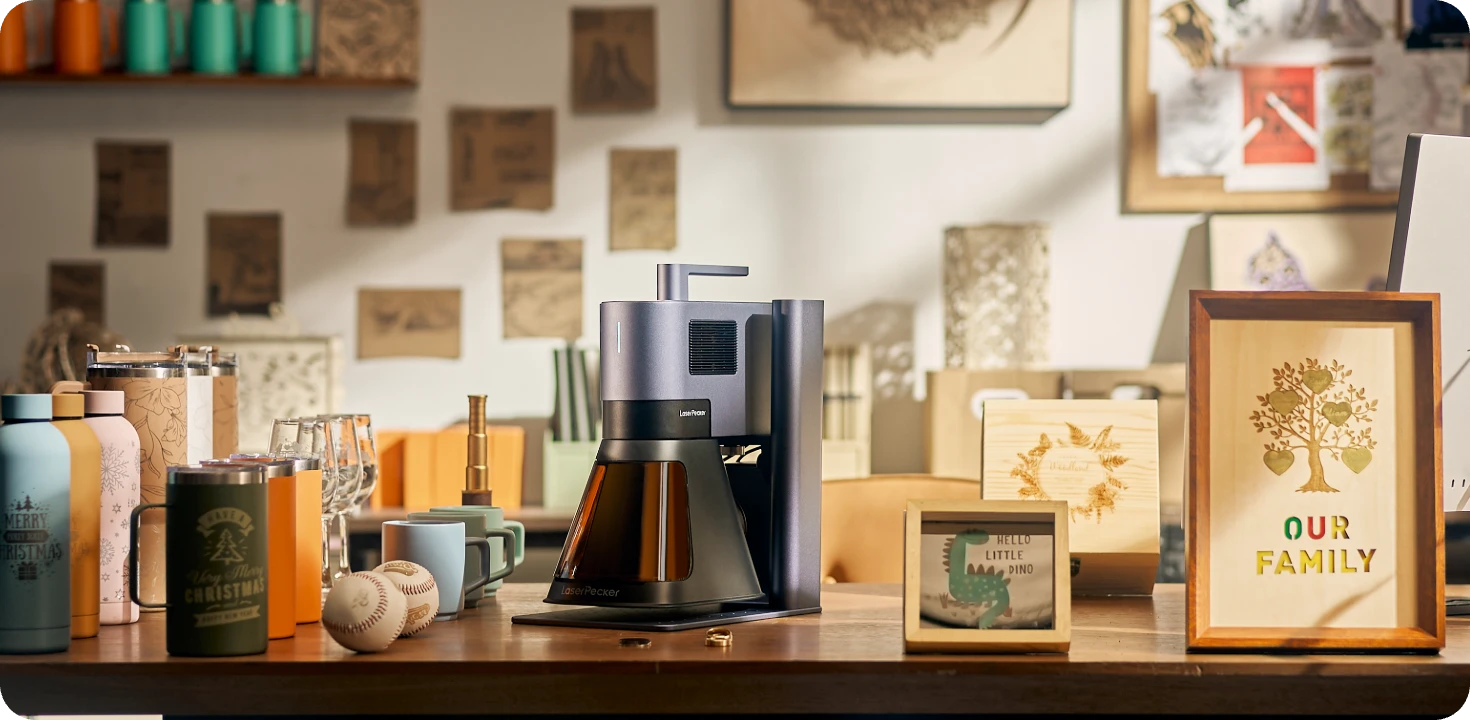
For pet stores, engraving businesses, and independent makers that work with both metal and nonmetal products, the LaserPecker LP5 offers two laser sources in one compact system.
Why Choose the LP5 as a Pet Tag Engraving Machine?
The LP5 combines a 20W 1064 nm fiber laser with a 20W 450 nm diode laser. The fiber source is designed for metal engraving, while the diode source expands the machine's capabilities to compatible materials such as wood, leather, and dark acrylic.
-
20W Fiber and 20W Diode Lasers
The fiber laser engraves stainless steel, brass, aluminum, titanium, and coated metals, while the diode laser supports compatible materials such as dark acrylic, wood, and leather. -
Detailed and Durable Engraving
The LP5 can reproduce names, phone numbers, logos, icons, QR codes, and decorative graphics with high precision. -
Up to 10,000 mm/s Engraving Speed
High-speed processing supports on-demand personalization, repeat orders, and efficient pet tag production. -
Deep Engraving and Cutting
In addition to surface marking, the LP5 supports deep engraving and cutting on compatible materials, allowing businesses to create custom tag shapes and finishes. -
Compact and Portable Design
Its compact footprint and portable laser head make it suitable for pet stores, small studios, craft markets, pop-up booths, and mobile engraving services. -
Efficient Batch Engraving
Multiple flat pet tags can be positioned in a jig and engraved in one job. The optional Slide Extension expands the work area to 160 × 300 mm for larger batches. -
Flexible Software Options
The LP5 works with LaserPecker Design Space and LightBurn for creating text, importing graphics, arranging tags, adjusting parameters, and saving reusable projects. -
Optional Class 1 Safety Enclosure
When installed and used as directed, the optional Safety Enclosure provides protective light filtering, door detection, and exhaust support for controlled indoor operation.
By combining fiber and diode lasers, fast marking, batch-production options, and a compact design, the LP5 is a versatile dog tag engraver for businesses that want to produce metal pet tags while expanding into other personalized pet products.
Part 5: FAQ About Pet Tag Engraving Machines
Q1. What type of machine is used to engrave pet tags?
Pet tags can be engraved with laser, rotary, dot peen, or stamping machines. Laser engravers are the most flexible option for customized tags because they can reproduce small text, logos, icons, QR codes, and detailed graphics. Rotary and stamping machines are better suited to traditional text-based designs, while dot peen systems are mainly used for durable industrial-style marking.
Q2. What is the best laser engraver for metal pet tags?
A fiber laser is generally the best choice for engraving bare stainless steel, brass, aluminum, titanium, and other common pet tag metals. An infrared laser may also mark selected metals and coated surfaces, while a diode laser is more suitable for anodized or coated metal than untreated bare metal. A dual-laser machine such as the LaserPecker LP5 is useful when a business needs to engrave metal tags as well as compatible nonmetal products.
Q3. Is laser engraving or rotary engraving better for pet tags?
Laser engraving is generally better for fast personalization, fine text, logos, QR codes, and repeatable batch production. Rotary engraving physically removes material with a cutting bit, producing a tactile groove that some customers prefer. However, it is usually slower, creates chips and noise, and requires tool replacement. The better method depends on the desired finish, production volume, and design complexity.
Q4. Can a pet tag engraving machine engrave multiple tags at once?
Yes. A laser engraving machine can process multiple flat pet tags in one job when the tags are arranged within the working area. A positioning jig keeps each blank in a consistent location, while batch engraving software or variable-text features can assign different names and phone numbers to individual tags. The number of tags per batch depends on the machine's working area and the size of the tags.
Conclusion
Choosing the right pet tag engraving machine starts with the materials you want to process, the number of tags you plan to produce, and the level of customization your customers expect.


