


Glass engraving is a practical way to personalize drinkware, home décor, jewelry, awards, signs, and gifts. Whether you want to add a name to a wine glass, decorate a vase, or produce branded glassware for customers, choosing the right glass engraving tool can make the work safer, easier, and more consistent.
Available options range from affordable hand tools to rotary engravers, sandblasting systems, and laser machines. Each type of glass etching equipment offers a different balance of detail, speed, control, and cost.
In this guide, we compare six popular glass engraving tools for 2026 and explain how to choose the best option for your projects, experience level, and production needs.

In this article:
- Part 1: Six Popular Glass Engraving Tools
- Type 1: Diamond-Tipped Engraving Pen
- Type 2: Carbide Scribe / Tungsten Carbide Etching Needle
- Type 3: Electric Engraving Pen
- Type 4: Mini Rotary Tool
- Type 5: Sandblasting Gun
- Type 6: Laser Engraving Machine for Glass
- Part 2: Which Glass Engraving Tool is Best in 2026
- Part 3: FAQ about Glass Engraving Tools
Part 3: 6 Popular Glass Engraving Tools
The following options cover the most common manual, electric, abrasive, and laser-based methods. Each glass engraver tool has different strengths, limitations, and suitable applications.
Type 1: Diamond-Tipped Engraving Pen
A diamond-tipped engraving pen is a simple hand tool that scratches lines directly into the glass surface. Its hard, narrow tip works well for names, signatures, outlines, and small decorative details.
This affordable glass engraving tool requires no electricity and is easy to carry. However, line quality depends entirely on hand pressure and control, so it is better for small one-off projects than complex designs or batch production.
Best for: Names, signatures, outlines, and beginner practice
Limitations: Requires steady hand control and produces limited depth and consistency
Type 2: Carbide Scribe or Tungsten Carbide Etching Needle
A carbide scribe uses a rigid tungsten carbide tip to scratch clean, shallow lines into glass. It is commonly used for labeling, scoring, technical marks, and simple outline designs.
Compared with some diamond pens, a carbide scribe can feel more rigid and direct. It is durable and inexpensive, but it still depends on manual pressure and is not the best choice for shading, complex artwork, or repeated production.
Best for: Straight lines, labels, scoring, and simple technical markings
Limitations: Limited shading ability and highly dependent on hand control
Type 3: Electric Engraving Pen
An electric engraving pen uses rapid vibration or rotation to mark the glass with less manual force than a traditional scribe. Many models include adjustable speed settings and interchangeable tips for different line widths and textures.
This type of etching tool for glass is useful for text, simple patterns, and light shading. It can reduce hand fatigue, but clean results still require practice and a stable grip.
Best for: Beginners, lettering, simple designs, and light shading
Limitations: Lower precision and repeatability than sandblasting or laser engraving
Type 4: Mini Rotary Tool
A mini rotary tool uses interchangeable bits rotating at high speed to grind designs into the glass. Diamond-coated points and silicon carbide accessories can produce lines, textures, shaded areas, and shallow relief effects.
Rotary tools are more versatile than basic engraving pens, but excessive pressure or unsuitable settings can chip or crack the glass. Make several light passes instead of attempting to reach the full depth in one pass.
Best for: Detailed freehand designs, shading, textures, and deeper engraving
Limitations: Higher learning curve, glass-dust exposure, and risk of chipping
Type 5: Sandblasting Gun
A sandblasting gun directs abrasive media at the glass through a stencil or mask. It removes a controlled layer of material and creates an even, frosted finish across text, logos, and larger surface areas.
Sandblasting can produce professional results and more noticeable depth than many handheld tools. However, a complete setup generally requires a cabinet, compressor, abrasive media, dust control, protective equipment, and sufficient workspace.
Best for: Frosted effects, bold graphics, broad coverage, and consistent depth
Limitations: Bulky setup, abrasive-media handling, stencil preparation, and dust-control requirements
Type 6: Laser Engraving Machine for Glass
A laser engraving machine uses a focused beam to create precise markings on the glass surface. Digital files make it possible to reproduce text, graphics, logos, patterns, and selected photographic designs with consistent placement.
A laser glass engraver is especially useful for personalized products and batch work because it does not depend on freehand control. Cylindrical glassware may also be engraved with a compatible rotary attachment.
Laser compatibility varies by glass composition and laser type. Clear glass may require a suitable marking paper, washable coating, or another method recommended for the machine. Always test a spare item before processing the final piece.
Best for: Detailed designs, logos, personalized gifts, curved glassware, and batch production
Limitations: Higher initial cost, material testing, ventilation, and setup requirements
Part 2: What Is the Best Glass Engraving Tool in 2026?
The best glass engraving tool depends on how often you engrave and the type of finish you need. A diamond pen or electric engraver is a practical choice for occasional DIY projects. A rotary tool offers more creative control for freehand artwork, while sandblasting is well suited to deep, uniform frosted designs.
For detailed digital designs, repeatable results, and personalized batch production, a laser engraving machine is generally the most versatile option. However, users must confirm glass compatibility, test the settings, and follow the machine's ventilation and safety requirements.
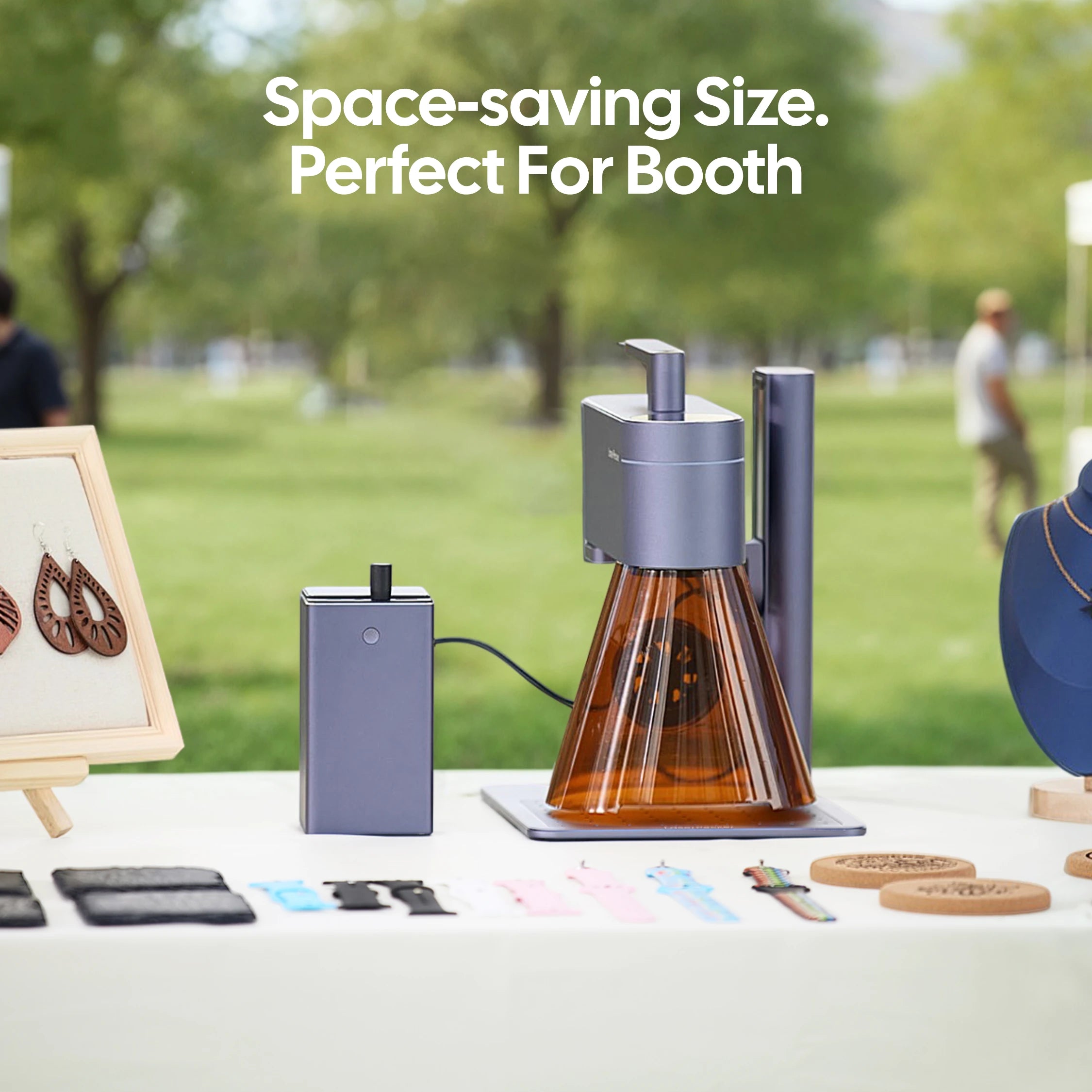
Recommended Glass Engraver: LaserPecker LP4 with Rotary Extension
The LaserPecker LP4 combines a 10W 450 nm diode laser with a 2W 1064 nm infrared laser. For glass engraving, the blue diode laser can be used with a compatible marking paper or washable dark coating to improve energy absorption and produce a more visible frosted mark.
Key Features for Glass Engraving
- Engraving speeds of up to 4,000 mm/s
- High-detail output suitable for text, logos, patterns, and personalized artwork
- A 160 × 120 mm standard working area
- A 150 mm focal length that provides space for positioning different objects
- Compatibility with the Rotary Extension for cylindrical and irregularly shaped objects
- Suitable for customized glassware, gifts, prototypes, and small-batch production
With the Rotary Extension, the LP4 can process compatible curved items such as wine glasses, whiskey glasses, beer mugs, jars, and bottles. Proper alignment helps reduce stretching and positioning errors when a design wraps around a cylindrical surface.
Which Types of Glass Can Be Engraved?
Glass composition, thickness, coatings, shape, and manufacturing stress can all affect the result. Never assume that two visually similar glass products will react in the same way.
Common Glass Types to Test
- Soda-lime glass
- Borosilicate glass
- Lead-free crystal glass
- Frosted glass
- Stained glass
- Non-tempered glass drinkware
These materials may be suitable for mechanical, abrasive, or laser engraving, but compatibility still depends on the exact product and process. Test a spare item using low-intensity settings before engraving the final piece.
Glass That Requires Extra Caution
- Tempered glass: Surface damage or localized heat may disturb its internal stress and cause sudden breakage.
- Laminated glass: Heat or excessive engraving depth may damage the internal bonding layer.
- Thin or low-quality glass: Uneven thickness and composition can increase the risk of cracks and chips.
- Coated, mirrored, or treated glass: Confirm the coating composition and whether it can be processed safely before engraving.
When the glass type or coating is unknown, contact the supplier or choose a verified engraving blank instead of experimenting on the finished product.
Part 3: FAQ About Glass Engraving Tools
Q1. What is the best tool for engraving glass?
The best tool depends on the project. A diamond-tipped pen is suitable for simple hand engraving, while a rotary tool with diamond or silicon carbide bits provides more control for detailed freehand work. A laser engraver is generally better for precise digital designs, repeatable results, and batch production.
Q2. What tools do you need to engrave glass at home?
For basic home engraving, you need a diamond engraving pen or rotary tool with a glass-compatible bit, a design template, a stable work surface, eye protection, and respiratory protection. Securing the glass and using appropriate dust-control measures can also reduce movement and exposure to fine particles.
Q3. Can you use a Dremel or rotary tool to engrave glass?
Yes. A Dremel or similar rotary tool can engrave glass when fitted with diamond-coated points or suitable silicon carbide accessories. Use light pressure and several shallow passes. Wear eye and respiratory protection, and follow the tool manufacturer's safety instructions.
Q4. What is the difference between glass etching and glass engraving?
Glass etching usually creates a shallow, frosted surface using chemicals, abrasive blasting, or another surface-treatment process. Glass engraving physically removes material with a hand tool, rotary bit, sandblaster, or laser. In everyday use, however, the two terms are often used interchangeably.
Q5. Can a laser engraver engrave clear glass?
Yes, but the correct method depends on the laser and glass. Some lasers interact directly with glass, while a visible-light diode laser may require compatible laser marking paper, a washable dark coating, or another approved preparation method to improve absorption. Always test the material before engraving the final item.
Q6. Do you need a rotary attachment to engrave glasses and bottles?
A rotary attachment is not normally required for flat glass, but it is useful for cylindrical objects such as glasses, jars, and bottles. It rotates the object while the machine engraves, helping the design follow the curved surface with less stretching or distortion.
Q7. Can you engrave tempered glass?
Engraving tempered glass is risky because scratches, impact, or localized heating may disturb its internal stress and cause sudden breakage. Do not process it unless the glass supplier and equipment manufacturer confirm that the specific material and method are suitable.
Q8. How do you prevent glass from cracking while engraving?
Identify the glass type, inspect it for existing damage, secure it without excessive pressure, and test the process on a spare item. When using a rotary tool, make light passes instead of applying heavy pressure. For laser engraving, begin with conservative settings and avoid concentrating excessive heat in one area.
Conclusion
The right glass engraving tool depends on your design style, experience, budget, and production volume. Diamond pens and electric engravers are affordable choices for simple DIY projects, while rotary tools provide more control for detailed freehand work. Sandblasting is effective for bold frosted designs and consistent surface coverage.
For detailed digital artwork and repeatable production, a laser engraver offers greater speed and consistency. The LaserPecker LP4, combined with the Rotary Extension, is a practical option for personalized glasses, jars, bottles, and other compatible glass items. Whichever method you choose, identify the glass type, use suitable protective equipment, and test the process on a spare piece before engraving the final product.


