


Stone engraving is used to create memorials, signs, artwork, personalized gifts, and architectural details. Depending on the required depth and detail, the right stone engraving tool may be a laser engraver, impact engraver, sandblasting system, or CNC machine.
Choosing the right equipment depends on the type of stone, design complexity, project size, production volume, and working environment. A tool that produces detailed photos on slate may not be suitable for carving deep lettering into granite.
In this 2026 guide, we compare four of the best stone engraving tools, explain their advantages and limitations, and help you choose the right stone engraving machine for your projects.

In this article:
- Part 1: Four Stone Engraving Tools You Need to Know
- Type 1: Laser Engraving Machines
- Type 2: Impact Engraving Machines
- Type 3: Sandblasting Machines
- Type 4: CNC Engraving Machines
- Part 2: Which Stone Engraving Tool is Best?
- Part 3: FAQ about Stone Engraving Tools
Part 1: Four Types of Stone Engraving Tools
The four main machine-based methods for engraving stone are laser engraving, impact engraving, sandblasting, and CNC carving. Each method offers a different balance of detail, depth, speed, cost, and production capacity.
Type 1: Laser Engraving Machines
A laser stone engraver uses a focused beam to change or remove a very thin layer of the stone surface. It is particularly useful for detailed text, logos, patterns, and photographs on smooth, flat materials such as slate, marble, and dark granite.
How It Works:
The laser follows a digital design uploaded through compatible software or an app. On many stones, it creates a light, matte mark through localized heating and micro-fracturing rather than carving a deep groove. Results vary with the stone’s color, mineral composition, surface finish, focus, and laser settings.
Selected machines can also create recessed or embossed-style effects through multiple passes and grayscale processing. For examples, see these guides to slate embossing and deep laser engraving on stone.
Advantages of Laser Engraving Machines
- Fine detail: A laser can reproduce small text, complex patterns, logos, and properly prepared photographs.
- Non-contact processing: The laser does not place mechanical pressure on the stone or require cutting bits that wear down.
- Repeatable results: Digital files can be saved and reused for personalized products or batch production.
- Clean workflow: Laser engraving generally removes less material than CNC carving, impact engraving, or sandblasting.
Best for: photographs, detailed graphics, coasters, plaques, tiles, personalized gifts, and repeatable small-batch production
Limitations: usually creates a shallow surface mark; contrast varies by stone; curved or uneven rocks can be difficult to focus; every new material requires testing
Type 2: Impact Engraving Machines
Impact engraving machines use rapid mechanical strikes to chip small points from the stone surface. The dots combine to form text, numbers, logos, or grayscale images. This method works especially well on hard, polished stone such as granite.
Because impact engraving physically removes material, it can produce durable markings for memorial stones, plaques, and outdoor markers. It can also process large or installed stones when the machine is designed for portable use.
Impact engraving does not normally reproduce smooth, continuous cuts. The final quality depends on dot density, tool condition, stone consistency, and image preparation.
Best for: granite memorials, stone plaques, outdoor inscriptions, and grayscale portraits
Limitations: noisy operation, limited carving depth, visible dot patterns, and less flexibility for fine vector artwork
Type 3: Sandblasting Machines
Sandblasting removes stone by directing pressurized abrasive media through openings in a rubber or vinyl stencil. It produces bold lettering and relatively deep, textured engravings on granite, marble, and other suitable stones.
This method is widely used for headstones, architectural stone, signs, and large memorial plaques. Its deeper engraving can remain legible outdoors and can be paint-filled to improve contrast.
However, sandblasting requires an air compressor, blasting equipment, durable stencils, abrasive containment, ventilation, and effective dust control. It is generally better suited to a properly equipped workshop than a home studio.
Best for: headstones, large lettering, deep engraving, paint-filled designs, and outdoor stone applications
Limitations: bulky setup, stencil preparation, abrasive cleanup, strict dust-control requirements, and less fine detail than laser engraving
Type 4: CNC Engraving Machines
A CNC stone engraving machine uses computer-controlled cutting tools, typically stone-rated diamond tooling, to remove material mechanically. It can carve grooves, deep lettering, reliefs, textures, and three-dimensional forms.
CNC machines are commonly used for architectural stone, commercial signage, sculptures, countertops, memorials, and other large or high-value projects. With suitable tooling and toolpaths, they provide controlled depth and repeatable geometry.
The tradeoffs are higher equipment costs, a larger footprint, longer setup times, tool wear, and a steeper learning curve. CNC stone work also requires secure workholding, cooling or dust extraction, and appropriate protective equipment.
Best for: deep lettering, relief carving, architectural stone, sculptures, and professional production
Limitations: high initial cost, substantial space requirements, tool wear, dust or slurry management, and a steeper learning curve
| Tool | Detail | Typical Depth | Best For | Repeatability | Main Consideration |
|---|---|---|---|---|---|
| Laser Engraver | High | Shallow surface mark | Photos, text, logos, and small products | High | Contrast and compatibility vary by stone |
| Impact Engraver | Medium to high | Shallow to moderate | Granite portraits, memorials, and inscriptions | High | Dot-based finish and noisy operation |
| Sandblasting | Medium | Moderate to deep | Bold lettering, headstones, and large plaques | Medium | Stencils, abrasive containment, and dust control |
| CNC Engraver | High | Deep and controllable | Reliefs, deep carving, and architectural work | High | Cost, tooling, setup, and dust or slurry |
Part 2: Which Stone Engraving Tool Is Best?
There is no single best engraving tool for stone. The right choice depends on the result you want:
- Choose a laser engraver for detailed photos, logos, text, and repeatable surface engraving.
- Choose an impact engraver for durable dot-based images and inscriptions on hard, polished stone.
- Choose sandblasting for deep, bold lettering on headstones, signs, and large plaques.
- Choose a CNC machine for controlled-depth carving, reliefs, architectural work, and three-dimensional forms.
For small personalized products and mixed-material projects, a compact laser engraving machine often provides the most convenient digital workflow. For deep commercial carving, however, CNC machining or sandblasting may be the better choice.
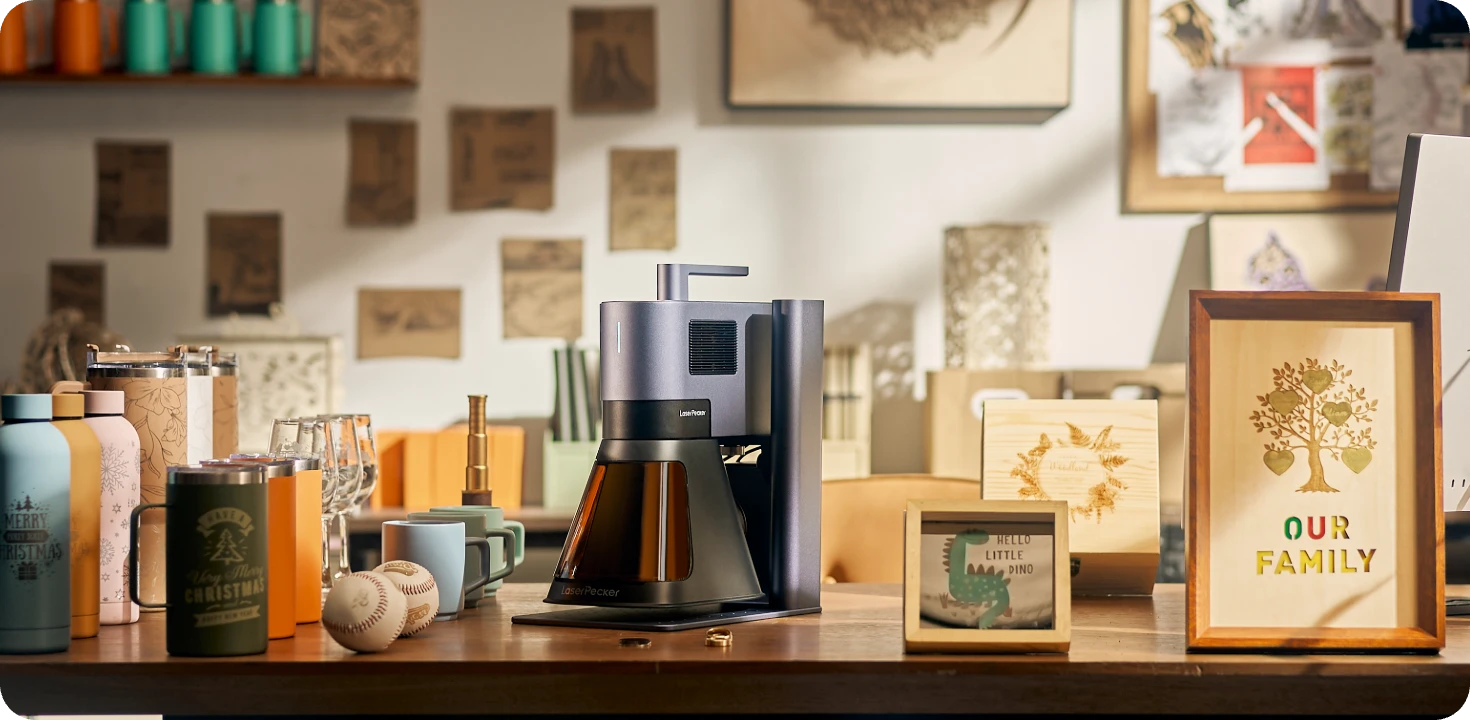
Recommended Product: LaserPecker LP5
The LaserPecker LP5 combines a 20W fiber laser with a 20W blue diode laser. For selected stone projects, its diode laser and software-controlled processing can create detailed surface engraving and embossed-style effects after the material and settings have been tested.
Key features for stone and mixed-material projects:
1. Dual-Laser System: The 20W diode laser supports selected stone and nonmetal engraving applications, while the 20W fiber laser extends production to compatible metals. This makes the LP5 particularly useful for businesses that work with both stone products and metal items.
2. High Marking Speed: A maximum marking speed of up to 10,000 mm/s helps shorten processing time for compatible designs and materials. Actual production speed depends on the stone, image, resolution, engraving depth, and number of passes.
3. Portable, Modular Design: Its compact laser head can be repositioned for different workpieces and workshop layouts. The machine still requires a stable setup, correct focusing, suitable guarding, and effective extraction during operation.
4. Digital Design Control: LaserPecker Design Space and compatible computer workflows support text, logos, images, positioning, and reusable project files.
Part 4: FAQ about Stone Engraving Tools
Q1. What tools can be used to engrave stone?
Stone can be engraved with manual chisels, rotary tools with stone-rated or diamond bits, laser engravers, impact engravers, sandblasting systems, and CNC machines. The best option depends on the stone, required depth, design detail, workpiece size, budget, and production volume.
Q2. What is the best stone engraving tool for beginners?
For small handmade projects, a rotary tool with suitable diamond bits can be an accessible starting point. For digital text, logos, or photos on flat stone products, a compact laser engraver may provide a more repeatable workflow. Beginners should start with inexpensive sample stones and follow all dust, eye, and machine-safety requirements.
Q3. What is the easiest stone to engrave?
The answer depends on the method. Softer stones such as limestone and soapstone are generally easier to carve mechanically. For laser engraving, smooth, flat, dark stones such as slate or black granite often provide clearer contrast. Natural variation means every stone should still be tested.
Q4. What is the best laser engraver for stone?
The best laser engraver for stone should match the type and size of stone, required detail, production volume, and other materials you plan to process. CO2 and selected diode laser systems are commonly used for surface engraving on slate, marble, granite, and similar materials. A dual-laser machine such as the LP5 may suit mixed-material businesses, but compatibility and settings must be confirmed with the actual stone.
Q5. Can a laser engrave any type of stone?
No. Many stones can be laser engraved, but the results vary with color, mineral content, density, surface finish, fillers, coatings, and heat sensitivity. Smooth, dark, consistent stone usually produces better contrast than pale, rough, or highly varied material. Always test an inconspicuous area or spare sample first.
Q6. Can a laser cutter cut through stone?
A typical desktop engraving laser is intended to mark the surface of stone, not cut through a stone slab. Full-depth stone cutting normally requires equipment such as a diamond saw, waterjet, or suitable CNC stone-cutting machine. Do not interpret a machine’s “laser cutter” name as confirmation that it can cut stone.
Q7. What is the best tool for engraving granite?
For detailed surface photos or text, a laser or impact granite engraving tool may work well, particularly on smooth, dark granite. Sandblasting is commonly used for deep, bold memorial lettering, while a CNC machine with stone-rated diamond tooling is better for deep carving and relief work.
Conclusion
The best stone engraving tool depends on the material, design, required depth, project size, and production environment. Laser engraving is well suited to detailed surface designs and repeatable personalization. Impact engraving produces durable dot-based markings, sandblasting creates deep and bold lettering, and CNC machines provide controlled carving depth for reliefs and professional stone work.
Before choosing a stone engraver, test the actual material and compare working area, processing depth, software, tooling, extraction, safety requirements, operating costs, and technical support. Matching the tool to the project will produce more consistent results than choosing a machine based on power or price alone.


