


From wallets and belts to bags, patches, and journals, leather can be personalized with several manual and machine-based methods. Common leather engraving tools include laser engravers, Cricut machines, swivel knives, stamping tools, mallets, and carving knives.
Each tool produces a different finish and requires a different level of skill. Some are better for traditional hand-tooled designs, while others provide the speed, precision, and repeatability needed for custom orders or batch production. This guide compares six popular options to help you choose the right leather engraving tool for your projects.

In this article:
- Part 1: 6 Essential Tools for Leather Engraving
- Tool 1: Laser Engraving Machines
- Tool 2: Cricut
- Tool 3: Swivel Knife
- Tool 4: Leather Stamping Tools
- Tool 5: Maul or Mallet
- Tool 6: Leather Carving Knife
- Part 2: Which Leather Engraving Tool Is Right for You?
- FAQ: Questions about Leather Engraving Tools
Part 1: 6 Essential Leather Engraving Tools
Leather can be engraved, carved, stamped, or debossed with a range of manual and powered tools. The right option depends on the finish you want, the type of leather, your experience, and whether you are making one item or producing repeat orders.
Below are six common leather engraving tools and machines, along with their main advantages, limitations, and best uses.
Tool 1: Laser Engraving Machines
A laser engraving machine uses a focused beam to remove or darken the surface of compatible leather. Because the design is digitally controlled, a leather engraver can reproduce fine text, logos, illustrations, photographs, and repeat patterns with high precision.
Laser engraving is fast, non-contact, and highly repeatable. It is therefore well suited to personalized products, custom orders, branding, and batch production. However, the correct power and speed settings must be tested first to prevent excessive burning, smoke stains, or cutting through the material.
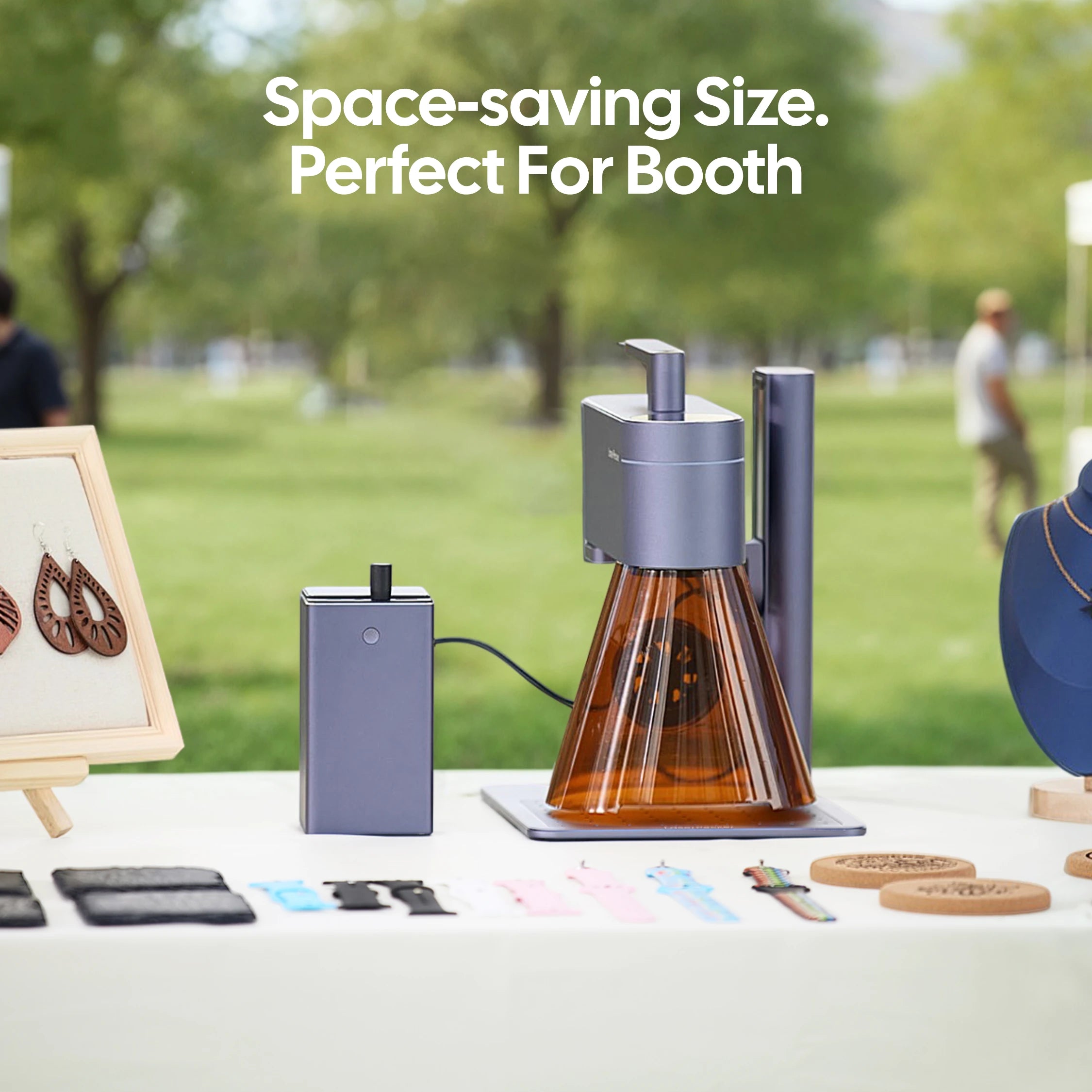
The LaserPecker LP4 dual-laser engraver, for example, combines a 10W 450 nm diode laser with a 2W 1064 nm infrared laser. Its diode laser can engrave many laser-compatible leather products, while its portable design is convenient for makers and small businesses.
Tool 2: Cricut Machines
Cricut machines can cut thin leather and create debossed or lightly marked designs with compatible tips. Rather than burning away the surface, a Cricut typically presses or scratches the design into the material.
This method works best for simple text, outlines, and decorative patterns. Results depend on the Cricut model, selected tool, leather thickness, and material firmness. Vegetable-tanned leather generally produces clearer impressions than very soft or heavily finished leather.
A Cricut is a practical option for hobbyists who already own the machine and mainly work with thin craft leather. However, it is less suitable than a dedicated engraving machine for leather for detailed images, strong contrast, or high-volume production.
Tool 3: Swivel Knives
A swivel knife is a traditional leather-carving tool used to cut flowing lines into damp vegetable-tanned leather. The rotating barrel helps the user guide curves, borders, letters, and decorative patterns.
Swivel knives offer excellent creative control and a distinctive handcrafted appearance. However, they require practice to control depth, pressure, and line quality. They are best for one-of-a-kind leatherwork rather than fast, identical production.
Tool 4: Leather Stamping Tools
Leather stamps are placed on the surface and struck with a maul or mallet to press letters, shapes, borders, or textures into the leather. They work particularly well on properly cased vegetable-tanned leather.
Stamping creates a durable, tactile finish with a traditional handmade appearance. Standard stamps are easy to repeat, but each stamp is limited to a fixed design. Custom logos or complex artwork may require specially manufactured dies.
Tool 5: Mauls and Mallets
A maul or mallet does not engrave leather by itself. Instead, it supplies the force needed to drive stamps, punches, and other leatherworking tools into the material.
Poly or rawhide mauls are commonly preferred because they provide controlled impact without damaging tool handles as quickly as a metal hammer. Consistent striking force is important for producing an even depth across the design.
Tool 6: Leather Carving Knives
Leather carving knives are used to cut, trim, and shape leather by hand. They can create deep lines and bold freehand designs, especially on thicker vegetable-tanned leather.
These knives are inexpensive and flexible, but the result depends heavily on the user's skill. They are slower than a machine and are generally less suitable for tiny text, photographic detail, or identical batch work.
| Tool | Precision | Consistency | Speed | Skill Level | Best For |
|---|---|---|---|---|---|
| Laser Engraving Machine | Very high | Excellent | Fast | Beginner–intermediate | Logos, detailed artwork, personalization, and batch production |
| Cricut Machine | Medium | Good | Medium | Beginner | Thin leather, cutting, debossing, and simple craft projects |
| Swivel Knife | High | Skill-dependent | Slow | Advanced | Traditional carving and freehand designs |
| Leather Stamping Tools | Medium | Good | Medium | Beginner–intermediate | Letters, borders, textures, and repeating patterns |
| Maul or Mallet | Not applicable | Skill-dependent | Not applicable | Beginner | Striking stamps, punches, and carving tools |
| Leather Carving Knife | Medium–high | Skill-dependent | Slow | Intermediate–advanced | Deep cuts, bold lines, and handcrafted artwork |
Part 2: Which Leather Engraving Tool Is Right for You?
The best engraver for leather depends on your material, design, production volume, experience, and preferred finish. Consider the following factors before choosing a tool.
Consideration #1: Choose the effect you want
Use a swivel knife or carving knife for freehand cuts and traditional carved artwork. Choose stamping tools for recessed letters, borders, and tactile patterns. For detailed graphics, photographs, small text, or consistent branding, a laser engraver is usually the more practical option.
Consideration #2: Precision and repeatability
Hand tools provide direct creative control, but the result depends on the user's pressure and technique. A digital leather engraving machine can reproduce the same logo, name, or pattern across multiple pieces, making it more suitable for customer orders and branded products.
Consideration #3: Speed and production volume
Manual carving is appropriate for unique artisan pieces, but it can be slow. Laser engraving is generally more efficient when processing detailed designs, multiple items, or frequently changing personalized content.
Consideration #4: Evaluate the learning curve
Stamping is relatively easy to begin, while detailed swivel-knife carving requires substantial practice. Laser engraving requires users to learn basic design software, focusing, material placement, and parameter testing, but it does not require advanced hand-carving skills.
Consideration #5: Plan for ventilation and safe operation
Laser engraving leather produces smoke, odor, and residue. Use appropriate ventilation or fume extraction, follow the machine manufacturer's safety instructions, and never process leather with an unknown coating or composition.
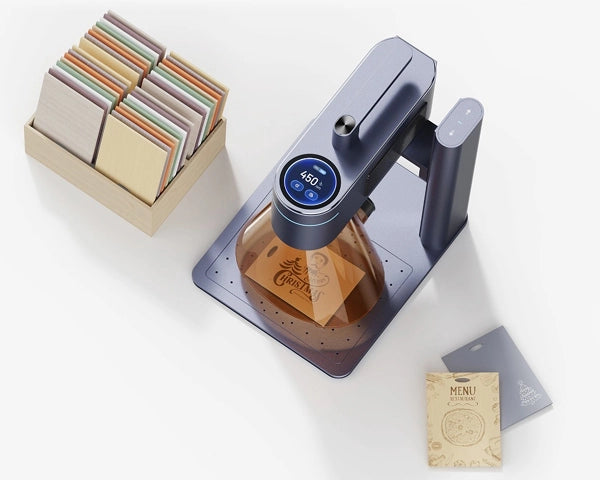
For makers and small businesses that prioritize detailed designs and repeatable results, the LaserPecker LP4 is a versatile portable option. It combines a 10W diode laser and a 2W infrared laser, offers engraving speeds of up to 2,000 mm/s, and supports a 160 × 120 mm working area.
Part 3: FAQ About Leather Engraving Tools
Q1. What tools can you use to engrave leather?
Common leather engraving tools include laser engraving machines, swivel knives, carving knives, rotary tools, stamping sets, and Cricut-compatible tips. Laser engravers are best for detailed digital designs and repeat production, while knives and stamps are better for traditional handcrafted effects.
Q2. What is the best leather engraving tool for beginners?
Leather stamps are among the easiest manual tools for beginners because they require limited drawing or carving skill. For users who want to create names, logos, or digital artwork, an entry-level laser engraver for leather can also be beginner-friendly after they learn focusing, material placement, and basic power and speed settings.
Q3. What is the difference between leather engraving, carving, stamping, and embossing?
Engraving removes or alters the leather surface to form a design. Carving uses knives and modeling tools to cut and shape the leather by hand. Stamping presses a premade letter or pattern into the surface, while embossing uses pressure and a die to create a raised or recessed design. These terms are sometimes used interchangeably, but the processes and finishes are different.
Q4. Can you engrave leather with a Dremel or engraving pen?
Yes. A Dremel, rotary tool, or engraving pen can scratch or grind designs into some types of leather. However, soft leather may stretch or move, and rotary bits can create uneven or fuzzy edges. Secure the material, use light pressure, and test the bit on scrap leather before working on the finished item.
Q5. Can you use a wood-burning tool to engrave leather?
A wood-burning tool can create dark lines on genuine vegetable-tanned leather, but it may also scorch the surface and produce strong odors. Do not use it on synthetic leather, vinyl, or material with an unknown coating. Work in a well-ventilated area and test the temperature on a scrap piece first.
Q6. What type of laser engraver is best for leather?
A blue diode laser is a practical choice for many genuine leather projects, including wallets, patches, belts, and journals. CO₂ lasers are also widely used for leather engraving and cutting, especially in larger workshop systems. The best machine depends on the leather type, required working area, production volume, and whether you also need to process other materials.
Q7. Can all types of leather be laser engraved?
No. Vegetable-tanned leather generally provides the most predictable results. Chrome-tanned, heavily coated, bonded, and synthetic leather may discolor, melt, or release unsafe fumes depending on their composition. Never laser engrave vinyl or PVC-based imitation leather, and verify the material with the supplier before processing it.
Q8. How do you choose the right leather engraving tool?
Choose based on the desired finish, leather type, design detail, production volume, budget, and experience level. Use hand knives for unique carved artwork, stamps for simple tactile patterns, a Cricut for light craft work, and a laser engraving machine for detailed, repeatable, digitally controlled designs. Always test the selected method on scrap material first.
Conclusion
The best leather engraving tool depends on the material, design, desired finish, and production volume. Swivel knives and carving knives provide the control and character needed for traditional leatherwork, while stamping tools make it easier to create tactile letters and repeating patterns.
For detailed graphics, personalized products, and repeatable production, a laser engraving machine such as the LaserPecker LP4 offers a faster and more consistent workflow. Its digitally controlled process is particularly useful for logos, names, illustrations, and custom orders.
Whichever method you choose, confirm the leather composition, secure the material, and test the tool or machine settings on scrap leather first. Proper testing helps prevent scorching, uneven depth, unwanted discoloration, and permanent damage to the finished product.


