


Ring engraving adds names, dates, symbols, and meaningful messages to wedding bands and other jewelry. However, rings are small, curved, and often made from valuable metals, so producing a clean, permanent design requires a precise and reliable ring engraving machine.
Hand and mechanical engraving can create attractive results, but both methods require physical contact with the ring and often depend heavily on the operator's skill. A modern ring laser engraver offers a faster, more consistent alternative for creating fine text, logos, patterns, and personalized designs.
This guide compares three main types of ring engraver machines, explains their advantages and limitations, and shows why laser engraving is a practical choice for jewelers, customization studios, and small businesses.

In this article:
- Part 1: Why Engraving a Ring Requires Precision
- Part 2: 3 Types of Ring Engraving Machines
- Type 1: Hand Engraving Machines
- Type 2: Mechanical Engraving Machines
- Type 3: Laser Engraving Machines
- Part 3: Why Laser Engraver is the Best Ring Engraving Machine
- FAQs: Hot Questions about Ring Engraving Machines
Part 1: Why Does Ring Engraving Require High Precision?
A ring provides far less engraving space than most flat objects. Its curved surface, delicate structure, and material value leave little room for alignment or processing errors.
A suitable ring engraver must therefore provide accurate positioning, controlled power or pressure, and repeatable results.
Factor #1: Small and Curved Engraving Areas
Ring bands provide only a narrow area for names, dates, and personal messages. The curved inner and outer surfaces also make it difficult to keep text straight, evenly spaced, and properly aligned. A rotary fixture or dedicated ring holder may be needed to maintain a consistent engraving position.
Factor #2: Thin and Delicate Structures
Some rings have thin walls, detailed settings, or delicate decorative elements. Excessive pressure, heat, or engraving depth can scratch, distort, or weaken the piece. Accurate settings and secure positioning help protect the ring while producing a clean mark.
Factor #3: Valuable Materials
Wedding bands and fine jewelry are often made from gold, silver, platinum, titanium, or stainless steel. An engraving mistake may be difficult or expensive to repair, particularly on plated, polished, or finished surfaces. Testing the settings on a comparable sample is therefore recommended before engraving the final ring.
Factor #4: Long-Term Readability
Rings are exposed to friction, moisture, cosmetics, and daily wear. The engraving must be deep or high-contrast enough to remain readable without unnecessarily damaging the material. The correct machine, settings, and engraving method depend on the ring's metal, coating, surface finish, and intended result.
Part 2: 3 Types of Ring Engraving Machines
Rings can be engraved by hand, with a mechanical cutter, or with a laser. Each method differs in precision, production speed, operating skill, design flexibility, and initial cost.
The right engraving ring machine depends on whether you want a handcrafted finish, straightforward text engraving, or a digital workflow for detailed and repeatable customization.
Type 1: Hand Engraving Tools for Rings
Hand engraving uses gravers, burins, pneumatic tools, or small rotary tools to remove metal manually. The engraver guides the cutting edge across the ring to create letters, symbols, textures, or decorative patterns.
Because every cut is controlled by hand, this method can produce distinctive lines and an artisanal appearance. It is particularly suitable for one-of-a-kind jewelry and designs in which the hand-finished character is part of the desired result.
However, clean lettering and uniform depth require considerable practice. Production is also slower, and reproducing exactly the same design across multiple rings can be difficult.
Pros
- Produces a distinctive handcrafted appearance
- Provides creative freedom for decorative work
- Requires relatively simple equipment
Cons
- Requires extensive skill and practice
- Results may vary between individual rings
- Slow for detailed designs or repeated orders
- Mistakes can be difficult to correct
Type 2: Mechanical Engraving Machines for Rings
A mechanical ring engraver machine uses a rotating cutter or diamond drag tool to mark the metal. The tool may be guided by a template, pantograph, or computer-controlled system, allowing it to produce more uniform lettering than fully manual engraving.
The ring is secured in a dedicated fixture while the cutting tool moves across its surface. Some jewelry engraving machines include attachments designed specifically for holding rings and engraving their inner or outer circumference.
Mechanical engraving creates a tactile cut and can work well for names, dates, and simple line designs. Because the cutter touches the ring, however, secure clamping, correct tool selection, and controlled cutting depth are essential.
Pros
- Produces physically cut, tactile engravings
- More repeatable than fully manual engraving
- Suitable for simple text and line designs
Cons
- Physical contact may scratch or deform delicate rings
- Cutters wear and require replacement
- Complex graphics and very fine details may be difficult
- Different ring sizes may require additional fixtures
Type 3: Laser Engraving Machines for Rings
A laser engraving machine uses a focused laser beam to mark or remove material from the ring's surface. Because the process is digitally controlled and usually non-contact, a laser engraver for rings can create fine text, logos, patterns, fingerprints, and other detailed designs with high repeatability.
For bare metals such as gold, silver, platinum, titanium, and stainless steel, a fiber laser is generally the most direct option. The actual result still depends on the metal alloy, surface finish, laser parameters, and required engraving depth.
Common Applications
- Wedding band personalization
- Names, dates, coordinates, and short messages
- Logos, symbols, fingerprints, and line art
- Custom jewelry and retail engraving services
- Small-batch production with variable designs
Pros
- High precision and repeatability
- Non-contact processing reduces mechanical pressure
- Supports detailed graphics and variable text
- Efficient for both individual and batch orders
Cons
- Higher initial cost than basic hand tools
- Requires material testing and parameter control
- Inner-ring engraving may require a compatible rotary attachment
- Fume extraction and appropriate laser safety measures are necessary
Reason #1: Superior Precision for Small Surfaces
Laser beams can engrave extremely fine details, making them ideal for the narrow bands of rings. Even very small text, symbols, or decorative patterns can be engraved clearly and accurately.
Reason #2: Faster Production Speed
Once the design file is prepared, the laser engraving machine can process rings quickly and consistently, reducing production time compared with traditional engraving methods.
Reason #3: Non-Contact Processing
Because the laser does not physically touch the ring, it eliminates mechanical pressure that could potentially deform delicate or thin jewelry pieces.
Reason #4: Flexible Customization
Laser engraving uses digital design files, allowing names, dates, symbols, or custom artwork to be engraved without changing physical tools or setups.
Reason #5: Scalable Production
Laser engraving works efficiently for both single custom pieces and larger batches of personalized rings, making it suitable for jewelry studios and customization businesses.
For jewelry studios, customization businesses, and designers who require both precision and efficiency, laserengraving provides a highly reliable and scalable solution for modern ring engraving.
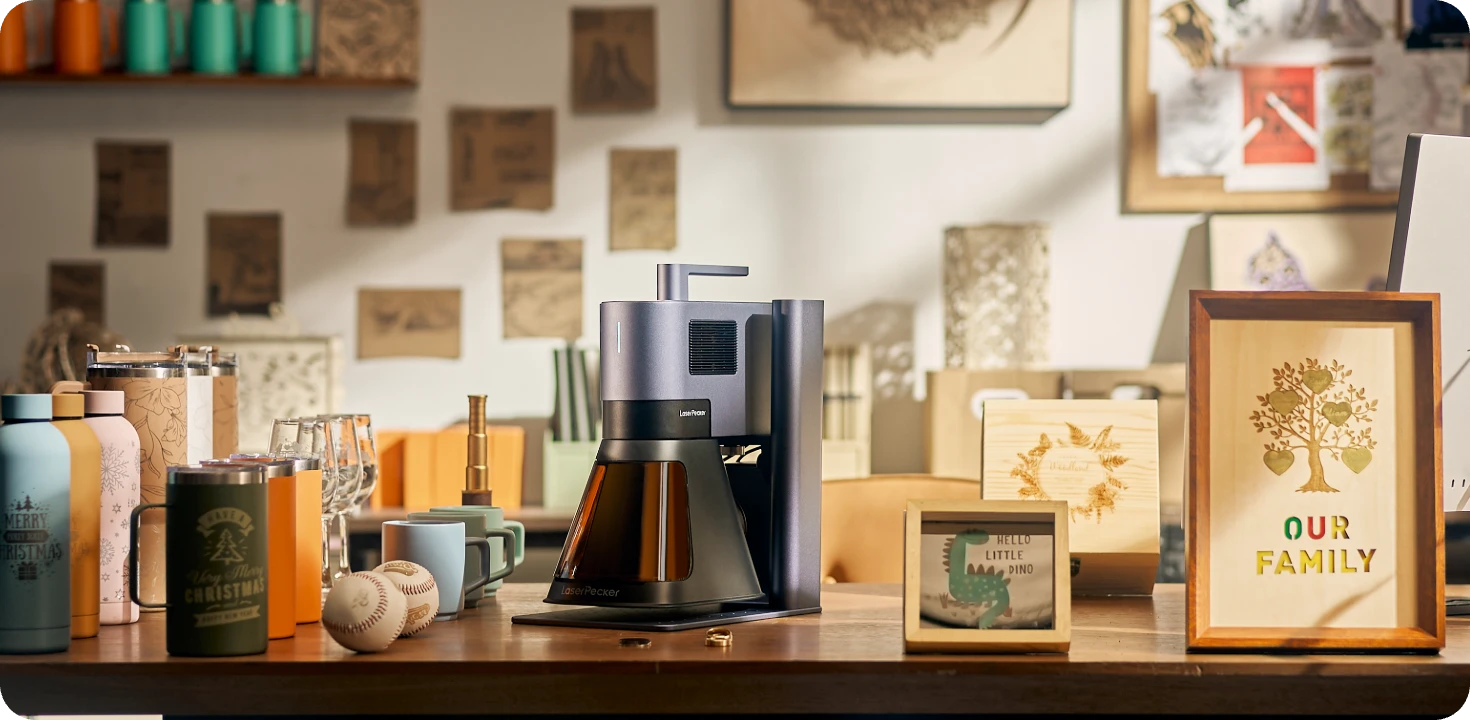
Recommended Laser Engraving Machine for Ring Engraving: LaserPecker LP5
The LaserPecker LP5 is a compact laser engraving system designed for high-precision engraving tasks such as jewelry engraving and ring customization. Unlike large industrial engraving machines, the LP5 focuses on delivering professional engraving quality while remaining easy to operate and suitable for small studios, workshops, or retail environments.
Feature 1: High Precision for Small Curved Surfaces
The LP5 is capable of engraving fine text and detailed designs (0.0027mm precision) on narrow and curved ring surfaces. This precision makes it ideal for engraving names, dates, or personal messages on ring bands.
Feature 2: Adjustable Power Settings for Different Metals
The system allows users to adjust laser parameters based on the type of metal being engraved, helping achieve consistent depth and contrast across materials such as stainless steel, titanium, and precious metals.
Feature 3: Rotary Extension Support
When paired with a rotary extension, the LP5 can rotate rings smoothly during engraving. This allows accurate engraving along the inner or outer circumference of the ring.
Feature 4: Efficient Workflow for Custom Orders
Digital design files make it easy to switch between different engraving jobs. Jewelers can quickly move from one personalized design to another without changing tools or complex machine setups.
Feature 5: 20W Fiber Laser for Consistent Results
The 20-watt fiber laser delivers stable energy output, allowing the machine to produce clear, high-contrast engravings with consistent depth.
Overall, the LaserPecker LP5 provides jewelers with a precise, efficient, and easy-to-use engraving solution. By reducing setup complexity and minimizing the risk of errors, it helps professionals produce high-quality customized rings with reliable results.
FAQs: Hot Questions about Ring Engraving Machines
Q1. What is the best method for engraving rings?
Laser engraving is widely considered one of the best methods for ring engraving. It offers high precision, a non-contact process that protects delicate jewelry, and durable markings that resist fading or wear.
Q2. Can a laser engrave both the inside and outside of a ring?
Yes. When used with a rotary attachment, laser engraving machines such as the LaserPecker LP5 can engrave accurately on both the inner and outer surfaces of a ring.
Q3. What is the best laser engraver for metal rings?
A fiber laser is generally the best type of laser engraver for rings made from bare metal because its 1064 nm wavelength is well suited to marking many metals. Look for accurate focusing, compatible rotary support, reliable fixtures, adjustable parameters, and sufficient workspace for the intended ring sizes. The LaserPecker LP5 is one option that combines a 20W fiber laser with a 20W diode laser.
Q4. Can a laser engraver engrave the inside of a ring?
Yes, but the machine must be able to position and focus the laser inside the ring. A compatible rotary attachment and ring fixture may be required to rotate and secure the piece. Inner-ring engraving also depends on the ring's diameter, width, profile, and the physical clearance around the laser head.
Q5. Is laser engraving or mechanical engraving better for rings?
Laser engraving is generally better for fine graphics, repeatable digital designs, and non-contact processing. Mechanical engraving creates a physically cut, tactile finish and may be preferred for traditional lettering. The better method depends on the desired appearance, engraving depth, ring material, production volume, and operator experience.
Q6. Can the same machine engrave gold, silver, platinum, and stainless steel rings?
A suitable fiber laser can engrave many gold, silver, platinum, titanium, and stainless steel alloys, but one parameter set will not work equally well on every ring. Alloy composition, plating, coatings, polish, and surface finish affect the result. Test and adjust the power, speed, frequency, focus, and number of passes for each material.
Conclusion
The right ring engraving machine depends on the desired finish, ring material, design complexity, and production volume. Hand engraving offers a distinctive artisanal appearance, while mechanical engraving creates tactile cuts and works well for straightforward lettering.
For businesses that need fine details, digital customization, and repeatable production, a ring laser engraver is often the most flexible option. Fiber lasers are particularly suitable for many bare metal rings, while a compatible rotary fixture can expand the machine's ability to process curved inner and outer surfaces.


