


Personalized tumblers are popular for custom gifts, branded merchandise, and small-business product lines. However, producing a clean and consistent engraving on a curved surface can be difficult without the right laser, rotary attachment, and material settings. Common problems include distorted artwork, uneven engraving depth, weak contrast, and misaligned wraparound designs.
In this guide, we compare four types of tumbler engraving machines, explain which lasers work best for coated and bare-metal drinkware, and show you how to choose the right laser engraving machine for tumblers. You will also find practical setup tips and answers to common questions about rotary engraving.

In this article:
- Part 1: Four Types of Laser Engraving Machines for Tumblers
- Type 1: Diode Laser Engraving Machine
- Type 2: IR Laser Engraving Machine
- Type 3: Fiber Laser Engraving Machine
- Type 4: CO2 Laser Engraving Machine
- Part 2: How to Choose the Right Tumbler Laser Engraving Machine?
- Part 3: Top Tips for Perfect Tumbler Engraving
- Part 4: FAQs about Tumbler Laser Engraving Machine
Part 1: Four Types of Laser Engraving Machines for Tumblers
Type 1: Diode Laser Engraving Machine
A blue diode tumbler laser engraver is a practical choice for powder-coated, painted, or anodized tumblers. The laser removes or alters the outer finish to reveal a contrasting layer underneath, making it suitable for names, logos, and detailed graphics.
Most blue diode systems operate at approximately 450 nm. They are effective for surface engraving on coated drinkware but generally cannot engrave deeply into bare stainless steel. A fiber laser is more suitable when direct or deep metal engraving is required.
Recommended Product: LaserPecker LP2 Plus
- Fast Engraving: Reaches speeds of up to 4,000 mm/s, making it suitable for personalized gifts and small-batch tumbler orders.
- 10W 450 nm Diode Laser: Suitable for coated tumblers, painted metal, and anodized aluminum, producing clean logos, text, and graphics.
- SpinTrack™ Module Support: Works with a compatible electric roller for cylindrical tumblers, bottles, and other round objects.
- Dual Red-Dot Focusing: Helps users set the correct focal distance quickly and accurately.
- Broad Material Compatibility: Can also process compatible wood, leather, acrylic, plastic, and coated-metal projects.
- Portable, Multi-Angle Design: Supports flexible positioning for different workspaces and engraving setups.
- Expandable Accessory System: Compatible with rotary accessories, a slide extension, a safety enclosure, and an air purifier.

The LP2 Plus is best suited to makers who primarily personalize coated tumblers. Choose a fiber laser instead if your work regularly requires direct or deep engraving on bare stainless steel.
Type 2: IR Laser Engraving Machine
A 1064 nm infrared laser can mark many metals, selected plastics, and coated surfaces. On bare-metal tumblers, a low-power IR laser is generally used for fine surface marking rather than deep engraving. Results vary according to the alloy, surface finish, and laser settings, so material testing is essential.
A dual-laser machine that combines IR and diode sources offers more flexibility than a diode-only engraver machine for tumblers. The IR source can create fine marks on compatible bare metals, while the blue diode laser processes painted, powder-coated, and anodized surfaces.
Recommended Product: LaserPecker LP4
- Dual-Laser System: Combines a 10W blue diode laser with a 2W 1064 nm IR laser.
- Coated and Bare-Metal Marking: The diode laser processes coated tumblers, while the IR laser marks compatible bare metals and selected plastics.
- Multi-Angle Positioning: Allows the laser head to be adjusted for different workspaces and object setups.
- Fast, Detailed Engraving: Reaches up to 2,000 mm/s and supports detailed text and graphics.
- Software Support: Works with LaserPecker Design Space and LightBurn.
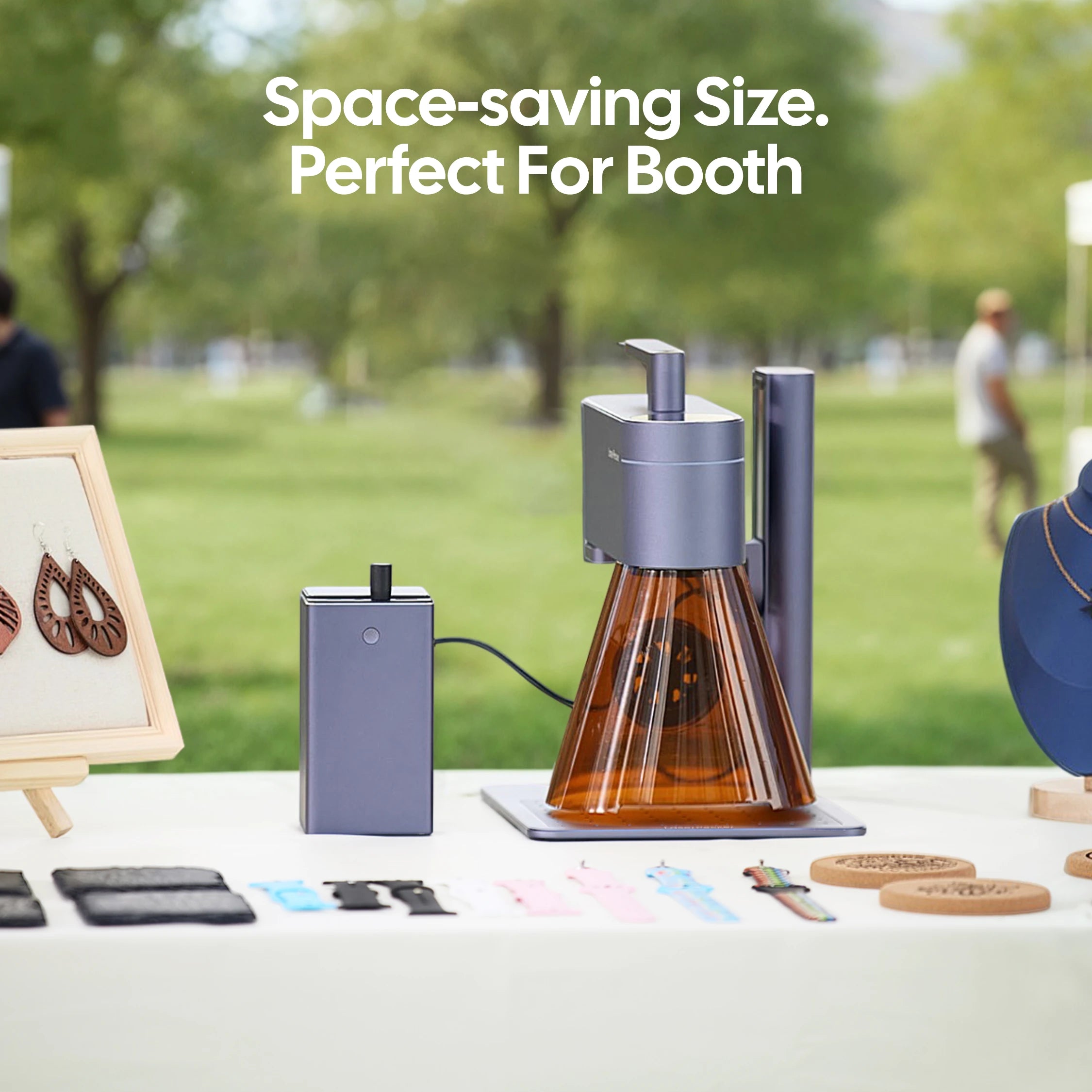
The LP4 is a versatile option for users who work with both coated drinkware and compatible bare-metal surfaces but do not require the depth of a higher-power fiber laser.
Type 3: Fiber Laser Engraving Machine
Fiber lasers are designed for direct metal marking and engraving, making them a strong choice for bare stainless steel, aluminum, and titanium tumblers. Depending on the laser parameters and metal, they can produce high-contrast marks, deeper engraving, and selected color effects.
A fiber engraving machine for tumblers is particularly suitable for professional shops that need fast processing, repeatable results, and durable direct-metal engraving.
Recommended Product: LaserPecker LP5
-
Dual-Laser Material Coverage:
The LP5 combines a 20W fiber laser and a 20W diode laser. Use the fiber source for compatible bare metals and the diode source for painted, powder-coated, or anodized finishes. -
Deep and High-Contrast Engraving:
The fiber laser supports direct metal engraving and 3D relief effects on compatible materials. -
High-Speed Production:
With engraving speeds of up to 10,000 mm/s, the LP5 is suitable for repeat orders and small-business production. -
Rotary Attachment Support:
When paired with a compatible rotary attachment, the LP5 can engrave cylindrical tumblers, mugs, and bottles while reducing distortion across curved surfaces. -
Compact, Expandable Setup:
The portable laser head can be paired with a compatible Class 1 Safety Enclosure and fume-control equipment.
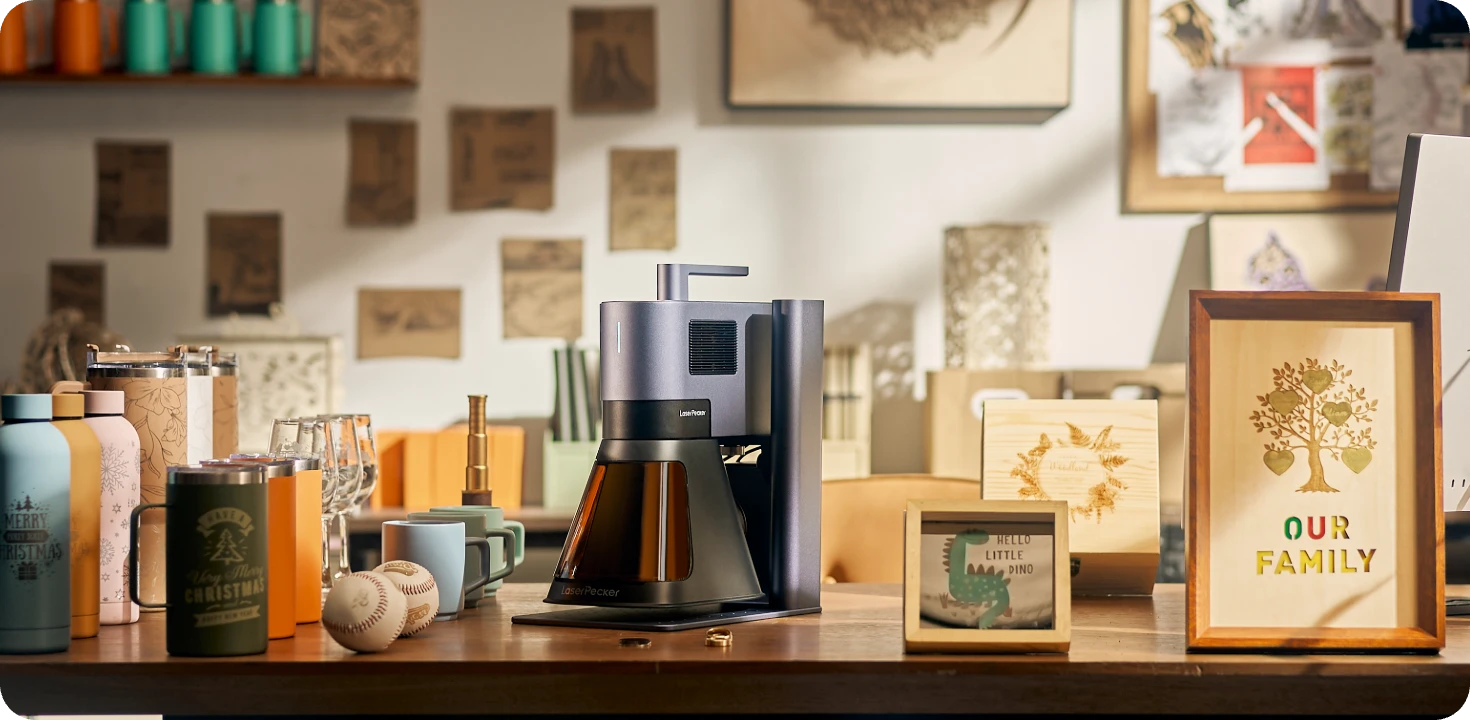
The LP5 is best for businesses that need both surface marking and deeper engraving across coated and bare-metal tumblers. Its higher price and more advanced parameter controls may be unnecessary for occasional hobby projects.
Type 4: CO2 Laser Engraving Machine
CO2 lasers are commonly used to remove powder coating, paint, or lacquer from metal tumblers. They can also etch compatible glass and selected nonmetal drinkware materials. A standard CO2 laser does not directly engrave bare metal effectively without a compatible metal-marking compound.
A CO2 tumbler etching machine can still be effective for coated metal or glass drinkware, particularly when a business already owns a CO2 system with a rotary attachment. Always identify the material before processing plastic because some plastics can melt, ignite, or release hazardous fumes.
Comparison Table
| Laser Type | Best For | Surface Compatibility | Advantages | Limitations | Recommended Product |
|---|---|---|---|---|---|
| Diode Laser | Coated tumblers | Powder-coated, painted, and anodized surfaces | Accessible price and clear coating removal | Limited direct marking on bare metal | LP2 Plus |
| IR Laser | Fine surface marking | Compatible bare metals, plastics, and coatings | Versatile and suitable for fine details | Limited depth with lower-power systems | LP4 |
| Fiber Laser | Direct metal engraving | Stainless steel, aluminum, titanium, and other compatible metals | Fast, deep, and high-contrast engraving | Higher price and learning curve | LP5 |
| CO2 Laser | Coated metal and compatible glass | Paint, powder coating, glass, and selected nonmetals | Effective coating removal and glass etching | Bare metal usually requires a marking compound | Not specified |
Choose the laser according to the tumbler surface and the result you need. A diode laser such as the LaserPecker LP2 Plus is a practical entry point for coated tumblers. The LaserPecker LP4 adds IR marking for compatible bare metals while retaining diode engraving for coated surfaces.
For higher-volume work, direct metal engraving, or deeper results, consider a fiber laser such as the LaserPecker LP5. CO2 lasers remain useful for coated metal and compatible glass, but they are less suitable for engraving bare metal directly.
Part 2: How to Choose the Right Tumbler Laser Engraving Machine
Use the following criteria to compare a laser engraver for tumblers:
- Tumbler material and finish: Identify whether the surface is powder-coated, painted, anodized, bare metal, glass, or plastic.
- Desired engraving result: Decide whether you need coating removal, a fine surface mark, high contrast, color marking, or deeper engraving.
- Rotary compatibility: Check the supported diameter, length, weight, and shape. Tapered cups and handled mugs may require a chuck-style rotary or additional leveling.
- Machine clearance and focusing: Confirm that the machine can accommodate both the tumbler and rotary attachment while maintaining the correct focal distance.
- Production volume: Compare engraving speed, repeatability, batch-processing features, and setup time based on your expected order volume.
- Safety and ventilation: Use a suitable enclosure, exhaust system, and material-specific safety precautions.
- Total budget: Include the cost of the rotary attachment, enclosure, exhaust or purification equipment, software, and other accessories.
For hobby use and coated drinkware, the LaserPecker LP2 Plus offers a straightforward starting point. The LP4 is suitable for users who want both diode and IR marking in one portable machine. For faster production and direct engraving on compatible stainless steel, aluminum, and titanium tumblers, the LP5 provides stronger metal-processing capabilities.
Part 3: Top Tips for Better Tumbler Engraving
Consistent tumbler engraving depends on accurate setup, secure rotation, correct focus, and laser settings matched to the material and finish.
Use a Rotary Attachment for Consistent Results
A compatible rotary attachment turns the tumbler as the laser processes the design, helping maintain the correct scale and alignment across the curved surface. Level the tumbler, secure it against slipping, and confirm the rotary circumference or steps-per-rotation setting before starting.
Choose the Right Laser Power and Speed Settings
There is no universal setting for every tumbler. Excessive power or too many passes can damage the coating, while insufficient energy may leave an incomplete mark. Start with the manufacturer's material guidance and refine the power, speed, frequency, line interval, and number of passes on a test blank.
Focus on the Engraving Area
Set the focus at the center of the intended engraving area and keep the surface within the laser's usable depth of field. For tapered tumblers, level the engraving area before focusing. A narrow design may work without a rotary attachment, but wider or wraparound artwork normally requires one.
Use Different Settings for Coated and Bare-Metal Tumblers
Coated tumblers are generally engraved by removing or altering the finish, while bare metal requires a compatible wavelength and a different parameter strategy. Do not reuse a coated-tumbler preset on bare stainless steel. Test every alloy, color, and coating because visually similar blanks can react differently.
Run a Test Before Final Production
Use a spare blank or an inconspicuous area to check contrast, line quality, focus, seam alignment, and rotary direction. Run a low-power frame or position preview first to confirm the placement of the design before starting the final engraving.
Part 4: FAQs About Tumbler Laser Engraving Machines
Q1. What Type of Laser Is Best for Engraving Tumblers?
The best laser depends on the tumbler surface. A blue diode or CO2 laser works well for removing powder coating or paint. An IR laser can make fine surface marks on compatible bare metals, while a fiber laser is better for direct, high-contrast, or deeper engraving on stainless steel, aluminum, and titanium. Always test the exact tumbler material and finish before production.
Q2. Can You Laser Engrave a YETI Tumbler Yourself?
Yes. Many YETI tumblers have a coated stainless steel exterior that can be personalized with a compatible laser engraver. A rotary attachment is recommended for larger or wraparound designs. Clean and level the tumbler, focus carefully, test the settings on a similar blank, and follow the laser manufacturer's enclosure, ventilation, and eye-safety requirements.
Q3. Can a Diode Laser Engrave a Metal Tumbler?
A blue diode laser can effectively remove paint, powder coating, or some anodized finishes from a metal tumbler. However, it generally cannot engrave deeply into bare stainless steel. For direct bare-metal marking, use a compatible IR or fiber laser, or follow the equipment manufacturer's guidance for an approved metal-marking compound.
Q4. Do You Need a Rotary Attachment to Engrave Tumblers?
A rotary attachment is strongly recommended for wide graphics, wraparound designs, and consistent engraving on cylindrical or tapered tumblers. A small design may sometimes be engraved without one if the surface remains within the laser's depth of field, but the usable area will be limited and distortion becomes more likely toward the edges.
Q5. How Long Does It Take to Laser Engrave a Tumbler?
Engraving time varies according to the design size, fill density, resolution, laser type, speed, number of passes, and rotary setup. A small name may take only a few minutes, while a detailed wraparound design or deep engraving can take considerably longer. Include cleaning, alignment, focusing, and testing when estimating production time.
Q6. What Settings Should You Use for Laser Engraving Tumblers?
There is no single setting that works for every tumbler. Start with the machine manufacturer's recommended parameters for the laser type and surface, then run a material test. Adjust power, speed, frequency or pulse settings, line interval, and pass count until the coating is removed cleanly or the desired metal mark is achieved without overheating the surface.
Q7. Can You Laser Engrave Stainless Steel Tumblers?
Yes. Powder-coated stainless steel can be engraved by removing the coating with a compatible diode or CO2 laser. Bare stainless steel is better suited to a fiber laser or a compatible IR system. Some CO2 workflows use a metal-marking compound instead of engraving the metal directly.
Q8. How Do You Prevent Tumbler Engravings From Looking Distorted?
Level the tumbler, secure it in the rotary attachment, enter the correct diameter or circumference, focus on the engraving area, and confirm the rotary calibration. Keep the artwork within the usable engraving zone and run a frame or outline preview before processing. Tapered tumblers may require additional leveling or a chuck-style rotary attachment.
Conclusion
The best tumbler engraver is the one that matches your materials, desired finish, and production volume. The LP2 Plus is a practical option for coated tumblers, the LP4 adds IR marking for greater material flexibility, and the LP5 is designed for faster, direct engraving on compatible bare metals.
Before choosing a machine, verify its laser wavelength, rotary compatibility, available clearance, focusing method, safety enclosure, and ventilation requirements. With the right setup and tested parameters, a suitable tumbler engraving machine can produce clean names, logos, graphics, and wraparound designs with consistent results.


