


Coin laser engraving is a precise way to create commemorative coins, challenge coins, collector pieces, corporate awards, and personalized gifts. It can add detailed logos, names, artwork, and messages to metal coins.
Compared with mechanical engraving, stamping, and chemical etching, laser engraving offers greater precision and flexibility for detailed designs.
This guide explains how coin laser engraving works, which coins can be engraved, what equipment to use, and how to achieve consistent results.

In this article:
- Part 1: Understanding Coin Laser Engraving
- 1.1 What Is Coin Laser Engraving
- 1.2 How Does Laser Engraving Work on Metal Coins
- 1.3 What Laser Engraving Machine Is Best for Coin Projects
- Part 2: Why Choose Laser Engraving for Coins
- Part 3: What Types of Coins Can Be Laser Engraved
- Case Study: How to Laser Engrave a Custom Challenge Coin in 5 Steps
- FAQs: Hot Questions about Coin Laser Engraving
Part 1: Understanding Coin Laser Engraving
1.1 What Is Coin Laser Engraving?
Coin laser engraving uses a focused laser beam to create permanent names, logos, portraits, serial numbers, and patterns on metal coins.
It is commonly used for commemorative coins, challenge coins, collectibles, awards, and personalized gifts. Digital control makes it suitable for both individual customization and consistent batch production.
1.2 How Does Laser Engraving Work on Metal Coins?
The laser directs concentrated energy onto the coin to modify or remove its surface. A 1064 nm laser can mark metals such as brass, copper, stainless steel, and aluminum.
Depending on the material and settings, it can create surface marks, deep engravings, dark markings, textures, and 3D relief effects. Power, speed, and frequency should be adjusted for each metal.
1.3 What Laser Engraving Machine Is Best for Coin Projects?
The best laser depends on the desired depth, detail, and production volume. An IR laser is suitable for basic personalization, while a fiber laser is better for deep engraving and professional coin production.
1064 nm IR Laser
A 1064 nm IR laser is suitable for surface marking and light engraving on metal coins. It can add names, dates, logos, serial numbers, and simple patterns.
It is a practical option for DIY projects, personalized gifts, and small batches that do not require deep engraving.
1064 nm Fiber Laser
A 1064 nm fiber laser provides stronger metal-processing capabilities. It can produce high-contrast marks, deep engravings, textures, and 3D embossing effects.
It is better suited to challenge coins, commemorative coins, collector pieces, and commercial production requiring detailed and professional results.
Summary
- 1064 nm IR laser: Surface marking, light engraving, and personalized coins
- 1064 nm fiber laser: Deep engraving, 3D embossing, and professional coin production
Choose the laser based on the coin material, desired engraving effect, and production requirements.
Part 2: Why Choose Laser Engraving for Coins?
Laser engraving offers precise, permanent, and flexible coin customization. It is suitable for both one-off projects and batch production on various metals.
Reason 1: Create Permanent and High-Contrast Markings
Laser engraving modifies the metal surface, creating durable marks that do not easily fade or wear away. It can also produce clear contrast for text, logos, and symbols.
Reason 2: Reproduce Fine Artwork and Small Details
Laser engraving can accurately reproduce portraits, badges, logos, small text, serial numbers, and detailed patterns with sharp edges.
Reason 3: Personalize Coins for Gifts and Special Events
Names, dates, messages, and illustrations can be added to coins for weddings, graduations, anniversaries, retirements, awards, and other special occasions.
Reason 4: Efficient for Custom Orders and Batch Production
Once the digital design is prepared, it can be applied consistently across multiple coins. This makes laser engraving efficient for custom orders and small- or medium-batch production.
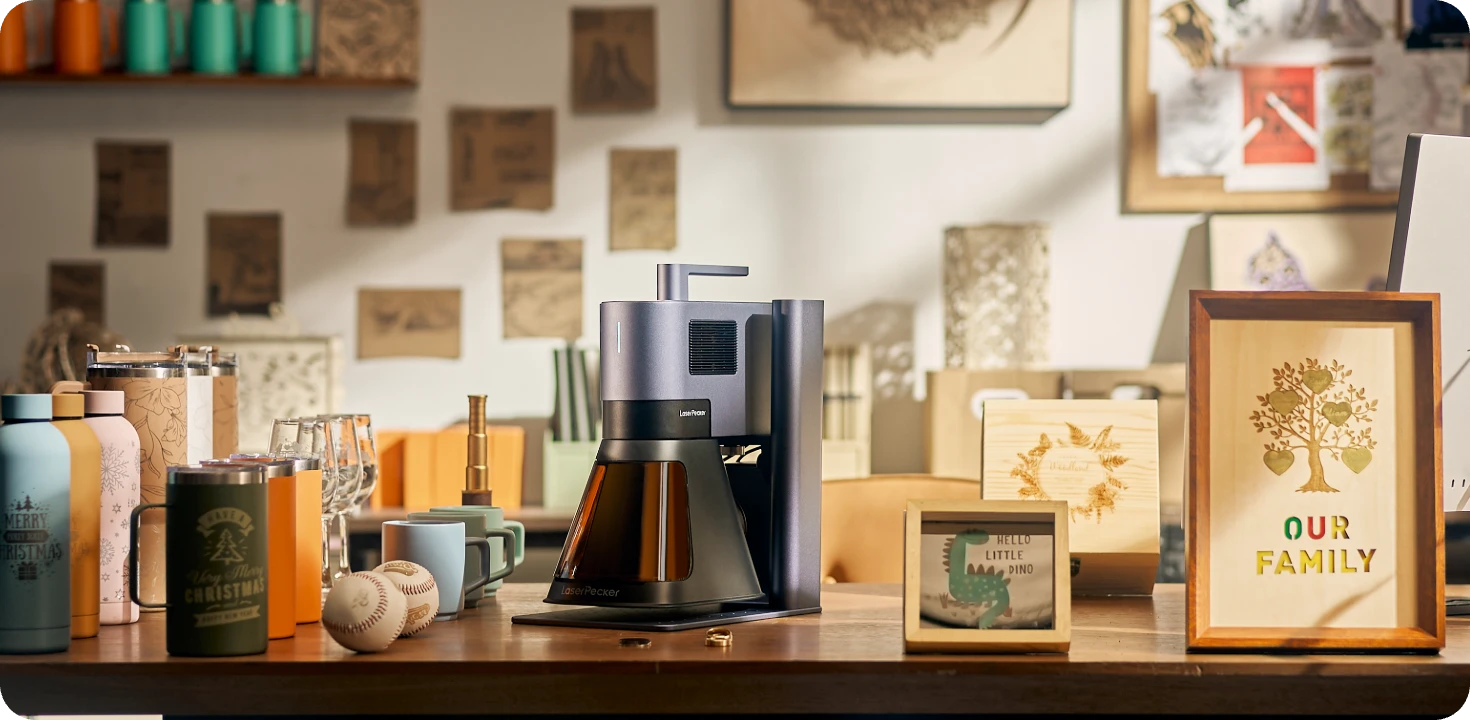
Recommended Laser Engraver for Coin Laser Engraving: LaserPecker LP5
The LaserPecker LP5 features a 20W fiber laser for marking and deep engraving metal coins. It is suitable for creating challenge coins, commemorative pieces, awards, collectibles, and personalized gifts.
-
20W Fiber Laser for Metal Coins
The fiber laser can engrave compatible metals such as brass, copper, stainless steel, and aluminum, making it suitable for a wide range of coin projects. -
Deep Engraving for Durable Designs
The LP5 can create recessed logos, names, emblems, serial numbers, and decorative patterns that remain visible during long-term handling and display. -
3D Grayscale Engraving
Grayscale control supports layered depths and relief-style effects for portraits, badges, emblems, and detailed commemorative artwork. -
Engraving Speed up to 10,000 mm/s
High-speed processing helps improve efficiency when producing customized coins or repeating the same design across small batches.
Part 3: What Types of Coins Can Be Laser Engraved?
Many metal coins can be laser engraved. The final result depends on the material, surface finish, and desired effect.
Type 1: Brass Challenge Coins
Brass challenge coins have a warm golden appearance and can produce strong engraving contrast. They are suitable for military emblems, company logos, names, mottos, dates, and commemorative messages.
Type 2: Copper Coins
Copper coins are commonly used for artwork, collectibles, and commemorative designs. They can show detailed patterns and visible contrast, but testing is important because copper conducts heat quickly.
Type 3: Stainless Steel Coins
Stainless steel coins are durable and corrosion-resistant. They are suitable for permanent logos, text, serial numbers, and graphics on corporate gifts, promotional products, and keepsakes.
Type 4: Zinc Alloy Souvenir Coins
Zinc alloy coins are lightweight and suitable for souvenir, event, and promotional projects. Laser engraving can add graphics, dates, and event details efficiently, including in batch production.
Case Study: How to Laser Engrave a Custom Challenge Coin in 5 Steps
Preparation Checklist
- A brass challenge coin blank
- Front and back design files
- A laser engraving machine suitable for metal
- LaserPecker Design Space or LightBurn
- A fixture for securing the coin
- Cleaning materials
Step 1: Choose the Coin Blank
Select a brass coin blank with enough space for the design. Check its size, thickness, and engraving area before creating the front and back layouts.
Step 2: Set Up the LaserPecker LP5 and Secure the Coin
Place the coin on a stable surface and secure it to prevent movement. Import the designs and use the preview function to check their position and alignment.
The LaserPecker LP5 supports precise positioning for detailed and double-sided coin engraving.
Step 3: Design the Front and Back Artwork
Create the eagle emblem and unit logo for the front. Add the commemorative phrase, veteran's name, and service years to the back.
Use clear vector graphics when possible to preserve small text, sharp lines, and fine details.
Step 4: Configure the Laser Settings and Run a Test
Test the power, speed, and frequency on a spare coin or similar brass material. Use lighter settings for surface marking and optimized settings with additional passes for deeper engraving.
Step 5: Engrave, Clean, and Inspect the Finished Coin
Engrave both sides, clean away any residue, and inspect the text, logos, edges, and alignment.
The finished challenge coin can be used as a retirement gift, veteran memorial, organizational collectible, or personal keepsake.
FAQs: Hot Questions about Coin Laser Engraving
Q1. Can you laser engrave coins?
Yes, many metal coins can be laser engraved with permanent logos, names, dates, numbers, and artwork. The result depends on the coin material, laser type, and settings.
Q2. What types of coins can be laser engraved?
Common options include brass, copper, stainless steel, zinc alloy, and blank metal coins. Brass is popular for challenge coins, while stainless steel is suitable for durable products.
Q3. Can you engrave both sides of a coin?
Yes, both sides can be engraved. Secure the coin with a stable fixture and carefully check the alignment before engraving each side.
Q4. Can laser engraving create 3D effects on coins?
Yes, a suitable fiber laser can use grayscale engraving and multiple passes to create different depths, textures, and 3D-style effects on compatible metal coins.
Q5. Are engraved coins permanent?
Yes, laser engraving modifies the metal surface, so the design does not easily fade. Deeper engraving generally provides greater resistance to wear.
Q6. Can I engrave collectible or antique coins?
It is possible, but engraving may reduce the value of rare or historical coins. Use a replica or blank coin when preserving the original is important.
Q7. What file format is best for coin engraving?
SVG, DXF, and AI files are suitable for logos, text, and line artwork. High-resolution raster images can be used for portraits and grayscale designs when supported by the software.
Q8. What is the best laser engraver for custom coins?
An IR laser is suitable for light surface marking. A 1064 nm fiber laser is a better choice for deep engraving, detailed textures, 3D effects, and professional coin production.
Conclusion
Coin laser engraving is a precise way to create personalized, commemorative, challenge, and collectible coins. Choosing the right coin material, laser type, design file, and settings helps produce clear and durable results for both personal and commercial projects.


