


Wooden wine bottle boxes are popular for gift packaging, wine storage, decorative display, and personalized event packaging. They combine functionality with handcrafted or customized decorative designs.
Depending on your tools, materials, and woodworking experience, wooden wine bottle boxes can be made using traditional woodworking methods or modern digital fabrication technologies.
In this guide, we will compare three practical methods for making a wooden wine bottle box and explore their tools, processes, advantages, and ideal applications.

In this article:
Method 1: Make a Wooden Wine Bottle Box with Electric Tools
Using electric tools is one of the most practical ways to make a wooden wine bottle box. This method is suitable for gift packaging, wine storage, decorative home décor, and handmade woodworking projects.
Electric tools such as saws, drills, sanders, and nailers help improve cutting accuracy and speed up the assembly process. This method works well for both simple rustic wine boxes and more decorative multi-bottle storage designs.
Materials and Tools Needed
- Plywood, pine wood, or hardwood boards
- Jigsaw, circular saw, or miter saw
- Drill or drill press
- Brad nailer, screws, or wood glue
- Orbital sander or sandpaper
- Measuring tape and ruler
- Wood stain, paint, or clear finish
- Handles, hinges, or clasps (optional)
- Safety glasses and hearing protection
Steps to Make a Wooden Wine Bottle Box with Electric Tools
- Plan the Wine Box Design: Decide the size, bottle capacity, lid style, and decorative features of the wine bottle box.
- Cut the Wood Panels: Use electric saws to cut the side panels, base, lid, and divider pieces according to the design dimensions.
- Prepare Assembly Areas: Drill pilot holes if needed and prepare joints for screws, nails, or wood glue assembly.
- Assemble the Wine Box: Use wood glue, screws, or a brad nailer to assemble the main box structure and internal dividers.
- Sand the Surface: Smooth rough edges and surfaces using a sander or sandpaper for a cleaner finish.
- Add Decorative Features: Install handles, hinges, clasps, rope handles, or decorative hardware if desired.
- Apply Final Finish: Stain, paint, or seal the wooden wine bottle box to improve appearance and durability.
Pros and Cons of Making a Wooden Wine Bottle Box with Electric Tools
Pros: Strong wooden structure, faster assembly, suitable for custom sizing, and ideal for decorative woodworking projects.
Cons: Requires power tools, creates dust and noise, and detailed decorative work may still require manual finishing.
Method 2: Make a Wooden Wine Bottle Box with a CNC Machine
A CNC machine is a precise and efficient way to make a wooden wine bottle box with clean cuts, engraved details, and highly consistent components. Unlike manual woodworking methods, CNC routers follow digital design files to automatically cut and carve wood with high accuracy.
This method is ideal for personalized wine gift boxes, decorative wine storage cases, engraved branding projects, and small-batch woodworking production. CNC machining also makes it easier to create repeated panels, bottle dividers, logos, and decorative patterns with minimal manual measuring.
Materials and Tools Needed
- CNC router machine
- Plywood, pine wood, MDF, or hardwood boards
- CAD or vector design software
- CNC control software
- Router bits
- Wood clamps or vacuum table
- Wood glue or screws
- Orbital sander or sandpaper
- Wood stain, paint, or clear finish
- Handles, hinges, or clasps (optional)
- Safety glasses and hearing protection
Steps to Make a Wooden Wine Bottle Box with a CNC Machine
- Create the Wine Box Design: Design the box panels, bottle compartments, dividers, handles, logos, and decorative engravings using CAD or vector software.
- Prepare the Wood Material: Secure the plywood or wood board onto the CNC machine bed using clamps or hold-down fixtures.
- Configure the CNC Toolpath: Import the design file into CNC software and adjust the cutting depth, feed rate, and router bit settings.
- Cut and Carve the Components: Use the CNC machine to cut the side panels, lid sections, bottle dividers, and decorative engraved elements.
- Sand the Surfaces: Smooth rough edges and remove machining marks using sandpaper or a sander.
- Assemble the Wine Bottle Box: Use wood glue or screws to assemble the box structure, dividers, and lid components.
- Apply Final Finishing: Stain, paint, or seal the wine bottle box and install optional handles, hinges, or clasps.
Pros and Cons of Making a Wooden Wine Bottle Box with a CNC Machine
Pros: High precision, repeatable production, detailed engraving capability, and excellent customization options.
Cons: Higher equipment cost, requires CNC software knowledge, and setup may be more complex for beginners.
Method 3: Make a Wooden Wine Bottle Box with a Laser Cutter
Laser cutting is one of the most precise and efficient ways to make a wooden wine bottle box. Instead of manually cutting and measuring each panel, a laser cutter follows a digital design file to create clean edges, engraved details, and highly consistent components.
This method is ideal for personalized wine gift boxes, engraved wooden packaging, decorative storage cases, and small-batch production projects. Laser cutting also makes it easy to create intricate patterns, logos, sliding lids, and custom bottle compartments with minimal manual finishing.
Materials and Tools Needed
- Laser cutter
- Plywood, basswood, MDF, or hardwood sheets
- Vector design software
- Wood glue or fasteners
- Sandpaper
- Wood stain, paint, or clear finish
- Handles, hinges, clasps, or foam inserts (optional)
- Ventilation system or air assist
- Protective glasses and mask
Steps to Make a Wooden Wine Bottle Box with a Laser Cutter
- Create the Wine Box Design: Design the box panels, bottle compartments, lid sections, logos, and decorative engravings using vector software such as SVG or DXF format.
- Prepare the Material: Place the wood sheet onto the laser cutter bed and ensure the material is flat and properly aligned.
- Adjust the Laser Settings: Configure the laser power, speed, and pass settings according to the wood type and thickness.
- Cut and Engrave the Components: Start the laser cutting process to cut the side panels, dividers, lid sections, and engraved decorative elements.
- Assemble the Wine Bottle Box: Use wood glue or fasteners to assemble the box structure and internal bottle compartments.
- Clean and Finish the Surface: Remove residue, lightly sand the edges if necessary, and apply stain, paint, or protective coating.
- Add Final Accessories: Install optional handles, hinges, clasps, rope handles, or foam inserts if included in the design.
Pros and Cons of Making a Wooden Wine Bottle Box with a Laser Cutter
Pros: High precision, detailed engraving capability, fast repeat production, clean decorative results, and excellent customization flexibility.
Cons: Requires a laser cutter and design software, material thickness limitations may apply, and wood edges may require light sanding after cutting.
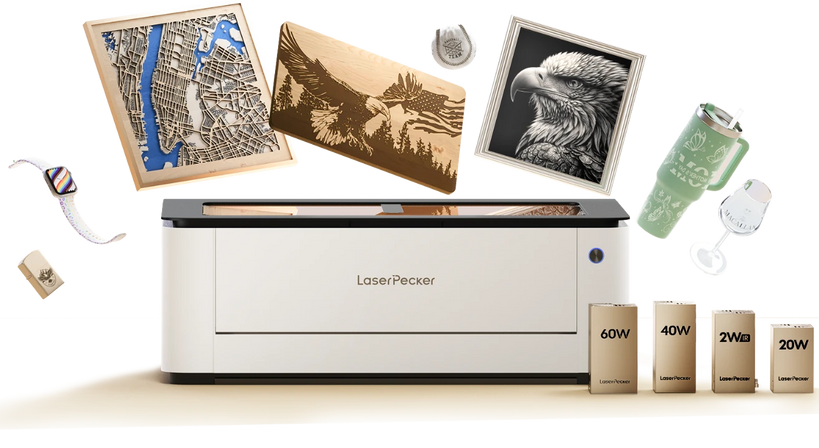
Recommended Laser Cutter for Wooden Wine Bottle Box Projects: LaserPecker LX2
The LaserPecker LX2 is designed for makers who need precise cutting, detailed engraving, and efficient production for wooden packaging and decorative woodworking projects.
With its enclosed desktop structure, interchangeable laser modules, and large working area, the LX2 is suitable for creating engraved wine gift boxes, custom wooden packaging, decorative storage cases, and personalized business products.
-
500 × 305 mm (19.7" × 12") Large Working Area
The spacious workspace allows larger wine box panels and multiple wooden components to be processed in a single run. -
20W / 40W / 60W Interchangeable Diode Laser Modules
Flexible laser module options support cutting and engraving on plywood, MDF, hardwood, acrylic, leather, and other maker materials. -
Up to 1000 mm/s Processing Speed
High-speed engraving and cutting improve efficiency for custom packaging and small-batch production projects. -
0.01 mm Positioning Precision
High positioning accuracy helps create cleaner joints, sharper engravings, and more consistent assembly parts. -
12 MP Camera Positioning System
The built-in camera system improves material alignment and simplifies engraving placement for logos and decorative artwork. -
Wide Material Compatibility
Supports wood, acrylic, leather, cardboard, and many other maker materials used for packaging and decorative craft applications.
FAQ About Making a Wine Bottle Box
Q1: What Wood Is Best for a Wooden Wine Bottle Box?
Baltic birch plywood is one of the most popular materials for wooden wine bottle boxes because it is durable, stable, and easy to cut and engrave.
Thicknesses between 3 mm and 6 mm are commonly used for laser-cut and CNC-made boxes. For premium handcrafted wine boxes, hardwoods such as black walnut or oak are also popular choices.
Q2: How Big Should a Wooden Wine Bottle Box Be?
A common size for a single-bottle wooden wine box is approximately 3.5 × 3.5 × 13 inches.
This size is generally large enough to fit most standard Bordeaux and Burgundy wine bottles while still allowing room for padding or decorative inserts.
Q3: Can Beginners Make a Wooden Wine Bottle Box at Home?
Yes, beginners can make a wooden wine bottle box at home using simple woodworking tools or laser cutting methods.
Laser cutters such as the LaserPecker LX2 are especially beginner-friendly because digital design files help automate measurements, cutting paths, and interlocking joint alignment for cleaner assembly results.
Q4: Do I Need Power Tools to Make a Wooden Wine Bottle Box?
No, it is possible to make a wine bottle box using only hand tools, wood glue, and manual assembly methods.
However, power tools and laser cutters can significantly improve cutting accuracy, reduce production time, and simplify decorative engraving and repeated production tasks.
Q5: Is Laser Cutting a Good Option for Custom Wooden Wine Bottle Boxes?
Yes, laser cutting is one of the most effective methods for making personalized wooden wine bottle boxes.
Laser cutters can create precise box panels, engraved logos, names, wedding dates, vineyard branding, and decorative artwork with high consistency and minimal manual finishing.
Conclusion
Making a wooden wine bottle box can range from a simple woodworking project to a highly customized decorative packaging process depending on the method you choose.
Electric tools are practical for traditional woodworking, while CNC machines and laser cutters provide greater precision, cleaner engraving, and better consistency for personalized production.
Whether you are creating wine gift boxes for personal use, weddings, business branding, or small-batch sales, choosing the right method will help you achieve better quality and a more efficient workflow.


