
















Cutting slots in wood is a standard task for any woodworker. You might need them when making furniture, boxes, signs, or even mechanical parts. Slots let pieces fit together better, guide moving parts, and make things look good and stay strong.
These days, with tools like laser cutters becoming more common, woodworkers have better ways to get accurate results.
In this guide, you'll discover four popular ways to cut slots in wood, including tips for choosing the right method for your project. We'll also explain how to cut a slot in wood without a router and show why laser cutting has become one of the most accurate solutions available in 2026.

In this article:
- Part 1: Why Do You Need to Cut a Slot in Wood
- Part 2: Four Ways to Cut a Slot in Wood
- Method 1: Cutting a Slot in Wood with a Laser Cutter
- Method 2: Cutting a Slot with a Handsaw and Chisel
- Method 3: Using a Router to Cut a Slot in Wood
- Method 4: Using a Drill Press and Chisel to Cut a Slot
- Part 3: Why Laser Cutting Is a Great Way to Cut a Slot in Wood
- Part 4: FAQs about Cutting a Slot in Wood
Part 1: Why Do You Need to Cut a Slot in Wood?
Before learning how to cut a slot in wood, it helps to understand why slots are used in woodworking projects. Also known as grooves, channels, or dadoes, slots serve both structural and decorative purposes.
Whether you're building furniture, cabinets, signs, or custom fixtures, cutting slots in wood can improve strength, functionality, and appearance.

- Create strong joints for shelves, drawers, cabinets, and frames.
- Allow parts to slide smoothly in adjustable or moving assemblies.
- Hold panels, inserts, or inlays securely in place.
- Provide space for hardware, hinges, fasteners, and wiring.
- Add decorative details that enhance the finished look of a project.
- Improve alignment and stability when joining multiple components.
Part 2: Four Ways to Cut a Slot in Wood
Woodworkers mainly use four ways to cut a slot. Each has a different level of accuracy, speed, difficulty, and how well it works for certain tasks.
Some woodworkers prefer traditional hand tools, while others rely on power tools or modern laser cutters for faster and more precise results. Below are four of the most popular methods for cutting slots in wood in 2026.
Method 1: Cutting a Slot in Wood with a Laser Cutter
Laser cutting has become one of the most precise ways to cut slots in wood. Instead of relying on manual guidance, the machine follows a digital design file to create highly accurate cuts with exceptional consistency.
This method is ideal for detailed projects, production work, custom signs, boxes, inlays, prototypes, and intricate woodworking designs. Laser cutters can produce narrow slots, sharp corners, and complex shapes that are difficult to achieve with traditional tools.
Because the laser never physically touches the wood, there is no tool vibration or tear-out. The result is a clean, professional-looking slot that often requires little or no post-processing.
Method 2: Cutting a Slot with a Handsaw and Chisel
A handsaw and chisel provide one of the most traditional ways to cut a slot in wood. This method involves sawing the slot boundaries first and then removing the waste material with a chisel.
It's an excellent choice for beginners, small repairs, and projects where power tools aren't available. Because it requires only basic woodworking tools, it's also one of the most affordable methods.
However, maintaining consistent depth and width can be challenging. The quality of the finished slot depends heavily on the user's skill and patience.
Method 3: Using a Router to Cut a Slot in Wood
A router is one of the most popular tools for cutting slots because it combines speed, accuracy, and versatility. With the correct bit and guide, you can produce clean, straight slots with consistent depth.
Routers are commonly used for cabinetry, furniture making, joinery, and decorative woodworking. They can cut grooves, dadoes, and channels quickly while delivering a smooth finish.
Method 4: Using a Drill Press and Chisel to Cut a Slot
This method combines the controlled drilling power of a drill press with the finishing accuracy of a chisel. Most of the material is removed with overlapping drill holes before the slot is cleaned and squared by hand.
It is particularly useful for deep slots, mortises, and structural joints where greater depth control is needed.
While slower than routing, it is often easier for beginners to master and works well with dense hardwoods.
Part 3: Why Laser Cutting Is a Great Way to Cut a Slot in Wood
| Method | Precision | Speed | Skill Required | Best For |
|---|---|---|---|---|
| Handsaw + Chisel | Low–Medium | Slow | High | Rustic joinery, small DIY tasks |
| Router | Medium–High | Fast | Medium | Furniture, cabinetry, curved slots |
| Drill Press + Chisel | Medium | Medium | Medium | Deep slots, mortises |
| Laser Cutter | Very High | Very Fast | Low | Thin–medium wood, precision slots, batch work |
For woodworkers who prioritize accuracy, consistency, and efficiency, laser cutting is one of the best ways to cut slots in wood.
Benefits of Using a Laser Cutter for Cutting Slots in Wood
- Exceptional precision: Create narrow slots, detailed patterns, and accurate joints with minimal variation.
- Consistent results: Every slot is cut to the same specifications, making laser cutting ideal for batch production.
- Clean edges: Minimal tear-out and reduced finishing work compared to many traditional woodworking methods.
- Fast workflow: Quickly produce multiple parts without repeatedly measuring and marking materials.
- Complex designs: Easily cut curves, intricate shapes, and detailed slot patterns that are difficult to achieve by hand.
- Non-contact cutting: The laser does not physically touch the wood, reducing vibration and movement during cutting.
These advantages make laser cutters popular for custom signs, decorative panels, wooden boxes, model making, furniture components, product prototypes, and precision joinery.
Another major benefit is design flexibility. If a slot needs to be resized or repositioned, you can simply update the digital file instead of rebuilding physical jigs or guides. This can save considerable time during product development and small-batch manufacturing.
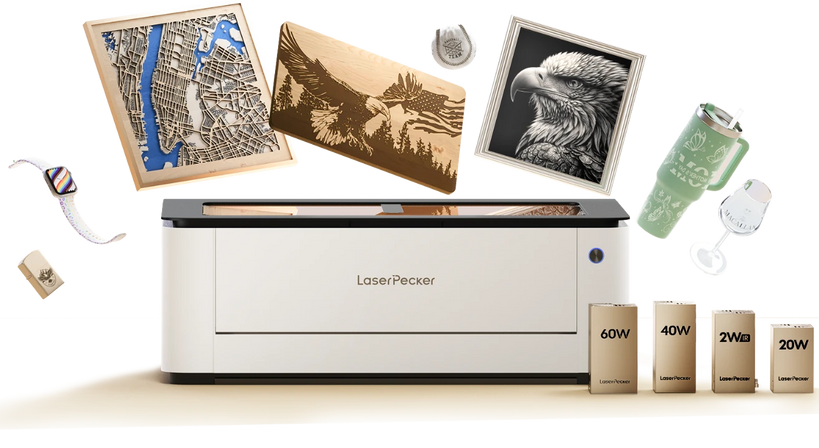
Recommended Laser Cutter for Cutting Slots in Wood: LaserPecker LX2
The LaserPecker LX2 is a powerful desktop laser cutter designed for precision woodworking projects such as cutting slots, joints, tabs, inlays, prototypes, signs, and custom wooden assemblies.
Whether you're creating box joints, tab-and-slot designs, furniture components, or craft projects, the LX2 provides the cutting accuracy and power needed to produce clean, repeatable slots in wood.
-
Up to 60W High-Power Diode Laser
The LX2 supports 20W, 40W, and 60W laser modules, providing strong cutting performance for plywood, basswood, MDF, and other woodworking materials commonly used in slot-and-tab designs. -
Precise Cutting for Tight-Fitting Joints
The LX2 delivers accurate cuts that help create clean slots, interlocking joints, assembly tabs, and custom-fit wooden components with minimal post-processing. -
Air Assist for Cleaner Wood Cuts
The built-in air assist helps reduce smoke marks, minimizes edge charring, and improves cutting quality when creating slots and detailed wooden parts. -
Large 500 × 305 mm Working Area
The spacious workspace allows users to process larger wooden panels or multiple components in a single cutting session, improving workflow efficiency.
Steps to Cut a Slot in Wood with LX2
The LaserPecker LX2 can cut both through slots and controlled-depth grooves in wood. The right workflow depends on whether you want to cut all the way through the material or create a slot that stops at a specific depth.
Situation 1: Cut-Through Slots in Wood
Step 1: Prepare the Wood
Place flat, dry wood on the honeycomb work surface and secure it if needed. The material should not move during cutting.
Step 2: Design the Slot
Create the slot as a vector shape in your design software. Set the slot width and length based on your project needs, and adjust for kerf if the slot must fit another wood piece.
Step 3: Set Up the LX2
Focus the laser, align the design with the wood, and turn on air assist to reduce smoke and burn marks.
Step 4: Choose Cut-Through Settings
Select power, speed, and passes based on the wood type and thickness. Thicker wood usually requires slower speed or multiple passes.
Step 5: Run a Test Cut
Test the settings on scrap wood from the same material. Check whether the slot cuts through cleanly and whether the size is accurate.
Step 6: Cut the Final Slot
Start the LX2 and monitor the cut. Do not move the wood until the job is complete.
Step 7: Check the Finished Slot
Remove the cutout piece and inspect the edges. Use a caliper to confirm the slot width if the fit needs to be precise.
Situation 2: How to Cut a 1/4-Inch Deep Slot in Wood with a Laser Cutter
Step 1: Design the Groove
Create the slot shape in your software and set it as an engraving or fill operation instead of a cut-through line. Define the required width, length, and depth target.
Step 2: Prepare and Focus the Wood
Place the wood flat on the work surface and focus the laser carefully. Accurate focus helps keep the groove depth consistent.
Step 3: Start with Light Engraving Settings
Choose lower power or faster speed at first. Since the goal is a 1/4-inch deep slot, not a through cut, remove material gradually with multiple passes.
Step 4: Run a Depth Test
Engrave a small test slot on scrap wood from the same material. Measure the depth with a depth gauge or caliper.
Step 5: Adjust Power, Speed, or Passes
If the groove is too shallow, increase the number of passes or slightly raise the power. If it is too deep or too dark, reduce power or increase speed.
Step 6: Engrave the Final Slot
Once the test reaches about 1/4 inch (6.35 mm) deep, engrave the final slot on your workpiece. Keep air assist on to reduce smoke and char.
Step 7: Measure and Clean the Slot
Check the final depth and clean away ash or debris with compressed air, a soft brush, or light sanding if needed.
Part 4: FAQs About Cutting a Slot in Wood
Q1. What Is the Best Tool for Cutting Slots in Wood?
The best tool depends on the type of slot and the level of precision you need.
- Handsaw and chisel: Best for simple DIY projects and traditional woodworking.
- Router: Ideal for furniture making, cabinetry, and general woodworking.
- Drill press and chisel: Suitable for deep slots and mortise-style joints.
- Laser cutter: Best for precision work, repeatable results, and complex slot designs.
If your project requires highly accurate dimensions, clean edges, or batch production, a laser cutter is often the most efficient solution.
Q2. How Do You Cut a Deep Slot in Wood?
There are several ways to cut a deep slot in wood. Traditional methods include using a router, drill press, or chisel. These tools provide good depth control and work well for structural joinery.
With a laser cutter, deep slots can be created through multiple engraving passes. By adjusting the laser power, speed, and number of passes, you can gradually remove material until the desired depth is reached without cutting through the wood.
Q3. How Do You Cut a Slot in Wood Without a Router?
If you do not have a router, there are several alternatives available:
- Use a handsaw and chisel for small woodworking projects.
- Use a drill press and chisel to create deeper or wider slots.
- Use a table saw with multiple passes to form straight grooves.
- Use a laser cutter for precise slots with minimal cleanup.
For hobbyists and small workshops, laser cutting is one of the easiest ways to achieve clean, consistent slots without relying on traditional routing equipment.
Q4. How Deep Can a Laser Cutter Engrave a Slot in Wood?
The maximum engraving depth depends on the laser power, wood species, and cutting settings. Most laser cutters can create shallow grooves in a single pass, while deeper slots require multiple passes.
For best results, perform a depth test on scrap material and gradually increase the number of passes until the desired depth is achieved.
Conclusion
For traditional woodworking, routers and hand tools remain reliable choices. However, if you want clean edges, accurate dimensions, and consistent results across multiple pieces, laser cutting offers a modern and efficient solution.
By choosing the right method, testing your settings, and accounting for kerf and material thickness, you can create slots that fit accurately and work as intended.