


Wooden combs are popular among woodworkers, DIY enthusiasts, craft sellers, and anyone who appreciates natural, handmade products. They're durable, eco-friendly, and gentle on hair, making them a practical alternative to plastic combs.
In this guide, you'll learn how to make a comb using six different methods, discover the benefits of wooden combs. Whether you're looking for how to make a wooden comb by hand or want a faster production method, this guide will help you choose the right approach.

In this article:
- Part 1: Benefits of a Wooden Comb
- Part 2: Six Ways to Make a Wooden Comb
- Method 1: Laser Cutting
- Method 2: CNC Processing
- Method 3: Band Saw Cutting
- Method 4: Traditional Handcrafting
- Method 5: Router Cutting
- Method 6: Wood Carving
- Part 3: Why Laser Cutting Is the Best Way to Make a Wooden Comb
- Part 4: How to Make a Wooden Comb with LX2
- Part 5: FAQs about Making a Wooden Comb
Part 1: Benefits of a Wooden Comb
Wooden combs have been used for centuries, and their popularity continues today thanks to their natural feel, durability, and hair-friendly qualities.
Compared to plastic or metal combs, wooden combs offer several advantages that make them ideal for daily grooming:
1. Gentle on Hair and Scalp
Wooden combs glide smoothly through hair without snagging or causing unnecessary breakage. The natural material creates less friction, which helps reduce static and keeps hair looking smoother.
2. Distributes Natural Oils Evenly
The wooden teeth help spread your scalp's natural oils from root to tip. This nourishes the hair, adds shine, and helps keep it moisturised without needing extra products.
3. Eco-Friendly and Sustainable
Wooden combs are made from renewable materials and can last for years. They're a great choice for anyone looking to reduce plastic waste or adopt more sustainable grooming habits.
Part 2: Six Methods of Making a Wooden Comb
Below are six popular methods for making a wooden comb, along with their strengths and ideal use cases.
Method 1: Laser Cutting
Laser cutting is a popular way to make wood combs today.
A wooden comb laser cutter uses a focused beam of light to make really exact cuts. This gives you clean, even spacing for the comb's teeth and smooth edges, even if the comb design is complex.

Source: LaserPecker CraftZone
Laser cutting works well for:
- High-precision shaping: cuts clean, accurate outlines that match your design perfectly.
- Consistent tooth spacing: ensures every comb has uniform, smooth teeth.
- Fine detail engraving: adds logos, textures, patterns, or even micro-details with excellent clarity.
- Fast batch production: ideal for producing many combs with identical quality.
- Minimal material waste: produces tight cutting paths and reduces errors.
- Smooth edges right after cutting: drastically reduces sanding time.
- Customisation on demand: makes it easy to create personalised combs with names, shapes, or brand elements.
- Stable, repeatable accuracy: perfect for both hobbyists and small-scale manufacturers.
Method 2: CNC Processing
CNC routers use rotating cutting bits to shape wood with high precision. Unlike laser cutters, CNC machines can create deeper cuts, textured surfaces, and three-dimensional designs.
They are particularly useful for thicker combs, decorative handles, and custom shapes that require additional depth.
Best for:
- Thick wooden combs
- 3D contours and handles
- Decorative surface details
- Repeatable production
Method 3: Band Saw Cutting
A band saw is a traditional woodworking tool that can quickly cut the overall shape of a comb from a wood blank. After cutting, the teeth are typically refined using files, scroll saws, or sandpaper.
This method is popular among woodworkers who prefer a hands-on approach and already have basic workshop tools.
Best for:
- Simple comb designs
- Traditional woodworking projects
- Workshop-based production
Method 4: Traditional Handcrafting
If you want to learn how to make a wooden comb by hand, traditional handcrafting is the classic approach. Using hand saws, chisels, files, and sandpaper, you can create a comb from start to finish without power tools.
Although time-consuming, this method provides complete creative control and a unique handmade character.
Method 5: Router Cutting
Routers are commonly used to shape edges, smooth contours, and add decorative details to wooden combs. While they can be used to help form comb teeth, they are often paired with other cutting methods for greater accuracy.
Routers excel at creating comfortable handles and professional-looking edge profiles.
Method 6: Wood Carving
Wood carving allows makers to create highly decorative and artistic combs using carving knives, gouges, and specialty hand tools. This method is often used for cultural designs, heirloom pieces, and premium handmade products.
Best for:
- Decorative combs
- Artistic craftsmanship
- Traditional carving projects
- Custom collector pieces
| Method | Precision | Speed | Best For |
|---|---|---|---|
| Laser Cutting | ★★★★★ | Very Fast | Thin, precise combs; engraving; batch production |
| CNC Machining | ★★★★☆ | Medium | Thick combs, 3D shapes |
| Band Saw | ★★★☆☆ | Fast | Simple designs, classic woodworking |
| Traditional Handcrafting | ★★☆☆☆ | Slow | Artisan combs, custom handmade products |
| Router Cutting | ★★★☆☆ | Medium | Detailed edges and shaping |
| Wood Carving | ★★☆☆☆ | Very Slow | Decorative or artistic pieces |
Each tool offers a different level of precision, speed, and craftsmanship. CNC routers are great for deep carving, rotary tools give a handmade look, metal stamps create classic embossed designs, and chemical etching works well for detailed patterns—though it takes more time.
But if you want the best balance of quality, speed, and flexibility, a laser cutter is the top choice. It delivers the sharpest detail, works extremely fast, and handles everything from text to complex logos with ease, making it the most reliable tool for creating custom belt buckles.
Part 3: Why Laser Cutting Is the Best Way to Make a Wooden Comb
Among all the methods available for making a wooden comb, laser cutting offers the best balance of precision, speed, consistency, and customization. Whether you're creating a single handmade gift or producing combs for sale, laser cutting makes it easier to achieve professional-quality results.
While traditional woodworking methods still have their place, laser cutters provide several advantages that are difficult to match with hand tools, routers, or even CNC machines.
1. Precise Tooth Spacing and Clean Cuts
One of the biggest challenges to make a wooden comb is creating evenly spaced teeth that are both strong and comfortable to use.
Laser cutters can produce highly accurate cuts with consistent spacing across every tooth. This improves both the appearance and functionality of the finished comb while reducing the risk of weak or uneven teeth.
2. Minimal Sanding and Finishing
Traditional cutting methods often require extensive filing and sanding to smooth rough edges. Laser cutting produces cleaner cuts from the start, reducing the amount of finishing work needed after production.
This saves time while helping maintain a consistent shape across multiple combs.
3. Faster Production
Compared with handcrafting, carving, or band saw work, laser cutting dramatically reduces production time. Once the design is prepared, the machine can cut combs quickly and accurately with very little manual effort.
This makes laser cutting ideal for hobbyists, small businesses, and anyone interested in producing multiple combs efficiently.
4. Easy Customization
If you're creating gifts, branded products, or custom orders, laser cutting makes personalization simple. Names, logos, patterns, and decorative engravings can be added directly to the comb during the production process.
This level of customization is one reason many makers choose laser cutting over more traditional methods.
5. Consistent Results Every Time
When making multiple combs, consistency matters. Laser cutters follow the same digital design file for every project, ensuring each comb matches the original dimensions and tooth spacing.
This repeatability is especially valuable for small businesses and online sellers who need reliable product quality.
6. Suitable for Beginners and Experienced Makers
Modern laser cutters combine advanced cutting capabilities with user-friendly software. Beginners can quickly learn the basics, while experienced makers can create highly detailed custom designs with minimal setup.
This flexibility makes laser cutting one of the most accessible ways to learn how to make a comb with professional results.
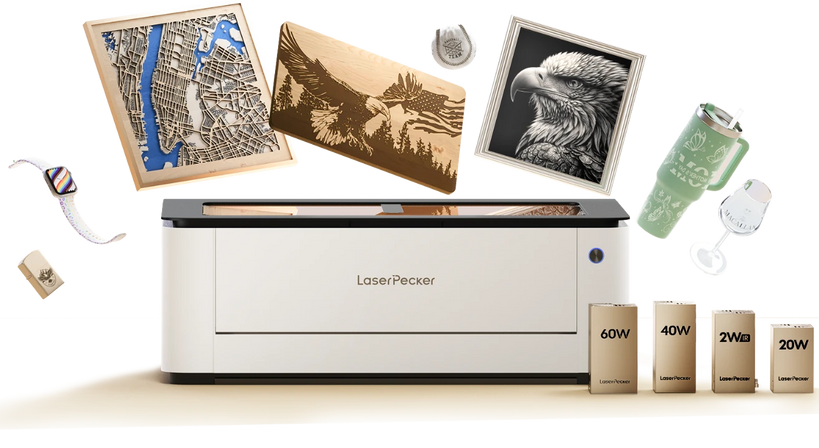
Recommended Laser Cutter for Making Wooden Combs: LaserPecker LX2
The LaserPecker LX2 is a powerful desktop laser cutter designed for creating wooden combs, personalized grooming accessories, craft products, and small woodworking projects.
Whether you're making custom beard combs, pocket combs, gift items, or branded products, the LX2 provides the cutting precision and workflow efficiency needed to create professional-quality wooden combs.
-
Up to 60W High-Power Diode Laser
The LX2 supports 20W, 40W, and 60W laser modules, providing strong cutting performance for plywood, hardwood veneers, bamboo, and other wood materials commonly used for comb making. -
Precise Cutting for Fine Comb Teeth
The LX2 delivers accurate cutting performance, making it possible to create narrow comb teeth, smooth curves, and detailed comb profiles with excellent consistency. -
12MP Camera with Point-to-Shape™ Positioning
The built-in camera system helps users align materials accurately and preview designs before cutting, reducing waste and improving workflow efficiency. -
Large 500 × 305 mm Working Area
The spacious workspace allows users to cut multiple combs in a single session, making it ideal for batch production and small business operations.
Part 4: How to Make a Wooden Comb with LX2
Using the LX2 laser engraver to make a wooden comb is both fast and spot-on because of its motion and alignment tech. With its speed, camera positioning, and easy laser module swaps, it makes things easier for everyone. Here's how to get great results.
Step 1: Prep and Load Your Design
Design your comb using software like Illustrator, Inkscape, or LDS. Make sure the teeth are spaced right and the shape looks good. Then, load the file into the LX2's software.
The built-in camera and Point-to-Shape Positioning help you line up the design on your wood with great accuracy.
Step 2: Pick and Secure the Wood
Go with hardwood like walnut, cherry, maple, beech, or sandalwood.
The LX2's side-opening door makes loading wood easy, even for big boards. Make sure the wood is flat so the cuts are even.
Step 3: Set Cutting Preferences
Adjust the power, speed, and number of passes based on how thick the wood is.
Do a small test cut to be sure the edges are clean and the teeth are the right thickness.
Step 4: Start Cutting
Because of LX2's fast motion control, cutting goes fast and smoothly.
The beam control keeps burn marks down and makes the tooth profiles clean and sharp.
Step 5: Sand the Teeth
After cutting, lightly sand the teeth with fine sandpaper to make them feel smooth and comfy when you use the comb.
Step 6: Add Engraving (Optional)
If you want to add a name or logo, quickly swap modules using the LX2's tool-free swap system and engrave it fast.
Step 7: Apply Finishing Oil
Finish with natural oils like linseed or tung oil to protect the wood and make the grain look better.
Part 5: FAQs about Making a Wooden Comb
Q1. Why Are Wooden Combs Better Than Plastic Combs?
Wooden combs create less static electricity than plastic combs, helping reduce frizz and flyaway hairs. They also glide more smoothly through the hair, which can reduce snagging and breakage.
Another benefit is that wooden combs help distribute natural scalp oils throughout the hair, promoting a healthier appearance and natural shine.
In addition, wooden combs are often more environmentally friendly because they are made from renewable materials and can last for many years with proper care.
Q2. What Is the Best Wood for Making a Wooden Comb?
Hardwoods are generally preferred because they are durable, resist cracking, and can be sanded to a smooth finish. Popular choices include:
- Walnut
- Maple
- Cherry
- Beech
- Sandalwood
- Oak
These woods provide a good balance of strength, appearance, and long-term durability.
Q3. How Thick Should a Wooden Comb Be?
Most wooden combs are typically between 5 mm and 8 mm thick, although the ideal thickness depends on the design and intended use.
A comb that is too thin may break under pressure, while one that is too thick can feel bulky and uncomfortable. The goal is to balance strength, flexibility, and comfort.
Q4. What Is the Easiest Way to Make a Wooden Comb?
For beginners, laser cutting is often the easiest and most accurate method. A digital design can be cut quickly with precise tooth spacing and minimal manual effort.
For those without access to a laser cutter, a band saw combined with hand-finishing is a practical alternative.
Q5. Can You Personalize a Wooden Comb?
Yes. Wooden combs can easily be customized with engraved names, logos, monograms, decorative patterns, or artwork.
This makes them popular as gifts, promotional products, wedding favors, and handmade retail items.
Q6. How Long Does a Wooden Comb Last?
A well-made wooden comb can last for many years when crafted from quality hardwood and properly maintained.
Regular cleaning, occasional oiling, and avoiding prolonged exposure to water can significantly extend its lifespan.
Conclusion
For makers who value speed, precision, and customization, laser cutting provides the most efficient approach. It allows you to produce clean tooth spacing, consistent results, and personalized designs with minimal effort.
With the right tools, materials, and a little practice, it's easy to create a durable wooden comb that looks professional and performs beautifully for years to come.


