


Embossing stamps are used to create raised or recessed designs on materials such as paper, cardstock, leather, foil, and packaging.
In the past, making an embossing stamp often required metalworking skills, hand carving, or expensive manufacturing processes. Today, modern technologies such as laser engraving and 3D printing make it much easier to create custom embossing stamps at home or in a small workshop.
Whether you're looking for how to make an embossing stamp for personal projects or want to make your own embossing stamp for business use, there are several effective methods available depending on your budget, materials, and required level of detail.

In this article:
- Part 1: What Do You Need to Make an Embossing Stamp
- Part 2: 4 Practical Ways to Make an Embossing Stamp
- Method 1: Laser Embossing (3D Laser Engraving)
- Method 2: Traditional Metalworking
- Method 3: 3D Printing
- Method 4: Hand Carving
- Part 3: Why Laser Embossing Is the Best Way to Make an Embossing Stamp
- Part 4: FAQs about Making Embossing Stamps
Part 1: What Do You Need to Make an Embossing Stamp?
Before learning how to make an embossing stamp, it's important to choose the right materials and tools. The best setup depends on the embossing method you plan to use, the level of detail required, and the material you want to emboss.
Common materials used for embossing stamps include:
- Acrylic: Easy to engrave and suitable for prototypes and light-duty embossing.
- Rubber: Popular for custom stamps and detailed impressions.
- Brass:Highly durable and widely used for professional embossing dies.
- Steel:Ideal for heavy-duty industrial applications.
- Polymer Materials:Affordable and easy to shape for custom projects.
- Leather or Wood:Occasionally used for specialty embossing applications.
Tools and equipment may include:
- Laser engraver or stamp making machine
- 3D printer
- CNC machine or rotary engraver
- Metalworking tools
- Hand-carving tools
If you're planning to make your own embossing stamp using modern digital methods, you'll also need a vector design file. Logos, text, monograms, patterns, and custom artwork can all be converted into embossing stamp designs using graphic design software.
Part 2: 4 Practical Ways to Make an Embossing Stamp
There are several ways to make an embossing stamp, ranging from traditional handcrafted techniques to modern digital manufacturing methods. The best option depends on your budget, available tools, required precision, and production volume.
Method 1: Laser Embossing (3D Laser Engraving)
Laser embossing uses a fiber laser engraver to remove material at controlled depths, creating raised and recessed surfaces that can be used as embossing stamps. This process allows for exceptional detail, making it ideal for logos, monograms, fine text, patterns, and custom artwork.
Because the entire process is digitally controlled, laser embossing delivers highly consistent results and makes it easy to reproduce the same design multiple times.
Method 2: Traditional Metalworking
Traditional metalworking is one of the oldest and most durable methods for creating embossing stamps. The process typically involves machining, engraving, etching, or carving designs into brass, steel, or other metals to create embossing dies capable of producing thousands of impressions.
Because of their strength and longevity, metal embossing stamps are widely used in commercial printing, packaging, bookbinding, leatherworking, and industrial manufacturing.
Method 3: 3D Printing
3D printing has become a popular option for creating custom embossing stamps because it allows makers to quickly turn digital designs into physical prototypes. Using CAD or 3D modeling software, you can design a stamp and print it using materials such as resin or PLA.
Method 4: Hand Carving
Hand carving is the most traditional way to create an embossing stamp. Using carving tools, knives, chisels, or engraving tools, the design is manually cut into the chosen material to create raised or recessed areas that form the embossing pattern.
Although this method requires patience and practice, it gives makers complete creative control and allows for truly unique, handcrafted results.
Part 3: Why Laser Embossing Is the Best Way to Make an Embossing Stamp?
| Method | Precision | Speed | Material Options |
|---|---|---|---|
| Laser embossing | Very High | Fast | Polymer, Acrylic, Metal |
| Metalworking | High | Medium | Metal |
| 3D Printing | Medium | Medium | Resin, PLA |
| Hand-Carved | Medium | Slow | Polymer, Soft Metals, Wood |
While traditional metalworking, 3D printing, and hand carving can all produce functional embossing stamps, laser embossing offers the best combination of precision, speed, consistency, and design flexibility. For most creators, businesses, and hobbyists, it is the most efficient way to make professional-quality embossing stamps.
Reason 1: Exceptional Precision and Fine Detail
Laser embossing can reproduce intricate logos, detailed artwork, fine patterns, and small text with remarkable accuracy. Because the laser is digitally controlled, even complex designs can be engraved with consistent depth and clean edges.
This level of detail is difficult to achieve reliably with hand carving and can often exceed the capabilities of many entry-level 3D printing methods.
Reason 2: Accurate Depth Control for 3D Effects
One of the biggest advantages of laser embossing is the ability to control engraving depth precisely. This makes it possible to create raised and recessed surfaces that produce clean, professional embossing impressions on paper, leather, packaging materials, and more.
Depth control is especially important when creating stamps that require crisp textures and highly visible embossing effects.
Reason 3: Fast Production and Easy Repeatability
Once a design file is prepared, laser embossing allows you to reproduce the same stamp repeatedly with virtually identical results. This makes it ideal for businesses, product packaging, branding projects, and creators who need multiple copies of the same design.
Compared with manual carving, laser engraving dramatically reduces production time while improving consistency.
In short: If your goal is to create detailed, durable, and professional embossing stamps, laser embossing offers the best overall balance of quality, speed, and ease of use.
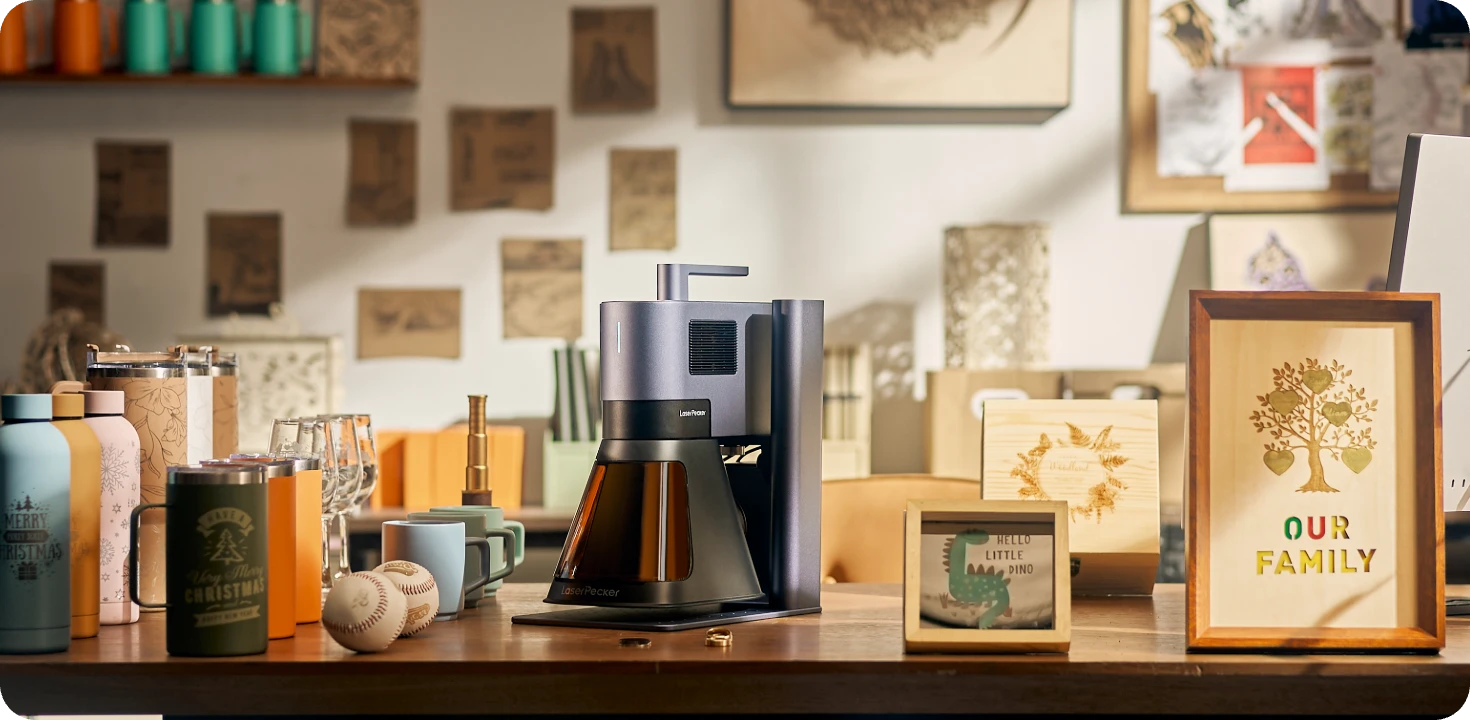
Recommended Laser Engraver for Making Embossing Stamps: LaserPecker LP5
The LaserPecker LP5 is a high-precision dual-laser engraver designed for creating custom embossing stamps, metal dies, branding tools, leather stamps, and personalized craft products.
-
20W Fiber Laser for Metal Stamp Production
The 20W fiber laser is optimized for engraving brass and other metals commonly used to create durable embossing stamps and custom dies. -
Deep Engraving and Embossing Capability
The LP5 supports deeper engraving effects, making it possible to create raised and recessed stamp designs that produce clearer embossing results. -
High-Precision Engraving for Fine Details
The LP5 delivers highly detailed engraving performance suitable for logos, monograms, decorative patterns, signatures, and intricate stamp artwork. -
10,000 mm/s Ultra-Fast Engraving Speed
The high-speed galvo system helps users create custom stamp designs quickly while maintaining professional-quality engraving accuracy.
Part 4: FAQs About Making Embossing Stamps
Q1. What Is the Best Material for an Embossing Stamp?
The best material depends on how the stamp will be used. Acrylic and rubber are popular for custom projects and prototypes, while brass and steel are preferred for long-term professional use because of their durability. For laser-made embossing stamps, acrylic, rubber, and certain engraving materials are often the easiest options to work with.
Q2. Can You Make an Embossing Stamp at Home?
Yes. Modern technologies such as laser engraving and 3D printing make it possible to create embossing stamps at home with professional-looking results. Many hobbyists and small business owners use laser engravers to produce custom stamps for packaging, branding, leatherworking, and stationery projects.
Q3. How Deep Should an Embossing Stamp Be?
The ideal depth depends on the material being embossed and the level of detail in the design. Shallow embossing may work well for paper and cardstock, while leather and thicker materials often require deeper relief. Testing on scrap material is the best way to determine the optimal depth for your specific application.
Q4. What Can Embossing Stamps Be Used For?
Embossing stamps are commonly used for:
- Product packaging and branding
- Business logos and maker marks
- Stationery and invitations
- Leatherworking projects
- Certificates and official documents
- Craft and DIY projects
- Personalized gifts
Conclusion
For most creators, hobbyists, and small businesses, laser embossing offers the best balance of precision, efficiency, and repeatability. It makes it possible to produce detailed embossing stamps with accurate depth control, clean edges, and professional-quality results across a variety of materials.
With the right materials, design preparation, and engraving settings, you can confidently create embossing stamps that deliver crisp, consistent impressions for both personal projects and commercial applications.


