For custom creators, small business owners, and workshop operators across the United States, choosing the right desktop laser cutter is no longer just about power — it’s about flexibility, efficiency, and long-term usability.
The Gweike Cloud NOX 50W is a capable CO2 laser system widely used for traditional cutting and engraving workflows. It performs well with common materials like wood and acrylic, but its fixed CO2 setup and maintenance requirements can feel limiting as production needs grow.
As more makers move toward multi-material projects, faster workflows, and lower maintenance systems, many are beginning to explore more modern alternatives.
Here, we will compare the Gweike Cloud NOX 50W with the LaserPecker LX2 and explain why it is becoming a strong alternative for creators who value speed, flexibility, and long-term scalability.

Part 1: Why Do People Look Beyond the Gweike Cloud NOX 50W?
CO2 laser cutters like the Gweike Cloud NOX 50W remain widely used in workshops and small businesses due to their strong performance on traditional materials such as wood and acrylic.
Common concerns include slower engraving speeds, manual alignment requirements, and ongoing maintenance from water cooling systems and CO2 tube replacement.
Below are the key limitations that lead many users to consider alternatives.
Limitation #1: Locked Into a Single CO2 Wavelength
The NOX 50W uses a fixed 10,640 nm CO2 laser tube, meaning it cannot be upgraded or switched to other laser types. This limits material flexibility and future expandability.
Limitation #2: Limited to 600 mm/s Engraving Speed
The machine can engrave at up to 600 mm/s, which is fine for normal projects. However, when handling large batch orders or high-volume production, the process can take more time compared to faster modern systems.
Limitation #3: Single Camera Positioning System
The Gweike Cloud NOX uses a built-in camera-based positioning system to help align designs before engraving.
While this improves usability, it relies mainly on a single visual alignment method, which may require manual fine-tuning for high-precision or multi-object layout work compared to more advanced multi-system positioning technologies.
Limitation #4: Cannot Directly Engrave Bare Metal
As a CO2 laser system, the NOX 50W cannot directly engrave untreated metal surfaces such as stainless steel, aluminum, titanium, gold, or silver.
These materials do not effectively absorb the CO2 laser wavelength, so additional marking sprays or coated surfaces are required to achieve visible engraving results.
Limitation #5: Ongoing CO2 Maintenance Requirements
CO2 laser systems use glass laser tubes that gradually degrade over time and eventually require replacement depending on usage.
In addition, the integrated water-cooling system requires regular maintenance, including coolant monitoring, temperature checks, and periodic fluid replacement to ensure stable and safe operation.
Part 2: Why Choose LaserPecker LX2 Instead of Gweike Cloud NOX 50W?
The LaserPecker LX2 is designed for modern creators who need flexibility, faster workflow performance, and multi-material capability in a single system.
Reason #1: Modular Laser Options
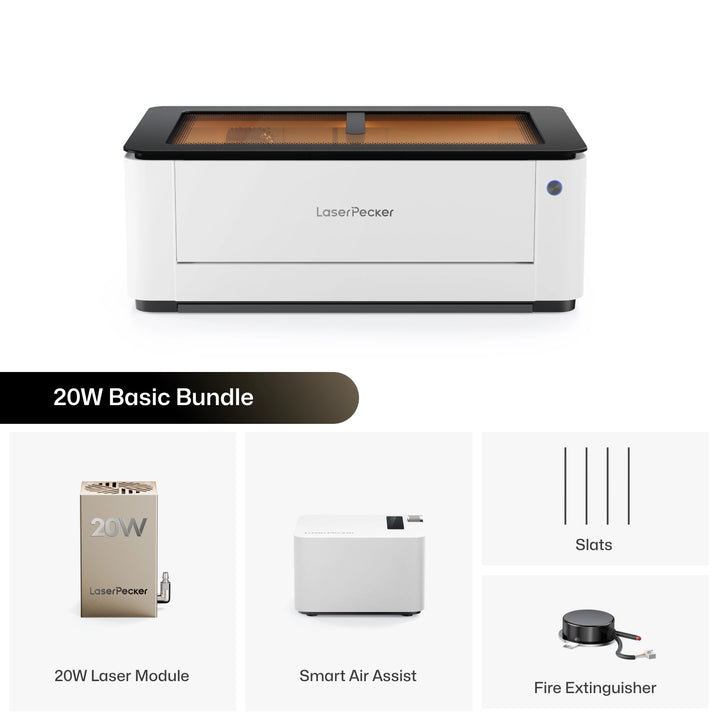
The LaserPecker LX2 supports different laser modules, including 20W, 40W, and 60W diode laser modules, plus a 2W infrared laser module.
- 20W Diode Module: Good for everyday engraving and light cutting.
- 40W Diode Module: Better for stronger cutting and higher output.
- 60W Diode Module: Designed for demanding cutting tasks.
- 2W IR Module: Used for direct engraving on metals and certain plastics.
This modular design gives users more flexibility than a fixed CO2 laser system.

Reason #2: High-Speed Engraving Performance
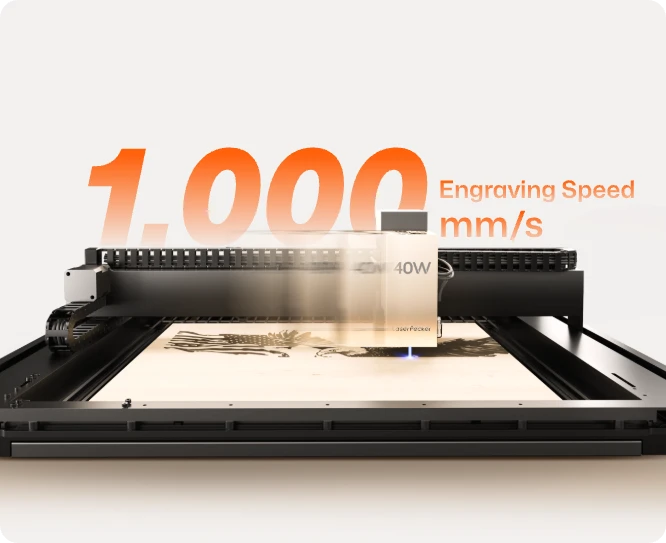
The LX2 delivers up to 1,000 mm/s engraving speed and 10,000 mm/s² acceleration, significantly improving productivity for batch production and complex designs.
Reason #3: Direct Metal Engraving
The 2W IR module enables direct engraving on stainless steel, gold, silver, aluminum, titanium, and other bare metals without marking spray.
Reason #4: 12MP Camera + Point-to-Shape™ Positioning
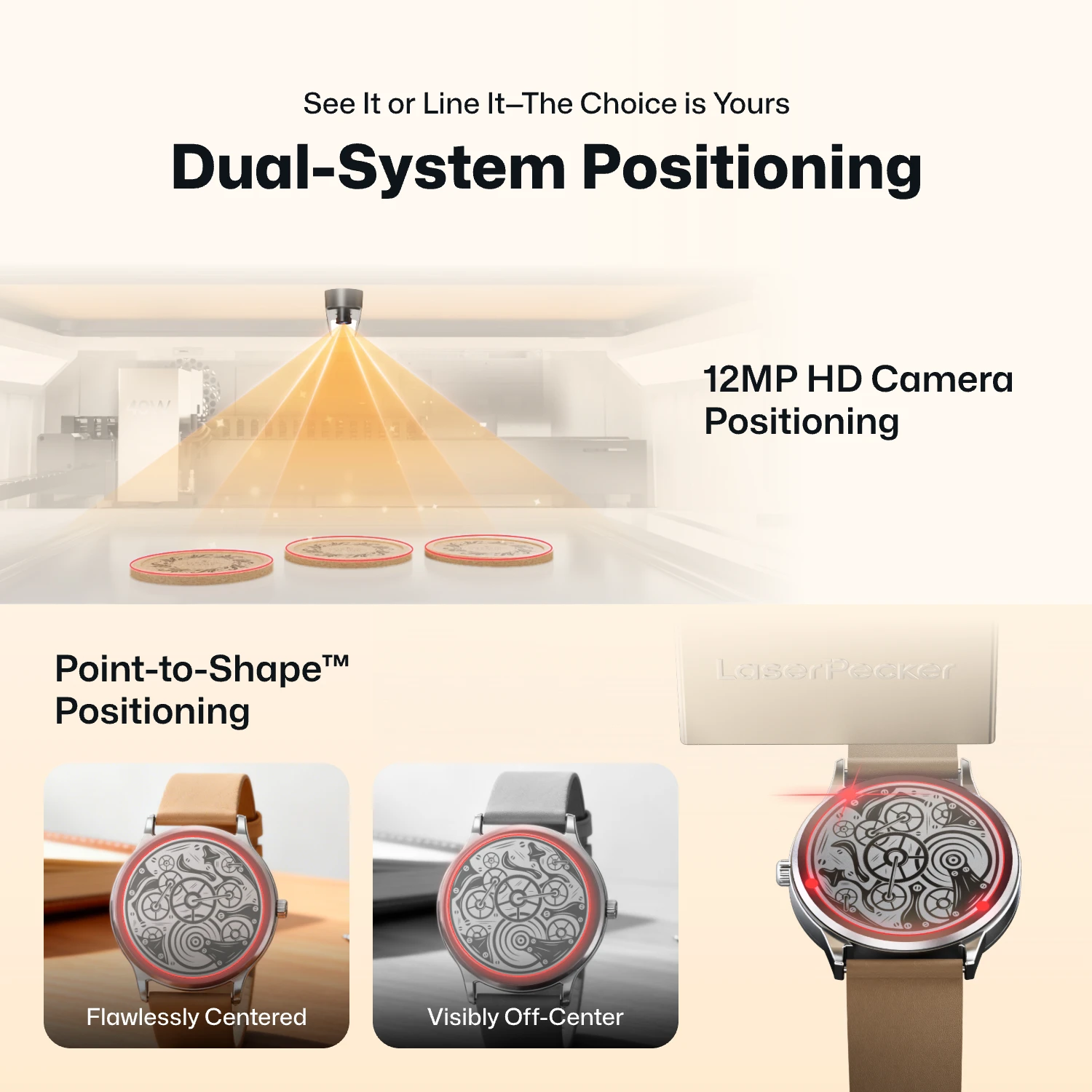
- 12MP Camera Positioning: The built-in ultra-wide camera provides a live preview of the entire workspace, allowing users to position artwork accurately before engraving begins.
- Smart Fill: Using the camera, the LX2 automatically detects multiple objects in the workspace and intelligently fills each one with the selected design, dramatically speeding up batch engraving.
- Remote Live View: The live camera feed lets users remotely monitor the workspace, verify positioning, and check engraving progress without standing next to the machine.
- Point-to-Shape™ Intelligent Probing: Instead of relying on visual recognition alone, the LX2 uses a mechanical probe to physically trace the outline of irregular objects. The detected shape is then imported into the software, allowing artwork to fit the object's exact contour with high precision.
The higher-resolution camera provides a clearer preview of your material, making it easier to position designs accurately before engraving. Whether you're engraving a single item or arranging multiple products for batch production, the system helps reduce setup time and improve positioning accuracy.
Reason #5: 3D Surface Adaptive Focus
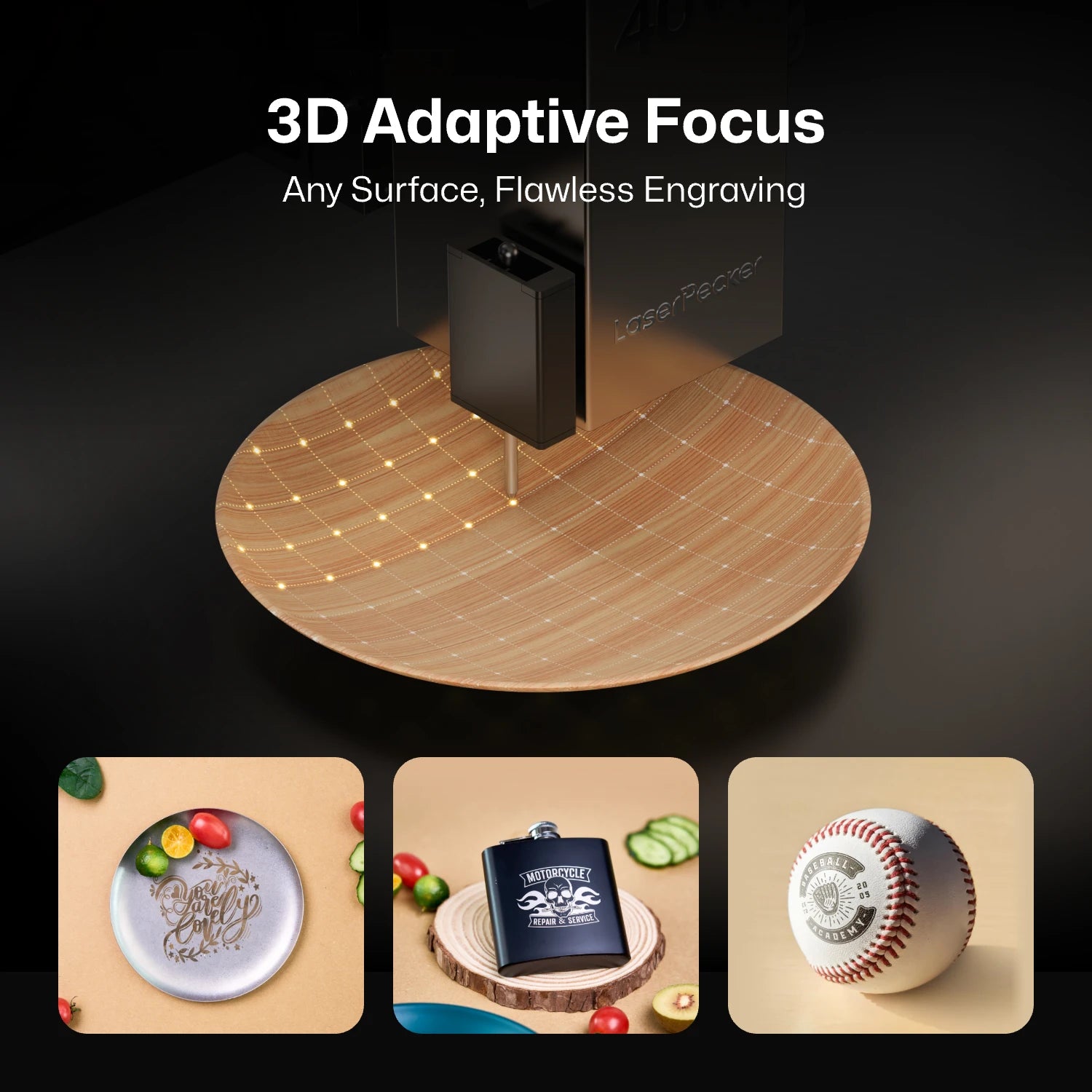
The LX2 supports 3D surface adaptive focusing, allowing engraving on curved and uneven surfaces with consistent results.
Reason #6: Rotary Expansion Support

With rotary support, the LX2 can engrave cylindrical objects such as tumblers, bottles, and mugs with expanded diameter compatibility.
Reason #7: Safety Protection System
The LaserPecker LX2 is built with a Class 1 fully enclosed design and multiple safety features to support safe everyday use.
These include protections such as a door-open stop system, emergency stop button, flame detection, and motion-based safety controls depending on the setup.
Overall, these features help improve safety during operation while keeping the machine easy to use in home or workshop environments.

Part 3: Gweike Cloud NOX 50W vs LaserPecker LX2 Comparison
The table below shows a simple side-by-side comparison of the Gweike Cloud NOX 50W and the LaserPecker LX2.
It highlights the main differences between the two machines based on typical specifications and common product configurations.
| Gweike Cloud NOX 50W | LaserPecker LX2 | |
|---|---|---|
| Laser Type | CO2 Glass Laser Tube | Modular Diode + Infrared Laser System |
| Laser Output Power | 50W CO2 (tube rating) | 20W / 40W / 60W Diode + 2W IR (module-dependent) |
| Laser Module Flexibility | Fixed CO2 laser tube (non-modular) | Swappable modular laser system (configuration dependent) |
| Working Area | Approx. 510 × 300 mm | Approx. 500 × 305 mm |
| Maximum Engraving Speed | Up to 600 mm/s (theoretical max) | Up to 1,000 mm/s (depending on settings) |
| Camera & Positioning System | Built-in camera-assisted positioning system | 12MP camera + Point-to-Shape™ positioning system |
| Autofocus Method | Auto material-based focusing (CO2 system dependent) | 3D surface adaptive autofocus |
| Cooling System | Water-cooling system | Air-cooled laser modules |
| Metal Engraving Capability | Requires marking spray or coated metal | Direct engraving on metals using IR module (material dependent) |
| Safety Features | Class 1 enclosed safety design with standard interlocks | Class 1 enclosed safety system with multi-layer protection features |
| Software Compatibility | RDWorks / LightBurn support (controller dependent) | LaserPecker Design Space / LightBurn support |
| Connectivity | USB / Ethernet | USB / Wi-Fi / USB drive |
| Weight | Approx. 42.6 kg | Approx. 22.5 kg |
FAQs: Common Questions about Gweike Cloud NOX 50W Alternatives
Q1: Can the LX2 Match the NOX Cutting Thickness on Wood and Acrylic?
The LaserPecker LX2 is capable of achieving comparable cutting results to the NOX 50W when configured with its higher-power diode modules. In real-world use, it can deliver similar cutting performance on wood and acrylic materials by adjusting speed and using multiple passes when needed.
Q2: Does the LX2 require water cooling or laser tube replacement?
No. The LX2 uses solid-state laser technology and air cooling, so it does not require water cooling, tube replacement, or related maintenance. This makes long-term upkeep simpler compared to CO2 laser systems.
Q3: Can the LX2 work with LightBurn?
Yes. The LX2 supports LightBurn, allowing users to design and control engraving jobs without needing complex setup software or extra conversion tools.
Conclusion
The Gweike Cloud NOX 50W is a capable CO2 laser machine, especially for traditional workflows focused on cutting wood, leather, and other organic materials.
However, for modern creators and small businesses, its fixed laser setup and maintenance requirements can feel limiting as project demands expand.
The LaserPecker LX2 offers a more flexible and future-ready approach with modular laser options, stronger metal engraving capability, faster workflow performance, and lower long-term maintenance.
For users who prioritize versatility, scalability, and multi-material production, the LX2 is the more practical choice and the stronger long-term investment.