














Custom jigsaw puzzles have become increasingly popular, not only for entertainment but also for education, personalized gifts, and creative products. From photo puzzles to branded merchandise, more individuals and businesses are entering the market, driving demand for reliable and efficient puzzle-making machines.
Whether you are starting a puzzle business or upgrading your current setup, choosing the right machine is essential. This article covers the main types of jigsaw puzzle making machines, their advantages and limitations, and how to select the best option based on your production needs, materials, and budget.

In this article:
- Part 1: What is a Jigsaw Puzzle Making Machine
- Part 2: 3 Types of Jigsaw Puzzle Making Machine
- Type 1: Die Cutting Machines
- Type 2: Laser Cutting Machines
- Type 3: CNC Router Machines
- Part 3: Why Laser Cutting Machine is the Best Jigsaw Puzzle Making Machine
- FAQs: Hot Questions about Jigsaw Puzzle Making Machine
Part 1: What Is a Jigsaw Puzzle Making Machine?
A jigsaw puzzle making machine is a device used to cut images or designs into interlocking puzzle pieces. These machines are commonly used to produce puzzles from materials such as cardboard, wood, or acrylic.
The process typically involves printing or applying a design onto the material, then cutting it into precise shapes using a specific method, such as die cutting, laser cutting, or CNC routing. The goal is to create pieces that fit together accurately while maintaining clean edges and consistent quality.
Jigsaw puzzle making machines are used in a wide range of applications, from DIY crafting and custom gifts to commercial puzzle production. Depending on the type of machine, they can support small-batch customization or large-scale manufacturing.

Part 2: 3 Types of Jigsaw Puzzle Making Machine
There are several types of machines used for headstone engraving, each designed for different materials, design styles, and levels of detail. From traditional methods to modern digital systems, each option offers unique advantages in terms of precision, depth, and workflow. Below are four common types of headstone engraving machines and how they are typically used.
Type 1: Die Cutting Machines for Jigsaw Puzzle
Die cutting machines use a pre-made metal die to press and cut puzzle shapes into materials such as cardboard or paperboard. This method is widely used in mass production because it can quickly produce large quantities of identical puzzle pieces with consistent shapes.
Once the die is created, the machine can repeatedly stamp out puzzle pieces with high efficiency. However, changing the design requires creating a new die, which adds time and cost.
Pros
- High Efficiency: Ideal for large-scale production with fast cutting speed.
Cons
- High Initial Setup Cost: Custom dies can be expensive to produce.
- Limited Flexibility: Design changes require new dies.
- Not Ideal for Custom Work: Less suitable for small batches or personalized puzzles.
Type 2: Laser Cutting Machines for Jigsaw Puzzle
Laser cutting machines use a focused laser beam to cut puzzle shapes directly from digital designs. Unlike die cutting, no physical mold is required, allowing for greater flexibility and quick design changes. This method is commonly used for custom puzzles, small-batch production, and intricate designs on materials such as wood, acrylic, and cardboard.
Because the process is digitally controlled, laser cutters can produce highly detailed puzzle pieces with consistent accuracy. They are especially suitable for personalized puzzles and complex patterns.
Pros
- High Precision: Produces clean, detailed cuts with excellent accuracy.
- No Physical Die Required: Design changes can be made instantly through software.
- Ideal for Custom Work: Perfect for personalized puzzles and small-batch production.
- Versatile Materials: Works with wood, acrylic, cardboard, and more.
Cons
- Slower for Mass Production: Not as fast as die cutting for large-scale manufacturing.
Type 3: CNC Router Machines for Jigsaw Puzzle
CNC router machines use computer-controlled cutting tools to carve puzzle shapes from materials such as wood, MDF, and plastic. The machine follows a digital design file to guide the cutting path, allowing for accurate and repeatable results.
CNC routers are commonly used for making durable puzzles, especially wooden puzzles that require deeper cuts and strong material structure. They are suitable for both custom designs and small to medium production runs.
Pros
- High Cutting Strength: Can handle thicker and harder materials like wood and MDF.
- Good Precision: Produces accurate and repeatable puzzle shapes.
Cons
- Slower Speed: Typically slower than laser cutting for intricate designs.
- Tool Wear: Cutting bits require regular maintenance and replacement.
- Limited Detail: Fine details may be harder to achieve compared to laser cutting.
Part 3: Why Laser Cutting Machine is the Best Jigsaw Puzzle Making Machine
| Method | Precision | Speed | Contact | Edge Quality | Complex Designs | Setup Cost |
|---|---|---|---|---|---|---|
| Die Cutting Machines | Medium | Very High | Yes | Clean | Limited | High (die required) |
| Laser Cutting Machines | Very High | High | No | Smooth (may have slight burn) | Excellent | Medium–High |
| CNC Router Machines | High | Medium | Yes | Clean | Good | Medium |
Among the different puzzle-making methods, laser cutting machines stand out for their precision, flexibility, and ease of use. While other machines are suitable for specific production needs, laser systems offer a well-balanced solution for both custom designs and small to medium production.
Reason 1: High Precision and Detail
Laser cutting machines can follow digital designs with exceptional accuracy, allowing for intricate puzzle shapes, tight-fitting pieces, and complex patterns.
Reason 2: No Physical Die Required
Unlike die cutting machines, laser systems do not require molds. Designs can be updated instantly, saving both time and cost.
Reason 3: Ideal for Custom and Small-Batch Production
Laser cutters are perfect for personalized puzzles, prototyping, and small production runs without additional setup.
Reason 4: Clean Edges with Minimal Finishing
The laser produces smooth cuts, reducing the need for sanding or post-processing.
Reason 5: Versatile Material Compatibility
Laser machines can cut a variety of materials such as wood, acrylic, and cardboard, offering greater flexibility for different puzzle styles.
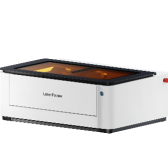
Recommended Popular Laser Cutting Machine for Jigsaw Puzzle: LaserPecker LX2
The LaserPecker LX2 is a practical solution for jigsaw puzzle making, combining precision, flexibility, and ease of use in a compact design. It is well suited for creators, small businesses, and workshops that focus on custom or small-batch production.
- Cutting and Engraving in One Workflow: The LX2 can engrave images and cut puzzle pieces within the same process, reducing production time and improving efficiency.
- Supports Complex Puzzle Shapes: Enables the creation of irregular, curved, or themed interlocking pieces for more creative and unique designs.
- High Cutting Precision: Produces clean, accurate edges that ensure puzzle pieces fit together smoothly and consistently.
- Multi-Material Compatibility: Works with materials such as wood, MDF, acrylic, and cardboard, supporting a wide range of puzzle styles.
- No Mold Required: Allows on-demand production without physical dies, making it ideal for customization.
- Compact and Space-Saving: Its small size makes it suitable for home studios and small workshops, perfect for small-scale businesses.

FAQs: Hot Questions about Jigsaw Puzzle Making Machine
Q1: What machine is best for making cardboard puzzles?
For large-scale production of cardboard puzzles, die cutting machines are the most efficient option. For smaller runs or custom designs, laser cutting machines offer greater flexibility and ease of use.
Q2: Is laser cutting better than die cutting for puzzles?
It depends on your needs. Laser cutting is ideal for custom puzzles, prototyping, and small-batch production. Die cutting is better suited for mass production where all puzzles have the same design.
Q3: How much does a puzzle-making machine cost?
Prices vary widely depending on the type of machine. Entry-level laser cutters may start from around $1,000, while industrial die cutting machines can cost significantly more. Additional costs may include materials, software, and maintenance.
Q4: Can I start a puzzle business with a laser cutter?
Yes, a laser cutter is a great option for starting a custom puzzle business. It is especially suitable for creating personalized puzzles, wooden puzzles, and artistic designs with high detail.
Q5: How profitable is a custom puzzle business?
Profitability depends on your product quality, pricing, and sales channels. Custom puzzles often have higher profit margins compared to mass-produced ones, especially when targeting niche or personalized markets.
Conclusion
Choosing the right jigsaw puzzle making machine depends on your production goals and business model. Die cutting machines are the best choice for high-volume cardboard puzzle production, offering speed and consistency. In contrast, laser cutting machines provide greater flexibility for custom designs, small-batch production, and creative projects.
In 2026, successful puzzle businesses are those that combine creativity with efficient production. Selecting the right machine for puzzle making plays a key role in achieving both quality and profitability.