















Leather might look basic, but it's complex to work with. It comes in various thicknesses and textures, so picking the correct cutting tool is something beginners should consider carefully. The wrong tool can cause rough edges, odd shapes, and wasted material, which can be pretty frustrating.
This guide will look at leather cutting tools for 2026. We will compare what each tool offers and where it falls short. This can help you decide on the best one for your situation, whether you're working on a personal DIY project, creating designs, or managing a leather business.

In this article:
- Part 1: What Are Leather Cutting Tools?
- Part 2: Four Best Cutting Tools for Leather
- Type 1: Laser Cutting Machine for Leather
- Type 2: CNC Leather Cutters
- Type 3: Manual Leather Knives
- Type 4: Handheld Rotary Cutters
- Part 3: How to Choose the Right Leather Cutting Tool for You?
- Part 4: Common Leather Cutting Mistakes to Avoid
- Part 5: FAQs about Leather Cutting Tool
Part 1: What Are Leather Cutting Tools?
Leather cutting tools are devices or hand tools made to cut leather cleanly and accurately into particular shapes. Leather is different from paper or fabric because its density, grain direction, and surface texture change how it responds to cutting. Some kinds of leather are hard to cut, some stretch a bit, and thick hides can make regular tools dull fast.
Because of these things, leather cutting tools go from simple knives to digital machines that are fully automated. Each one has a different use based on how precise the cut needs to be, how much leather needs to be cut, and how complex the design is.
Part 2: Four Best Cutting Tools for Leather
There's no single best leather cutting tool. The right one depends on your workflow, projects, and how often you cut. Here are four common and recommended options:
Type 1: Laser Cutting Machine for Leather
These leather cutting machines use a focused laser beam guided by a digital design to cut leather. The laser heats the leather along the set path, cleanly separating the fibers without any physical contact.
Because the cutting is fully computer-controlled, the laser follows curves and fine details accurately, producing smooth edges with no blade pressure or material distortion.
Why laser cutters for leather are cool:
- Super accurate, good for tiny cutouts and lace patterns.
- Great for complex shapes, symmetry, and small details.
- Digital process means consistent results.
- Many also engrave, adding textures, logos, or patterns in one go.
Things to keep in mind:
Laser cutting isn't ideal for very thick, oily, or chrome-tanned leather, and proper ventilation is a must to manage fumes and odors during cutting. It is often used for earrings, decorative panels, custom leather goods, and small production runs.
Type 2: CNC Leather Cutters
CNC leather cutters use computer-controlled blades, often oscillating or drag knives, to cut leather based on digital patterns. The cutting head moves along programmed paths, while the blade rapidly vibrates or slides to slice through the leather fibers.
To use one, the leather sheet is laid flat on the cutting bed and secured with vacuum suction or clamps, then a digital design file is loaded into the system. Once started, the machine follows the design automatically, producing consistent shapes with minimal manual effort. This approach is designed for high-volume production, offering stable results and efficient cutting on thick or dense leather, though it requires dedicated space and higher upfront investment.
Good points:
- Work with thick leather and big pieces.
- Cut fast for mass production.
- Consistent results for standard designs.
Downsides:
- Big and pricey.
- Not good for changing designs often.
- Not for small studios or home use.
These are better for factories than individual crafters.
Type 3: Manual Leather Knives
These tools include utility knives, craft knives, and dedicated leather knives, all of which rely on a fixed sharp blade to cut leather through direct hand pressure. The blade slices the leather fibers as it is pulled or pushed along a marked line.
To use them, the leather is usually placed on a cutting mat, the pattern is traced or marked, and a ruler or template is used as a guide. The user controls cutting depth and direction by adjusting pressure and angle, often making several passes for thicker leather. This method is simple and flexible, but clean results depend heavily on blade sharpness and hand control.
Good points:
- Cheap and easy to get.
- Good control for straight cuts and simple shapes.
- No power or software needed.
Downsides:
- Results depend on skill.
- Hard to keep things consistent.
- Not good for tricky or repeated designs.
Manual knives are good for beginners or craftspeople who like working by hand.
Type 4: Handheld Rotary Cutters
These tools use a rotating circular blade that rolls across the material instead of slicing straight down. The blade spins as you push it forward, allowing it to glide smoothly through leather with steady pressure.
To use one, the leather is placed on a cutting mat, a ruler or pattern is aligned on top, and the cutter is guided along the cutting line by hand. This method works best for straight lines or gentle curves and gives more control than a fixed blade, though it relies heavily on the user's hand stability and pressure control.
Good points:
- Faster than knives for long cuts.
- Smooth motion is easier on your hand.
- Works well on thinner leather.
Downsides:
- Not accurate for tight curves or small details.
- Not for thick or stiff leather.
- Can't engrave.
Rotary cutters are often used to prep patterns, not for finished decorative cuts.
Comparison Table of Cutting Tools for Leather
| Tool Type | Precision | Ease of Use | Best For | Custom Designs | Scalability |
|---|---|---|---|---|---|
| Laser Cutting Machines | Very High | Easy (digital) | Detailed designs, earrings, personalization | Excellent | High |
| CNC Leather Cutters | High | Moderate | Industrial production | Limited | Very High |
| Manual Leather Knives | Medium | Skill-based | Simple cuts, traditional work | Low | Low |
| Rotary Cutters | Medium | Easy | Long straight cuts | Low | Low |
Overall, the comparison shows clear differences in precision, efficiency, and creative freedom across leather cutting tools.
Manual knives and rotary cutters are affordable and flexible but rely heavily on skill and consistency, making them better suited for simple shapes or one-off projects. CNC and industrial cutters improve repeatability but often require more space, setup time, and technical experience.
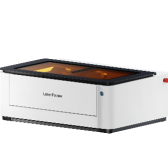
Laser leather cutting stands out as the most balanced option, especially for designers and makers who value accuracy and ease of use. With tools like the LaserPecker LX2 and LaserPecker LP2 Plus, digital designs translate directly into clean cuts without physical contact, reducing errors and material stress. The added ability to engrave details at the same time further expands what's possible, making laser cutting the most efficient and versatile choice for modern leather work.
Part 3: How to Choose the Right Leather Cutting Tool for You?
Picking the right tool isn't about finding the most complex machine. It's about finding the tool that fits how you work.
For Home Leather Crafters and DIY Makers
If you're crafting small items like wallets or earrings at home, flexibility is more important than power. Laser cutters, such as the LaserPecker LX2, let you play around with shapes, test ideas fast, and get professional-looking results without needing years of experience.
For Leather Designers and Pattern Makers
Leather designers and pattern makers need tools that keep proportions exact and make it easy to iterate on designs. With laser cutting, you can quickly resize, duplicate, or tweak patterns in your digital files without redrawing them by hand, which is especially helpful when working with customers or preparing seasonal collections.
A machine like the LaserPecker LX2 and LaserPecker LP2 Plus fits this workflow well: its camera-assisted alignment and high-precision laser deliver consistent, repeatable cuts every time, even on detailed pieces. On top of cutting, the ability to add engraved markings, decorative textures, or branding elements directly into the design makes it easier to communicate pattern details and elevate finished products. For designers who value both precision and flexibility, this combination of cutting and engraving streamlines the creative process and reduces manual revisions.
For Small Leather Businesses and Custom Leather Workshops
For small shops, being consistent matters most. Laser cutting lets you make items in batches with the same results each time. You can still add custom touches like names or logos without slowing things down. This mix of speed and personalization is hard to get with hand tools.
For High-Volume or Industrial Leather Production
Big factories that make lots of leather goods may be better off with CNC cutting systems. These are built for running all the time and focus on speed and volume instead of flexibility.
Part 4: Common Leather Cutting Mistakes to Avoid
Even if you have the best tools, mistakes can still happen. Avoiding these common problems will save you time and stuff.
Mistake 1: Cutting Without Testing Settings
Leather is different. Always test your settings on a spare piece first. This is key, especially with lasers.
Mistake 2: Applying Uneven Pressure
When cutting by hand, shaky edges happen if your pressure isn't right. Keep your leather still and move your hand smoothly.
Mistake 3: Ignoring Leather Grain Direction
Cutting against the grain can ruin edges or stretch the leather, mostly soft kinds.
Mistake 4: Not Securing the Leather Properly
If the leather isn't secure, it will move when cutting. This will mess up shapes and patterns.
Part 5: FAQs about Leather Cutting Tool
Q1. What Are the Best Leather Cutting Tools for Small Businesses?
Laser cutters usually take the cake because they're super precise, deliver consistent results every time, and let you craft exactly what you want-from detailed cuts to custom engravings.
For most leather projects, a machine like the LaserPecker LX2 is an all-in-one solution: it follows your digital design with high accuracy, cuts without applying mechanical stress to the material, and even supports decorative engraving in the same workflow. That combination makes laser cutting ideal for both creative makers and small business production.
Q2. Can Laser Cutting Damage Leather?
Not really, if you set it up correctly, but push the power too hard or go too slow, and you might get some dark marks or even scorch it.
Q3. How to Finish Leather Edges After Cutting?
The method depends on the tool you used to cut the leather:
If you used a laser cutter:
The laser naturally seals the edges, giving a clean, smooth finish with minimal fraying. For an even more polished look, you can lightly sand the edges or apply a leather burnishing tool or conditioner to enhance shine and smoothness.
If you used manual knives or rotary cutters:
The edges may be uneven or slightly rough. To finish them, sand or bevel the edges, then use a burnisher, edge slicker, or leather conditioner to smooth and protect the surface. This ensures your leather pieces look professional and durable regardless of cutting method.
Q4. Should I Cut Leather Wet or Dry?
It depends on the tool you're using:
Laser cutters:
Always cut leather dry. Moisture can interfere with the laser process, cause uneven cuts, or produce excess smoke. Dry leather ensures precise, consistent cuts and protects the machine.
Manual knives or rotary cutters:
Leather can sometimes be slightly dampened for easier slicing, especially thicker or very stiff pieces. However, too much moisture can stretch or warp the material, so it's usually best to work with dry leather for accuracy and clean edges.
This way, your cutting results stay predictable and professional regardless of the method.
Conclusion
Different leather cutting tools suit different needs. Manual knives and rotary cutters work well for simple DIY projects, while CNC cutters are better for industrial production. For makers, small businesses, and anyone creating detailed leather designs, laser cutting machines like LaserPecker LP2 Plus and LX2 offer the best balance of precision, efficiency, and repeatability.
By choosing the right tool and avoiding common mistakes, you can achieve cleaner cuts and more professional results in your leather projects.