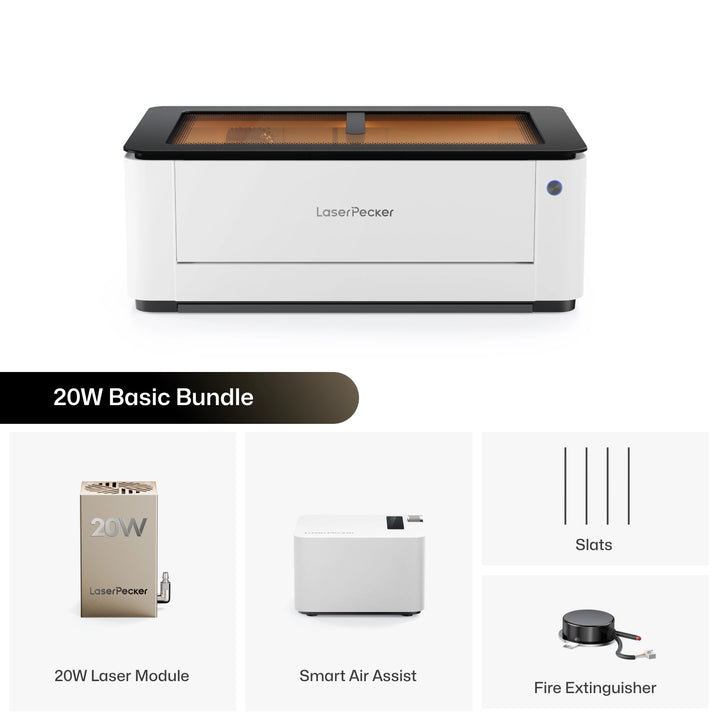
The OMTech Polar Lite is a popular desktop CO2 laser cutter for cutting and engraving materials like wood, acrylic, leather, paper, and more. It's a good choice for makers who mainly work with traditional workshop materials.
As your projects grow, you may start looking for a machine that offers more flexibility. Like most CO2 laser cutters, the Polar Lite uses a fixed CO2 laser tube, requires water cooling and regular maintenance, and cannot directly engrave bare metals without using laser marking spray.
If you're looking for a machine that's easier to maintain, can engrave more types of materials, and offers greater flexibility for future projects, the LaserPecker LX2 is worth considering. In this guide, we'll compare the OMTech Polar Lite and the LX2 to help you decide which one is the better fit for your needs.

Part 1: Why Do People Look for an OMTech Polar Lite Alternative?
The OMTech Polar Lite is a capable CO2 laser cutter, especially for users who mainly work with wood and acrylic. But it is not the best match for every maker, especially if you need direct metal engraving, easier maintenance, or a more flexible setup.
Here are the main reasons why some users start looking beyond the OMTech Polar Lite.
Limitation #1: Fixed CO2 Laser Tube with No Module Flexibility
The OMTech Polar Lite uses a fixed 55W CO2 glass laser tube. This gives it strong cutting performance on CO2-friendly materials, but it also means you are locked into one laser type and one wavelength.
You cannot switch to a diode laser module for different cutting tasks, and you cannot add an infrared laser module for direct metal engraving. If your business grows and you want to engrave jewelry, bare metal tags, stainless steel tools, or fine serial numbers, you may need to buy another machine.
For creators who want one system that can adapt to different projects, this fixed-laser design can feel limiting over time.
Limitation #2: Slower Maximum Speed
The OMTech Polar Lite has a maximum speed of up to 500 mm/s. This is enough for many hobby projects, but it may become a bottleneck for small businesses that handle repeat orders or batch production.
If you are engraving personalized gifts, seasonal products, wooden signs, tags, or custom merchandise every day, speed matters. A slower engraving workflow means fewer finished products per day and longer turnaround times for customers.
Limitation #3: Requires a Dedicated Workspace
The OMTech Polar Lite weighs about 41 kg (90.4 lbs) and measures 1045 × 565 × 280 mm. Like most enclosed CO2 laser cutters, it also requires proper ventilation and a stable workbench.
Because of its size and weight, it is better suited for a fixed workshop than a flexible home studio. Moving it across a workspace or repositioning it on a crowded bench is not easy. For makers working in apartments, garages, shared studios, or multipurpose rooms, this can be inconvenient.
Limitation #4: Basic Camera Resolution and Positioning Accuracy
The OMTech Polar Lite includes a built-in 5MP camera for positioning and material preview. While it works well for many everyday engraving jobs, it offers less detail than newer high-resolution camera systems.
When working with small graphics, tightly packed layouts, or repeat production, a higher-resolution camera can make alignment easier and improve positioning accuracy.
Limitation #5: Cannot Directly Engrave Bare Metal
The Polar Lite uses a CO2 laser, which cannot directly engrave untreated metals such as stainless steel, aluminum, brass, titanium, gold, or silver.
To engrave these materials, users usually need to apply a laser marking spray or coating before engraving, then clean the surface afterward. This adds extra material costs, preparation time, and cleanup for every project.
For businesses that regularly engrave jewelry, metal business cards, tools, pet tags, or industrial parts, these additional steps can slow production and increase operating costs.
Limitation #6: Higher Long-Term Maintenance
Like most CO2 laser machines, the OMTech Polar Lite requires more maintenance than a diode laser system.
The CO2 laser tube gradually loses power over time and will eventually need replacement. The machine also uses an integrated water-cooling system, which requires regular coolant changes and routine checks to ensure proper operation.
In addition, mirrors and lenses need to be cleaned regularly to maintain engraving quality. Depending on usage, mirror alignment may also need adjustment over time.
For hobbyists, these maintenance tasks may be manageable. But for busy small businesses, they can add downtime, maintenance costs, and extra work over the life of the machine.
Part 2: Why Choose the LaserPecker LX2 Instead?
The LaserPecker LX2 is designed to give makers more flexibility without the limitations of a traditional CO2 laser system. Its modular design, faster motion system, and lower maintenance requirements make it a practical choice for hobbyists, small businesses, and professional creators.
Reason #1: Swappable Laser Modules for Different Projects
Unlike the fixed CO2 laser in the Polar Lite, the LX2 features a modular design that allows users to switch between different laser modules in seconds.
- 20W Diode Module for everyday engraving and cutting.
- 40W Diode Module for thicker wood and acrylic.
- 60W Diode Module for maximum cutting performance.
- 2W IR Module for direct engraving on bare metals and many engineering plastics.
This allows one machine to handle a much wider range of projects without purchasing multiple laser systems.

Reason #2: Up to 2× Faster Engraving Speed
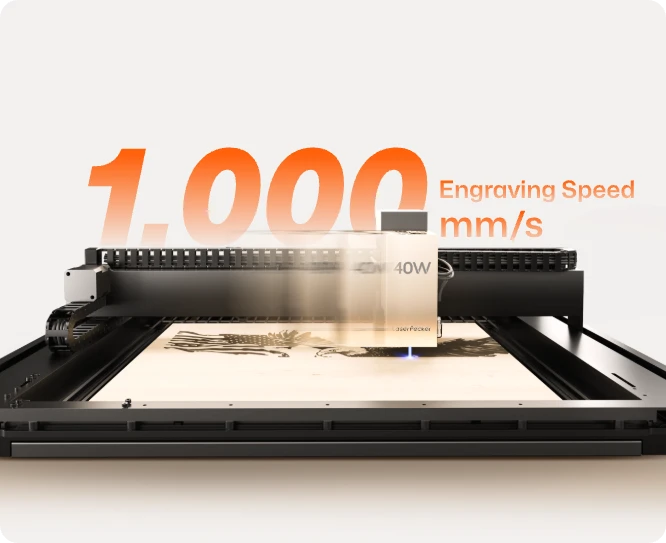
The LX2 supports engraving speeds of up to 1,000 mm/s, which is twice the maximum speed of the OMTech Polar Lite.
It also features an acceleration of 10,000 mm/s², allowing the laser module to reach top speed much faster when engraving detailed graphics or text.
For users producing personalized gifts, custom products, or batch orders every day, the faster workflow helps increase productivity and reduce turnaround time.
Reason #3: Direct Bare Metal Engraving
With its dedicated 2W 1064nm infrared laser module, the LX2 can engrave directly onto many bare metals, including stainless steel, aluminum, brass, silver, titanium, and gold.
Unlike a CO2 laser, there is no need to use laser marking spray or coating before engraving. This saves time, reduces material costs, and creates a cleaner workflow for businesses that frequently engrave metal products.
Reason #4: Smarter Positioning
The LaserPecker LX2 combines a 12MP ultra-wide camera with Point-to-Shape™ intelligent probing to simplify project setup and improve engraving accuracy. Together, these technologies reduce manual alignment, shorten setup time, and make batch production much more efficient.
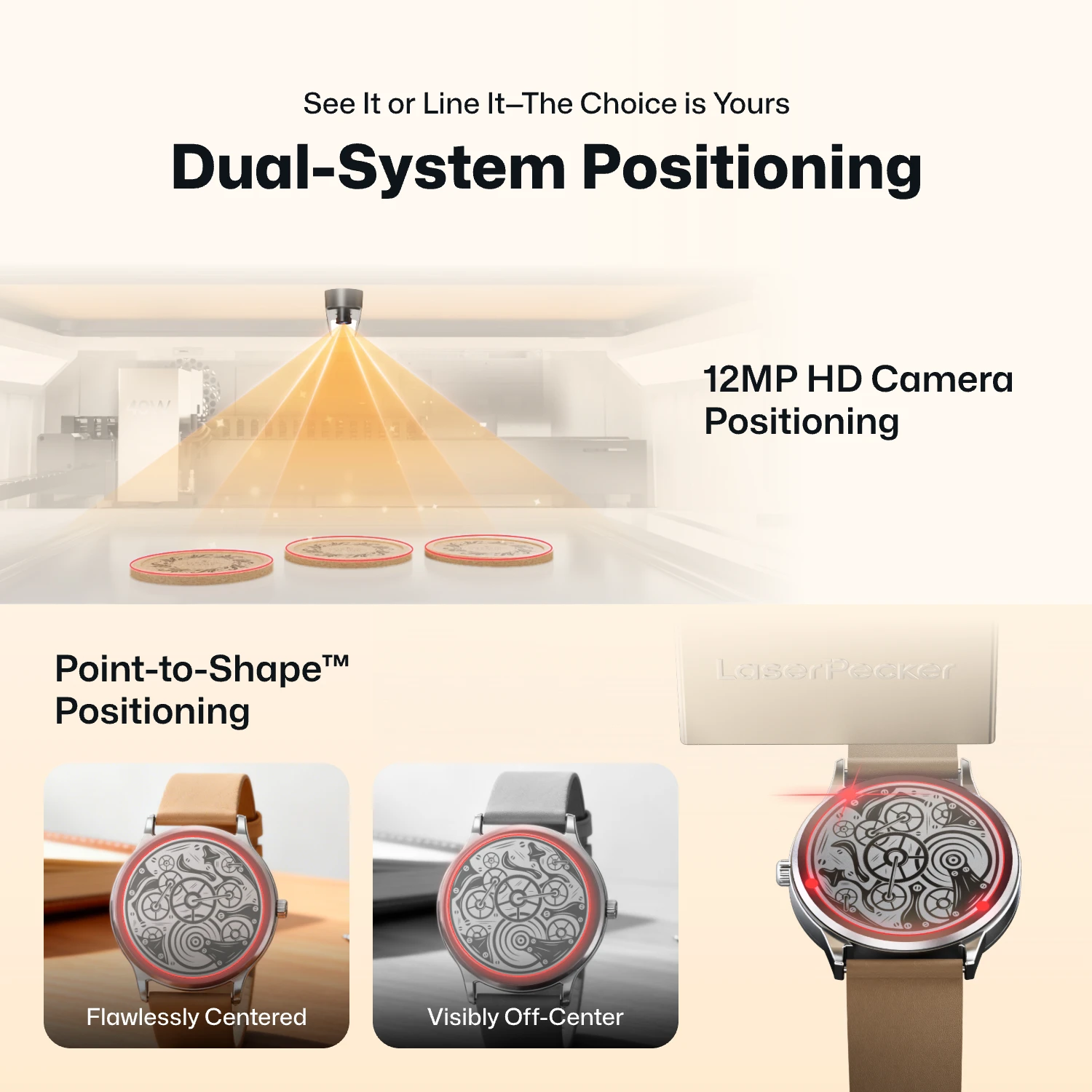
- 12MP Camera Positioning: The built-in ultra-wide camera provides a live preview of the entire workspace, allowing users to position artwork accurately before engraving begins.
- Smart Fill: Using the camera, the LX2 automatically detects multiple objects in the workspace and intelligently fills each one with the selected design, dramatically speeding up batch engraving.
- Remote Live View: The live camera feed lets users remotely monitor the workspace, verify positioning, and check engraving progress without standing next to the machine.
- Point-to-Shape™ Intelligent Probing: Instead of relying on visual recognition alone, the LX2 uses a mechanical probe to physically trace the outline of irregular objects. The detected shape is then imported into the software, allowing artwork to fit the object's exact contour with high precision.
The higher-resolution camera provides a clearer preview of your material, making it easier to position designs accurately before engraving. Whether you're engraving a single item or arranging multiple products for batch production, the system helps reduce setup time and improve positioning accuracy.
Compared with the Polar Lite's 5MP camera, the LX2 offers a more detailed workspace view and a smoother alignment workflow.
Reason #5: Higher Engraving Precision
The LX2 delivers engraving accuracy of ≤0.01 mm, providing finer detail for small text, logos, QR codes, serial numbers, and intricate artwork.
For makers producing jewelry, customized tools, electronic accessories, and other detailed products, this higher level of precision helps produce cleaner and sharper engraving results.
Reason #6: 3D Surface Adaptive Auto-Focus
Unlike traditional autofocus systems that mainly focus on flat materials, the LX2 uses 3D Surface Adaptive Auto-Focus.
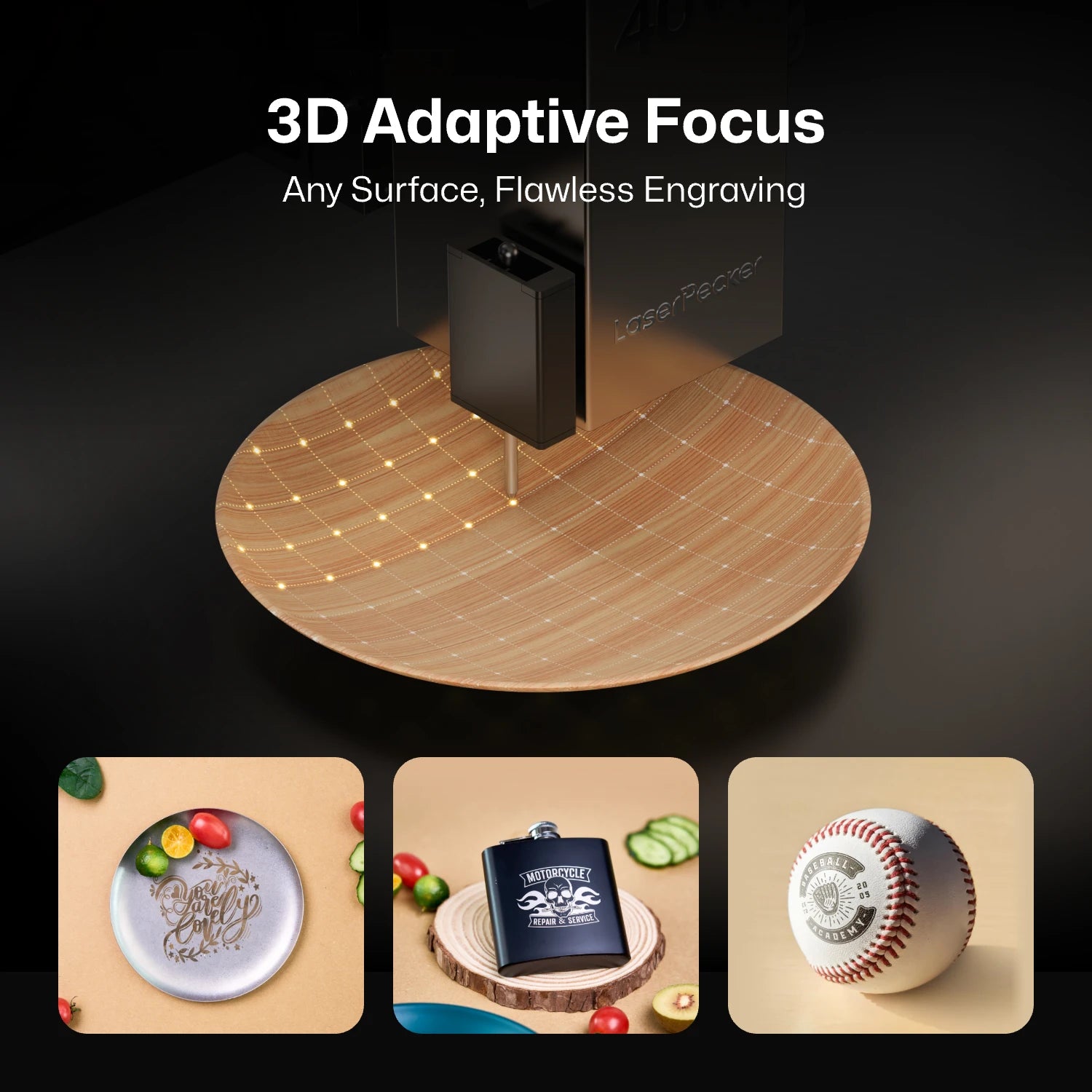
The system scans uneven or curved surfaces and automatically adjusts the laser height during engraving. This helps maintain consistent focus when engraving tumblers, flasks, wooden plaques, and other irregular objects.
It reduces manual adjustments and makes engraving curved items much easier.
Reason #7: Lower Maintenance and Easier Ownership
The LX2 uses a solid-state diode laser design, eliminating many of the maintenance tasks associated with CO2 laser machines.
- No laser tube replacement.
- No water-cooling system.
- No coolant changes.
- No mirror alignment.
- Fewer routine maintenance tasks.
Instead of spending time maintaining the machine, users can focus on creating projects and fulfilling customer orders.
Reason #8: Lighter Weight and Easier to Move
The LaserPecker LX2 weighs approximately 22.5 kg (49.6 lbs), compared with about 41 kg (90.4 lbs) for the OMTech Polar Lite. That makes the LX2 nearly 18.5 kg (40.8 lbs) lighter.
While both machines are designed for desktop use, the lower weight makes the LX2 easier to reposition around a workshop, move between workstations, or relocate when needed. This added flexibility can be especially useful for makers working in smaller studios or shared workspaces.
Reason #9: More Comprehensive Safety Protection
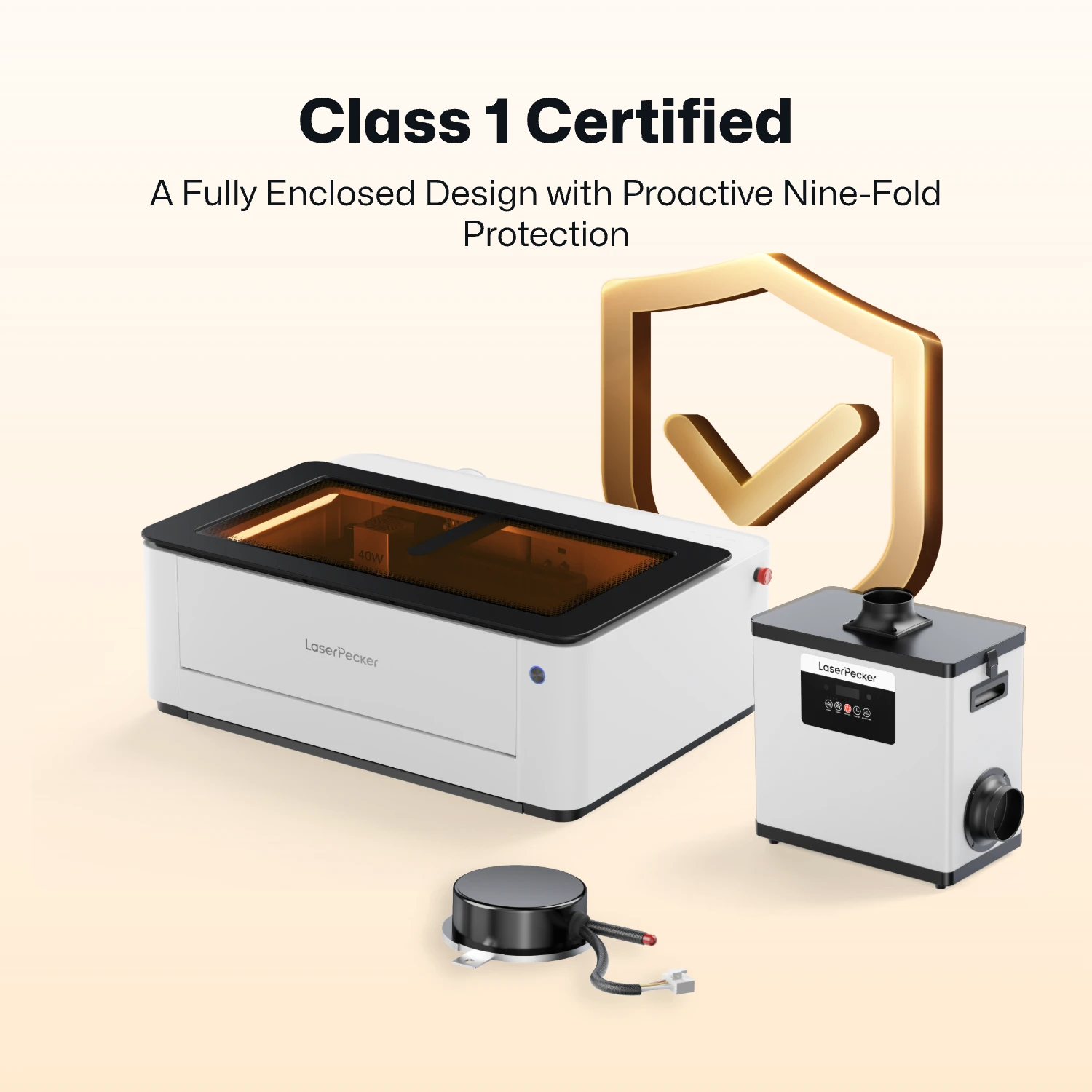
The LaserPecker LX2 is built as a Class 1 enclosed laser system and includes a comprehensive safety protection system for everyday use.
Its safety features include:
- Automatic safety stop when the cover is opened
- Flame detection
- Automatic fire suppression
- Tilt and impact protection
- Dual door safety interlocks
- Protective viewing window with 99.99% laser filtering
These features help provide additional protection for home workshops, schools, makerspaces, and small businesses.
Part 3: OMTech Polar Lite vs LaserPecker LX2 Comparison Table
Both machines are capable laser cutters, but they are designed with different priorities. The table below highlights their key differences.
| OMTech Polar Lite | LaserPecker LX2 | |
|---|---|---|
| Laser Type | 55W CO2 Laser | 20W / 40W / 60W Diode + 2W IR |
| Laser Modules | Fixed CO2 Tube | Swappable Laser Modules |
| Working Area | 500 × 300 mm | 500 × 305 mm |
| Max Engraving Speed | 500 mm/s | Up to 1,000 mm/s |
| Positioning Accuracy | ±0.02 mm | ≤0.01 mm |
| Camera | 5MP Camera | 12MP / 6K Camera + Point-to-Shape™ |
| Autofocus | One-click Autofocus | 3D Surface Adaptive Auto-Focus |
| Bare Metal Engraving | Requires Marking Spray or Coating | Direct Engraving with 2W IR Module |
| Cooling System | Water Cooling | No CO2 Water-Cooling System |
| Maintenance | CO2 Tube, Mirrors, Lenses & Cooling System | Lower Routine Maintenance |
| Weight | 41 kg (90.4 lbs) | 22.5 kg (49.6 lbs) |
| Software | LightBurn / RDWorks | LaserPecker Design Space / LightBurn |
Part 4: Where the OMTech Polar Lite Still Has an Edge
While the LaserPecker LX2 offers greater flexibility, lower maintenance, and support for multiple laser modules, the OMTech Polar Lite is still the better choice for certain types of projects.
Advantage #1: Better for Cutting and Engraving Clear Acrylic
The OMTech Polar Lite uses a 55W CO2 laser, which is well suited for working with clear acrylic. It can cut and engrave transparent acrylic directly, producing clean, polished edges without requiring additional coatings or preparation.
By comparison, most diode laser systems, including the LX2, work best on dark or opaque acrylic because clear acrylic allows much of the diode laser's light to pass through.
If your business mainly creates acrylic signs, LED light panels, display stands, wedding decorations, or other transparent acrylic products, the Polar Lite remains the better choice.
Advantage #2: Stronger Cutting Performance on Non-Metal Materials
The Polar Lite's 55W CO2 laser delivers excellent cutting performance on a wide range of non-metal materials, including wood, MDF, plywood, paper, cardboard, leather, fabric, rubber, and acrylic.
If most of your work involves cutting sheet materials instead of engraving metal, a CO2 laser like the Polar Lite can provide faster cutting speeds, cleaner edges, and efficient production for everyday workshop use.
FAQ: Common Questions about OMTech Polar Lite Alternatives
Q1: Is the LaserPecker LX2 a good alternative to the OMTech Polar Lite?
For many hobbyists, makers, and small businesses, yes. The LX2 offers faster engraving, lower maintenance, direct metal engraving with the optional 2W IR module, and interchangeable laser modules that let you handle more types of projects.
However, if you mainly cut or engrave clear acrylic, a CO2 laser like the OMTech Polar Lite is still the better choice.
Q2: Can the LX2 cut wood and acrylic like the Polar Lite?
Yes. With the 60W diode laser module, the LX2 can cut up to 25 mm wood and 30 mm black acrylic, making it suitable for most woodworking and acrylic projects.
Keep in mind that, like most diode laser machines, it works best with dark or opaque acrylic rather than clear acrylic.
Q3: Does the LX2 need water cooling?
No. The LX2 uses an air-cooled diode laser system, so there's no water pump, coolant, or CO2 laser tube to maintain.
This means less routine maintenance and less time spent servicing the machine.
Q4: Which machine is better for engraving metal?
If metal engraving is important to you, the LaserPecker LX2 is the better choice.
With the optional 2W infrared laser module, it can engrave directly on many bare metals, including stainless steel, aluminum, brass, titanium, gold, and silver, without using laser marking spray.
Conclusion
The OMTech Polar Lite is a good choice if you mainly cut wood, leather, and clear acrylic. Its 55W CO2 laser delivers strong cutting performance and works especially well for clear acrylic projects.
But if you want a machine that's easier to maintain, can engrave metal directly, and gives you more flexibility as your projects grow, the LaserPecker LX2 is worth considering.
With interchangeable laser modules, engraving speeds of up to 1,000 mm/s, direct metal engraving, and a lower-maintenance design, the LX2 can handle a wider range of projects without requiring multiple machines.