














Silver engraving is widely used for jewelry, gifts, and branding—but achieving clean results requires precision. Its reflective and sensitive surface makes even small mistakes visible, leading to uneven lines or poor contrast.
Many beginners struggle due to choosing the wrong tools. Manual methods can be inconsistent, and some entry-level machines cannot effectively engrave silver.
This guide covers the main engraving tools, compares their pros and limitations, and helps you choose the right method for your needs.

In this article:
- Part 1: What Makes Silver Engraving Challenging
- Part 2: 3 Types of Silver Engraving Tools
- Type 1: Laser Engraving Tools
- Type 2: Hand Engraving Tools
- Type 3: Rotary Engraving Tools
- Part 3: Why Laser Engraver is the Best Silver Engraving Tool
- FAQs: Hot Questions about Silver Engraving Tools
Part 1: What Makes Silver Engraving Challenging?
Silver engraving may seem straightforward because silver is a relatively soft metal. However, achieving clean, precise, and professional results can be surprisingly challenging. Small mistakes are highly visible, especially on polished surfaces, where scratches, uneven lines, or inconsistent depth can easily affect the final appearance.
Unlike rough materials, silver is often used in high-value items such as jewelry, gifts, and branded products. This means engraving quality is critical—not just for aesthetics, but also for perceived value.
Key Challenges in Silver Engraving
-
High Visibility of Errors:
Even minor mistakes like slips, uneven lines, or burn marks are easy to notice on reflective silver surfaces. -
Fine Detail Requirements:
Silver engraving often involves small text, intricate patterns, or delicate logos that require high precision and control. -
Material Sensitivity:
Although soft, silver can deform, scratch, or overheat easily if the engraving process is not properly controlled. -
Depth Control:
Consistent engraving depth is essential to ensure clear visibility without damaging the material or weakening the structure. -
Surface Finish Impact:
Polished or coated silver surfaces can react differently during engraving, affecting edge quality and overall appearance.
Because of these challenges, choosing the right engraving tool is essential for achieving clean, detailed, and repeatable results on silver.
Part 2: 3 Types of Silver Engraving Tools
There are several ways to engrave silver, each using different tools and techniques. The right choice depends on your required precision, design complexity, and production needs.
Below are the three most common types of silver engraving tools, along with how they work and where they are best used.
Type 1: Laser Engraving Tools for Silver
Laser engraving tools use a focused beam of light to mark or engrave silver surfaces with high precision. Instead of relying on physical contact, the laser interacts directly with the material, allowing controlled marking, oxidation, or surface ablation depending on the settings.
When engraving silver, a laser engraving tool typically refers to a system equipped with an infrared (IR) laser or a fiber laser. These laser types operate at wavelengths that silver absorbs efficiently, enabling the laser energy to create clean, permanent marks without direct contact. This results in stable, highly precise engraving—even on delicate items such as jewelry or thin silver pieces.
Pros
- High Precision: Ideal for engraving small text, detailed patterns, and fine logos.
- Non-Contact Process: No physical tool touches the material, reducing the risk of scratches or deformation.
- Clean Results: Produces sharp lines with minimal post-processing.
- Repeatability: Perfect for batch production with consistent quality.
- Efficient Material Interaction: IR and fiber lasers are well-suited for silver, ensuring stable and reliable marking.
Cons
- Higher Cost: Initial investment is higher than manual tools.
This method is widely used for engraving jewelry, personalized gifts, logos, and fine text because it offers excellent control and consistent results.
Type 2: Hand Engraving Tools for Silver
Hand engraving tools are traditional instruments used to carve designs directly into silver by hand. Common tools include gravers, chisels, and burins. The engraver manually controls the cutting angle, depth, and movement to create patterns, text, or decorative details on the surface.
Pros
- Full Artistic Control: Allows complete freedom for custom and creative designs.
- Unique Results: Each engraving has a handcrafted, one-of-a-kind quality.
Cons
- Skill Intensive: Requires significant practice and experience to achieve good results.
- Limited Precision: Difficult to produce very fine details or small text consistently.
- Low Repeatability: Hard to reproduce identical engravings multiple times.
This method is widely used in jewelry making and artistic engraving, where craftsmanship and uniqueness are highly valued. Each piece is individually created, giving it a distinct handmade character.
Type 3: Rotary Engraving Tools for Silver
Rotary engraving tools use a fast-spinning cutting bit to carve into the silver surface. The tool removes material through direct contact, either by hand-held rotary tools (like Dremel-style devices) or CNC-controlled engraving machines for more consistent results.
This method is commonly used for deeper cuts, bold lettering, and simple decorative patterns. It offers more speed and control than hand engraving but is less precise than laser-based methods.
Pros
- Efficient Material Removal: Suitable for deeper engraving and clear, bold designs.
- Faster Than Hand Tools: Improves productivity compared to manual engraving.
Cons
- Lower Precision: Difficult to achieve fine details or very small text.
- Contact Process: Physical contact can cause scratches or deformation on soft silver.
Part 3: Why Laser Engraver is the Best Silver Engraving Tool
| Method | Precision | Speed | Contact | Edge Quality | Complex Designs | Setup Cost |
|---|---|---|---|---|---|---|
| Laser Engraving Tools | High | Fast | No (Non-contact) | Very Clean | Excellent | Medium to High |
| Hand Engraving Tools | Low | Slow | Yes (Manual Contact) | Variable | Limited | Low |
| Rotary Engraving Tools | Medium | Medium | Yes (Tool Contact) | Moderate | Moderate | Low to Medium |
When you look at all the ways to engrave silver, laser engraving comes out on top because:
Reason 1: Non-Contact Precision
Laser engraving does not touch the surface, avoiding deformation or damage. Its ultra-fine beam enables highly detailed engraving, including small text and intricate patterns.
Reason 2: Perfect Consistency
Software-controlled paths ensure every engraving is identical, making it ideal for batch production without variation.
Reason 3: Efficient and Low Maintenance
Silver absorbs IR and fiber lasers well, allowing clean engraving with minimal passes. No tool wear means stable quality and lower long-term costs.
Overall, laser engraving offers the best combination of precision, consistency, and efficiency for silver engraving.
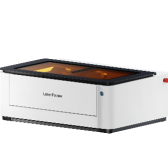
Recommended Laser Engraving Tool for Silver: LaserPecker LP5
The LP5 laser engraver is a strong choice for professional silver engraving, combining power, precision, and versatility. It features both a 20W fiber laser and a 20W diode laser, allowing you to engrave metals such as 925 silver, brass, and stainless steel, as well as materials like wood, leather, acrylic, and ceramics.
Designed for both detailed and larger-scale projects, the LP5 offers the following key advantages for silver engraving:
-
Fast Engraving for Silver Customization
With speeds up to 10,000 mm/s, the LP5 is ideal for engraving silver jewelry, nameplates, and accessories quickly. This is especially useful for personalized orders, small-batch production, and in-store customization. -
Precise Depth Control for 3D Effects
The LP5 allows accurate control of engraving depth, making it possible to create layered textures, relief designs, and subtle 3D effects on silver without overheating or damaging the material. -
Rotary and Slide Extensions for Flexibility
With rotary attachments, the LP5 can engrave curved silver items such as rings, bracelets, and cups. Slide extensions expand the working area, making it suitable for larger pieces like plates, trays, or signage. -
User-Friendly Software Control
Compatible with LightBurn and LaserPecker Design Space, the LP5 allows precise adjustment of power, speed, and passes—essential for achieving clean and consistent results on silver. Designs can be easily edited, resized, or mirrored before engraving. -
Safe for Indoor Use
The Class 1 safety enclosure makes the LP5 suitable for indoor environments such as jewelry studios, workshops, classrooms, or retail spaces. This enables safe, on-site engraving and live customization services.


FAQs: Hot Questions about Silver Engraving Tools
Q1: Will a budget laser engraver work on 925 silver?
It depends more on the laser type than the price. Silver reflects most visible and blue diode laser wavelengths, so standard diode laser engravers—even high-end ones—often struggle to mark bare 925 silver effectively.
To engrave raw silver, you typically need an infrared (1064nm) laser or a fiber laser, as these wavelengths are absorbed much more efficiently. Power also matters: higher power enables deeper, clearer, and more permanent marks, while low-power systems may only produce faint surface discoloration.
With the right laser source and sufficient power, clean and durable engraving on 925 silver can be achieved without coatings or marking sprays.
Q2: Is silver easy to engrave?
Silver is considered moderately challenging to engrave. Its softness allows smoother cutting compared to harder metals, but it also makes it easier to over-cut or scratch the surface if not controlled properly.
With hand engraving, good technique is required for consistent results. Rotary tools can handle silver, but fine details may require extra finishing. For laser engraving, silver is more difficult than many metals due to its reflective nature—however, with IR or fiber lasers, it can be engraved cleanly and precisely.
Overall, silver is not the easiest material, but with the right tools and setup, high-quality results are very achievable.
Q3: Why does my engraving look dull instead of shiny?
A dull engraving is usually caused by surface oxidation, incorrect focus, or lack of post-processing. Heat from engraving can oxidize the silver, reducing its shine.
To improve results:
- Refocus the laser: Ensure the laser is properly focused before engraving.
- Clean the surface: Wipe the silver before and after engraving.
- Polish after engraving: Light polishing can restore brightness and enhance contrast.
Conclusion
Silver engraving offers both creative and commercial opportunities, from personalized jewelry to custom branding. Choosing the right tool plays a key role in achieving clean, precise, and consistent results.
While traditional methods like hand engraving provide artistic flexibility, modern laser engraving stands out for its precision, speed, and repeatability. With the right laser system—especially one using IR or fiber technology—you can produce detailed, high-contrast designs on silver efficiently and reliably.
Whether you're a hobbyist or building a business, mastering silver engraving with the right tools will help you create professional-quality work and scale your production with confidence.