


Brass is a durable, corrosion-resistant material commonly used for signs, jewelry, industrial parts, and decorative pieces. However, cutting detailed designs accurately can be difficult with traditional tools.
Laser cutting offers a precise and efficient way to cut brass with clean edges, consistent results, and less material waste.
This guide explains how brass laser cutting works, its common applications, and how to choose the right equipment.

Contents
Part 1: The Overview of Brass Laser Cutting
1.1 What Is Brass Laser Cutting?
Brass laser cutting is a manufacturing process that uses a focused laser beam to cut brass sheets or plates into precise shapes and patterns. Instead of relying on mechanical blades or saws, the laser heats the material at a highly concentrated point until it melts or vaporizes, while assist gas removes the molten material from the cut.
Because there is no direct contact between the cutting tool and the brass, laser cutting minimizes mechanical stress and helps maintain dimensional accuracy. This makes the process suitable for producing detailed artwork, custom signage, decorative components, industrial parts, and other projects that require clean, consistent results.

1.2 How Does Laser Cutting Work on Brass?
Brass is a highly reflective metal, which means it requires a laser system designed to process reflective materials efficiently. Fiber lasers are commonly used because their wavelength is absorbed by brass more effectively than standard CO2 and diode lasers, allowing energy to penetrate the material with greater efficiency.
During cutting, a focused laser beam follows a digital design file while compressed air or another assist gas clears molten metal from the kerf. The combination of accurate motion control and concentrated laser energy produces narrow cuts, fine details, and smooth edges, reducing the amount of finishing work required after cutting.

Source: LP5 Facebook Group
Part 2: Why Use Laser for Brass Cutting
Laser cutting is widely used for brass because it provides precise, clean, and repeatable results. It also reduces tool wear, material waste, and production time compared with traditional cutting methods.
Reason 1: High Precision for Intricate Designs
A focused laser beam can accurately cut small text, detailed patterns, and complex shapes. Since the process is contact-free, it also reduces mechanical stress and material distortion.
Reason 2: Clean Edges with Minimal Post-Processing
With the correct settings and assist gas, laser cutting produces smooth edges with minimal burrs. This reduces the need for sanding, grinding, or polishing.
Reason 3: Suitable for Custom and Industrial Applications
Digital designs can be quickly adjusted for custom products, prototypes, or industrial parts. Brass laser cutting is commonly used for jewelry, signs, electronics, machinery, and architectural projects.
Reason 4: Efficient for Small Batches and Repeat Production
Once the design and settings are confirmed, the same project can be reproduced consistently. This makes laser cutting suitable for both small batches and repeat production.
Part 3: Common Applications of Laser Cut Brass
Brass combines strength, corrosion resistance, and an attractive metallic finish, making it a versatile material for both decorative and functional products.
With laser cutting, users can produce detailed shapes, clean edges, and repeatable designs that would be difficult or time-consuming to achieve with traditional machining methods..
Laser-Cut Brass Earrings
Laser cutting can create brass earrings with clean edges, detailed patterns, and consistent shapes. It is ideal for producing geometric, floral, personalized, or other intricate designs.
After cutting, the earrings can be polished and fitted with hooks or studs to create finished jewelry for personal use or sale.
Jewelry and Decorative Pieces
Brass is a popular material for pendants, charms, bracelets, and decorative ornaments due to its warm color and excellent machinability. Laser cutting allows designers to produce delicate patterns, geometric shapes, and highly detailed artwork that would be difficult to create manually.
Custom Signs and Nameplates
Laser-cut brass is widely used for premium signs, plaques, and nameplates because of its polished appearance and long-lasting durability. Businesses often choose brass for office signage, company logos, commemorative plaques, room numbers, and equipment labels where a professional finish is important.
Heart-Shaped Brass Refrigerator Magnets
Laser cutting can create heart-shaped brass refrigerator magnets with smooth edges and precise details. Names, dates, patterns, or short messages can be added to make personalized gifts, wedding favors, or decorative keepsakes.
After cutting, the brass surface can be polished and a small magnet attached to the back for easy display on refrigerators or other magnetic surfaces.
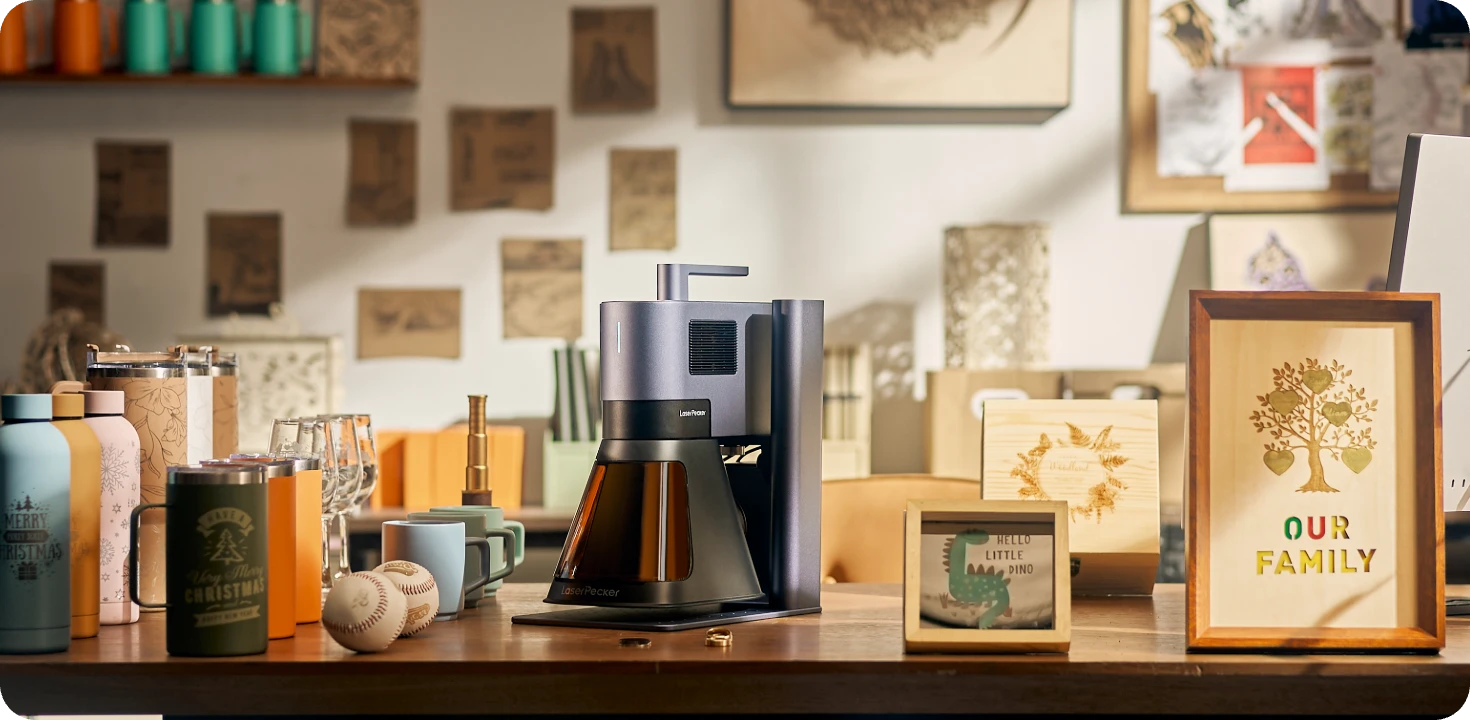
Why LaserPecker LP5 Is Suitable for Brass Processing?
-
20W Fiber Laser for Brass Processing
The 20W fiber laser can process thin brass while also supporting permanent engraving, making it useful for projects that combine cutting with names, patterns, or logos. -
Precise Cutting for Detailed Designs
Its focused laser beam can follow intricate vector paths, helping create small openings, geometric shapes, and delicate jewelry designs with consistent dimensions. -
Cutting and Engraving in One Workflow
Users can cut the basic brass shape and then add recessed details or surface markings without switching to a separate machine. -
Up to 10,000 mm/s Engraving Speed
High-speed engraving helps reduce processing time when adding repeated patterns, branding, or personalized details to batches of brass pieces.
Case Study: How to Laser Cut a Brass Necklace in 5 Steps
Instead of looking at the process in theory, let's create a personalized brass necklace pendant featuring a floral monogram design.
In this case study, we'll use a 0.3 mm brass sheet to produce a custom pendant that combines precision cutting with fine engraved details. This type of project is commonly used for personalized jewelry, handmade gifts, and small-batch product lines.
For this project, we use the LaserPecker LP5 to complete both the engraving and cutting processes. The following steps walk through the complete workflow, from preparing the material to polishing the finished pendant.
Preparation Checklist for Brass Laser Cutting
Before starting, prepare everything you'll need to complete the project.
- 0.3 mm brass sheet
- Laser cutting machine suitable for brass
- Computer with vector design software (AI, SVG, DXF, etc.)
- LaserPecker Desktop Air Purifier
- Soft cloth and isopropyl alcohol for cleaning
- Masking tape (optional, to help protect the surface)
- Fine sandpaper or polishing cloth for finishing
Cleaning the brass sheet before cutting helps improve consistency by removing fingerprints, oils, and dust that could affect the laser's performance.
Step 1: Choose the Right Brass Sheet
Material selection plays an important role in the final result. For jewelry projects such as pendants, earrings, and charms, 0.3 mm brass sheet offers a good balance between durability and ease of cutting. It is rigid enough to maintain its shape while remaining thin enough for intricate laser-cut patterns.
Step 2: Set Up the LaserPecker LP5 and Position the Brass Sheet
For this project, secure the 0.3 mm brass sheet firmly on the work surface to prevent movement during cutting.
Before starting the full job, check that the cutting and engraving layers are assigned correctly and confirm the design alignment using the machine's positioning tools. Proper setup helps ensure accurate cuts and consistent engraving throughout the project.
Step 3: Create and Prepare Your Design File
Design the necklace in vector software using closed paths for all cutting lines. Then, import the prepared necklace design into LaserPecker Design Space or LightBurn and position it within the working area..
Step 4: Configure Laser Settings and Secure the Material
Place the brass sheet flat on the work surface and make sure it cannot shift during cutting. Even slight movement may affect alignment when processing intricate jewelry designs.
Next, configure the cutting parameters according to the brass thickness and perform a small test cut in an unused corner of the sheet. Fine adjustments to power, speed, or the number of passes may be needed to achieve complete penetration while maintaining clean edge quality.
Step 5: Start Cutting and Inspect the Final Results
Once the settings have been verified, begin the cutting job and monitor the process until it is complete. After removing the finished pendant from the brass sheet, inspect the edges to confirm that all details have been fully cut and that there are no remaining connection points.
Finally, wipe away any residue and lightly polish the surface if desired. At this stage, the pendant is ready for drilling, adding jump rings or chains, and any additional finishing needed before packaging or personal use.
FAQs: Hot Questions about Brass Laser Cutting
Q1. Can a laser cutter cut brass?
Yes. A fiber laser can cut brass, especially thin sheets, with precise results and clean edges.
Q2. What type of laser is best for cutting brass?
Fiber lasers are generally the best choice because their wavelength is well suited to reflective metals such as brass.
Q3. Is LaserPecker LP5 suitable for brass cutting and engraving?
Yes. The LaserPecker LP5 uses a 20W fiber laser to cut thin brass sheets and create detailed or deep engravings. It is suitable for small items such as jewelry, tags, and decorative pieces.
For indoor use, the LP5 can be paired with a Safety Enclosure and Desktop Smoke Purifier to help contain the laser process and filter smoke and odors.
Q4. How thick of brass can a laser cut?
Cutting thickness depends on the laser power, brass alloy, settings, and required edge quality. For desktop fiber lasers, thin sheets such as 0.3 mm brass are commonly used for detailed projects.
Q5. Is brass difficult to laser cut?
Brass can be challenging because it is reflective. However, a suitable fiber laser and optimized settings can produce accurate results. Always perform a test cut first.
Q6. Does laser cutting leave burrs on brass?
Proper focus and settings can produce smooth edges with minimal burrs. Light polishing may still be needed for jewelry and decorative products.
Q7. Can fiber lasers cut brass?
Yes. Fiber lasers can cut thin brass accurately and are suitable for detailed designs, custom projects, and repeat production.
Q8. What industries use laser-cut brass parts?
Laser-cut brass is used for jewelry, signs, electrical parts, identification tags, furniture hardware, architectural decoration, and custom metal products.
Q9. Is laser cutting brass suitable for beginners?
Yes. Beginners should start with simple vector designs and thin brass sheets, follow the recommended settings, and run test cuts before production.
Conclusion
Brass laser cutting provides precise, clean, and repeatable results for jewelry, nameplates, decorative items, and industrial parts.
Using the right laser cutter for brass, optimized settings, and test cuts can improve cutting quality, reduce waste, and support both custom projects and small-batch production.


