


Laser engraving shoes is a precise way to add names, logos, patterns, and artwork to suitable footwear materials. It can create detailed, consistent, and durable designs for custom sneakers, gifts, branded shoes, and limited-edition products.
This guide explains how shoe laser engraving works, which materials and designs are suitable, how to engrave shoes step by step, and how to choose the right laser engraver.

In this article:
- Part 1: Understanding Shoe Laser Engraving
- 1.1 What Is Laser Engraving Shoes
- 1.2 How Does Laser Engraving Work on Shoes
- 1.3 What Types of Shoes Can Be Laser Engraved
- 1.4 What Type of Laser Is Best for Shoe Customization
- Part 2: Why Use Laser Engraving for Shoes
- Part 3: What Shoe Materials Can Be Laser Engraved
- Part 4: Creative Ideas for Laser Engraved Shoes
- Case Study: How to Laser Engrave a Personalized Leather Sneaker with a Custom Logo in 5 Steps
- FAQs: Hot Questions about Laser Engraving Shoes
Part 1: Understanding Shoe Laser Engraving
1.1 What Is Laser Engraving Shoes?
Laser engraving shoes uses a focused laser beam to create permanent names, logos, patterns, and artwork on suitable shoe surfaces. The laser changes the surface by removing a thin layer, altering its color, or creating texture without adding ink or stickers.
It can be used on leather sneakers, dress shoes, canvas shoes, and other compatible footwear. Results depend on the material, coating, color, and engraving settings.
1.2 How Does Laser Engraving Work on Shoes?
A laser directs concentrated energy onto the shoe surface to create controlled marks. Leather may develop contrast through surface removal, while synthetic materials may show changes in color or texture.
Power, speed, passes, material type, and surface finish all affect the result. Always test a small hidden area before engraving the final design.

1.3 What Types of Shoes Can Be Laser Engraved?
Suitable footwear may include leather shoes, sneakers, canvas shoes, boots, and custom shoes. Leather often produces clear details, while the woven texture of canvas may limit very fine designs.

1.4 What Type of Laser Is Best for Shoe Customization?
The best laser depends on the shoe material and project. Shoes may contain leather, canvas, PU leather, rubber, textiles, and metal parts, so different laser types are suitable for different surfaces and designs.
450nm Blue Diode Laser
A 450nm blue diode laser is one of the most commonly used options for shoe customization. It is suitable for materials such as genuine leather, vegetable-tanned leather, PU leather, canvas, and some fabric surfaces. It can create clear engraving contrast and may also cut thinner leather accessories, such as leather shoe tags or decorative pieces.
1064nm Infrared Laser
A 1064nm infrared laser is suitable for detailed marking applications, especially when working with certain leather surfaces, PU leather, and metal shoe accessories. Because infrared lasers typically have a smaller heat-affected area, they can help reduce unwanted burning or excessive discoloration on some materials.
1064nm Fiber Laser
A 1064nm fiber laser is also used for precision marking on certain shoe-related materials and accessories. It is especially suitable for applications requiring high-contrast marks and detailed designs. With a smaller heat-affected area compared with some other laser types, fiber lasers can help reduce material deformation and provide cleaner results on selected leather and accessory surfaces.
CO2 Laser
CO2 lasers are widely used in industrial footwear manufacturing because they can process materials such as leather, fabric, and rubber. They are suitable for larger-scale cutting and production workflows, including shoe component manufacturing and bulk material processing.
Compared with desktop laser engravers, CO2 laser systems are more commonly found in factories and professional production environments due to their larger working areas and industrial capabilities.
335nm UV Laser
A 335nm UV laser is designed for high-precision, low-heat processing applications. It is more commonly used for electronics, plastics, and specialized materials rather than everyday shoe customization. For most personalized footwear projects, other laser types are generally more suitable depending on the shoe material and desired effect.
Part 2: Why Use Laser Engraving for Shoes?
Reason 1: Create Unique and Personalized Footwear Designs
Laser engraving can add names, dates, illustrations, symbols, and other personalized designs to suitable shoes. It is ideal for custom sneakers, gifts, collectible footwear, and small business orders.
Digital designs can be easily adjusted for different customers, while the engraved marks remain directly on the shoe surface.
Reason 2: Achieve Precise Details on Shoe Surfaces
Laser engraving can produce clean lines, small text, detailed logos, and complex patterns more consistently than many manual methods.
It also makes it easier to repeat the same design across multiple pairs of shoes with fewer variations.
Reason 3: Customize Shoes Without Additional Materials
Laser engraving modifies the shoe surface directly, so it does not require ink, stickers, or added decorative layers.
This helps preserve the original look and feel of the footwear while creating a clean, integrated design.
Reason 4: Support One-Off Projects and Small-Batch Production
Laser engraving is suitable for one-off DIY projects, personalized orders, and small product collections. Digital files can be quickly edited without creating new physical templates.
This flexibility helps customizers and small businesses test designs, personalize each pair, and produce limited runs more efficiently.
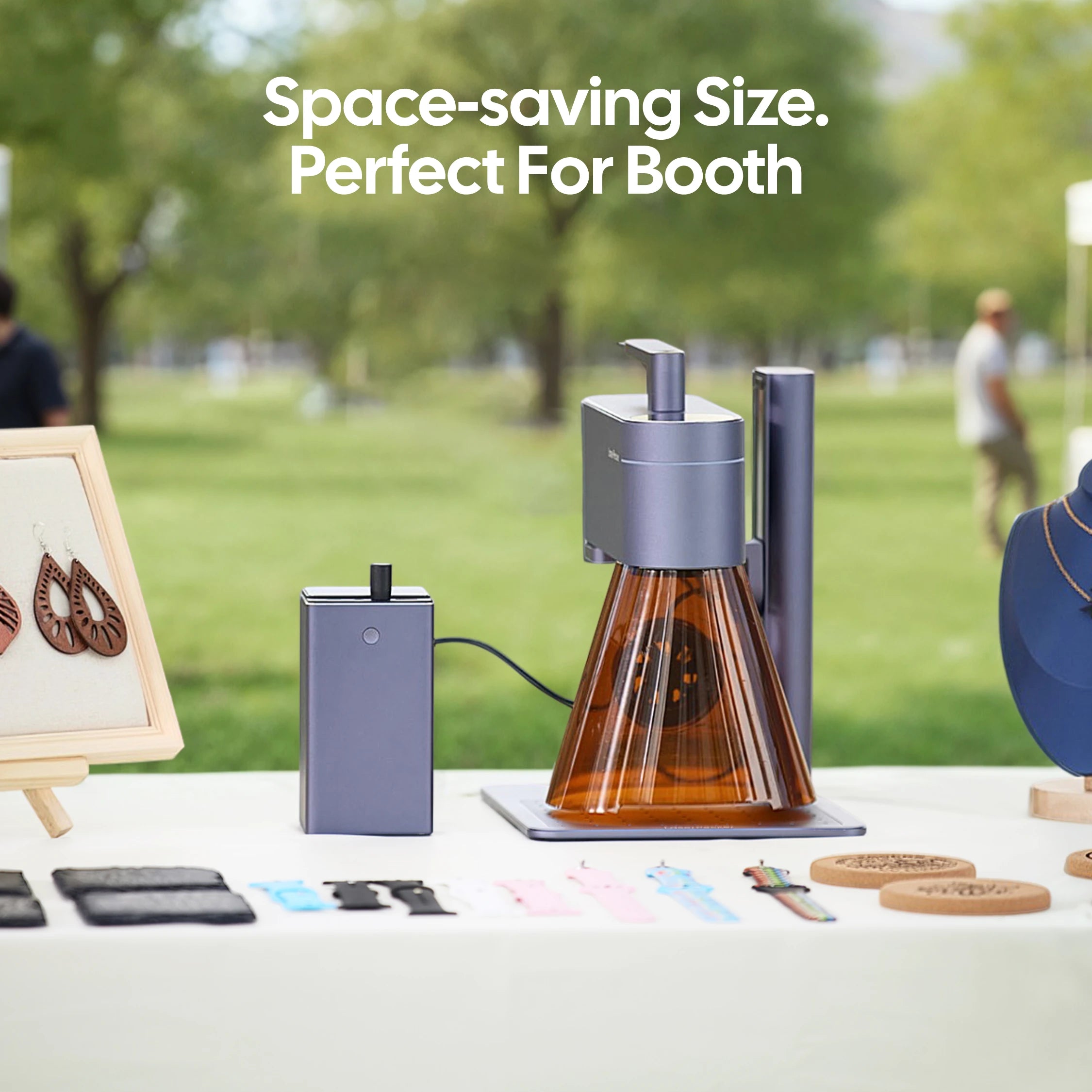
#1 Recommended Handheld Laser Engraver
The LaserPecker LP4 is a dual-laser engraver suitable for customizing leather shoes, canvas sneakers, coated footwear, and selected plastic shoe components.
-
10W 450 nm Diode Laser for Leather and Canvas
The diode laser can engrave suitable leather and canvas shoe surfaces, creating clear logos, text, patterns, and decorative artwork. -
2W 1064 nm Infrared Laser for Selected Plastic and Coated Parts
The infrared laser expands the range of compatible shoe components by supporting detailed marking on selected plastics, coated materials, and metal accessories. -
8K Resolution
Produce sharp logos, names, artwork, and intricate design details on customized footwear. -
Multi-Angle Engraving
Easily engrave shoes with curved or uneven surfaces from different angles. -
Offline Touchscreen Operation
Switch laser modes, select files, and start engraving without connecting to a computer. -
Up to 4,000 mm/s Engraving Speed
Its high-speed galvo system supports efficient one-off customization and repeated designs for small-batch shoe engraving projects.
#1 Recommended Desktop Laser Engraver
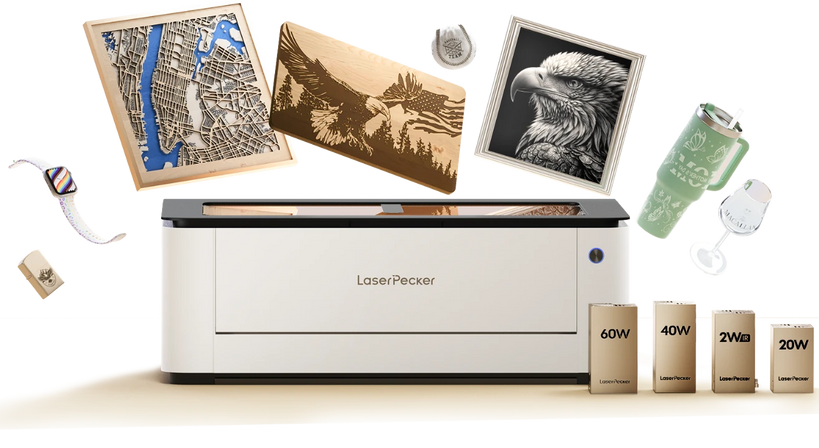
The LaserPecker LX2 is suitable for engraving compatible leather, canvas, and selected synthetic shoe surfaces. Its spacious desktop design supports custom sneakers, branded footwear, personalized gifts, and small-batch projects.
The overhead camera and adaptive autofocus help users position designs on irregular shoe surfaces. Names, logos, patterns, and artwork can be placed more accurately on areas such as side panels, tongues, and heel sections. Always test unknown synthetic or coated materials before engraving.
-
Interchangeable Blue Diode and 2W Infrared Laser Modules
The blue diode modules support engraving on compatible leather and canvas, while the infrared module expands marking options for selected plastic, coated, and metal shoe components. -
3D Surface Adaptive Autofocus
The autofocus system adjusts to variations in surface height, helping maintain more consistent results across curved and uneven sections of a shoe. -
12MP/6K Overhead Camera with Point-to-Shape™
The camera provides a detailed preview of the shoe and helps align names, logos, and artwork with specific panels or material shapes before engraving. -
500 × 305 mm Working Area
The large workspace provides room for positioning complete shoes and can also accommodate multiple compatible components for repeated customization projects.
Part 3: What Shoe Materials Can Be Laser Engraved?
Type 1: Leather Shoes
Genuine leather, especially vegetable-tanned leather, can produce clear, detailed engravings such as logos, initials, and patterns.
PU leather may also be engraved, but results depend on its coating and composition. Always test a hidden area first.
Type 2: Canvas Shoes
Canvas shoes can be engraved with artwork, text, patterns, and personalized messages.
Because canvas has a woven texture, fine details may require careful adjustment of power, speed, and passes.
Type 3: Synthetic Leather and Other Shoe Materials
PU leather, rubber parts, and other synthetic materials may be engraved depending on their composition and coating.
Check the material specifications and test it before engraving, as some synthetic materials may produce poor results or unsafe fumes.
Type 4: Shoe Accessories and Related Items
Leather tags, insoles, shoeboxes, lace accessories, and decorative components can also be laser engraved.
Customizing these items can create consistent branding and add value to personalized footwear products.
Part 4: Creative Ideas for Laser Engraved Shoes
Inspiration 1: Personalized Names, Initials, and Messages
Add names, initials, dates, quotes, or numbers to create personalized shoes for gifts, anniversaries, graduations, and other special occasions.
Digital files can be easily adjusted to create unique designs while maintaining a consistent style.
Inspiration 2: Custom Artwork and Pattern Designs
Engrave geometric patterns, illustrations, abstract graphics, or streetwear-inspired artwork onto suitable shoe surfaces.
Laser engraving can reproduce detailed and repeated designs while creating different textures and contrast effects.
Inspiration 3: Brand Logos and Business Customization
Footwear brands and customization studios can engrave logos, collaboration details, and limited-edition marks directly onto shoes.
Digital designs can be quickly updated for custom orders, promotional footwear, and small product collections.
Inspiration 4: Sports and Event Shoes Customization
Customize shoes with player names, numbers, team symbols, or event dates for sports teams, weddings, competitions, and group activities.
Matching sets can share the same design while including individual details for each person.
Case Study: How to Laser Engrave a Personalized Leather Sneaker with a Custom Logo in 5 Steps
Creating a personalized leather sneaker with a custom logo is a practical example of how laser engraving can be used for small footwear businesses and individual customization projects.
In this case study, a small sneaker studio creates a custom pair of leather sneakers featuring the customer's name and the studio's logo.
Preparation Checklist:
- A pair of suitable leather sneakers with a clean and flat engraving area
- A custom logo or name design file
- A Laser engraving machine suitable for leather engraving projects
- LaserPecker Design Space or LightBurn software
- Cleaning materials for removing dust and surface residue
- A test piece of similar leather for adjusting laser settings
- Proper ventilation or a smoke management solution for the workspace
Step 1: Select and Prepare the Shoes
Choose shoes made from a laser-compatible material. Smooth leather surfaces usually provide clearer and more consistent results.
Clean the surface and select a suitable engraving area, such as the heel, side panel, tongue, or leather tag.
Step 2: Position the Shoe
Place the shoe securely under the laser engraver to prevent movement. Adjust the focus and align the engraving area carefully.
Use camera-assisted positioning if available, especially for curved or uneven shoe surfaces.
Step 3: Prepare the Design
Adjust the design to fit the size and shape of the engraving area. Consider how it will appear on the curved shoe surface.
Keep logos and text clear by using suitable line thickness, spacing, and proportions.
Step 4: Test the Settings and Engrave
Test the laser settings on a spare piece of similar material to determine the appropriate power, speed, and number of passes.
Once the settings are confirmed, engrave the design while avoiding excessive burning or material damage.
Step 5: Clean and Inspect the Shoe
Clean away any dust or residue after engraving. Check the design placement, contrast, and details from different angles.
The finished shoes can be used as personalized gifts, custom orders, or limited-edition products.
FAQs: Hot Questions about Laser Engraving Shoes
Q1. Can you laser engrave shoes?
Yes, shoes made from leather, canvas, and certain synthetic materials can be laser engraved with names, logos, patterns, and artwork.
Results depend on the material, coating, color, and laser settings. Always test a small area first.
Q2. What types of shoes can be laser engraved?
Leather sneakers, dress shoes, canvas shoes, boots, and other compatible footwear can be laser engraved.
Smooth, consistent surfaces usually produce more predictable results than textured or unknown synthetic materials.
Q3. What shoe materials work best for laser engraving?
Vegetable-tanned leather, genuine leather, PU leather, and canvas are commonly used. Leather often produces clear contrast, while canvas is suitable for text and graphic designs.
Check the material composition and test the settings before engraving.
Q4. Does laser engraving damage leather shoes?
With suitable settings, engraving usually changes only the leather's surface without affecting the shoe's structure.
Excessive power may cause burning or discoloration, so test the settings carefully.
Q5. Can you laser engrave sneakers with logos or custom artwork?
Yes, sneakers can be engraved with logos, names, illustrations, and custom artwork for gifts, branded footwear, or limited-edition designs.
Digital files can be easily resized or updated for different shoes and customers.
Q6. What laser engraver is best for shoe customization?
The best machine depends on the shoe material, design size, and production needs.
The LaserPecker LP4 is suitable for compact customization projects, while the LaserPecker LX2 provides a larger working area for workshop use.
Q7. Can beginners laser engrave shoes at home?
Yes. Beginners should start with compatible materials and simple designs, then test the settings before engraving the final shoe.
Secure the shoe properly and use suitable ventilation during operation.
Q8. Can laser engraving be used for shoe customization businesses?
Yes, it can be used to create personalized shoes, branded products, limited editions, and customer-specific designs.
Digital artwork can be quickly adjusted for individual orders and small production runs.
Q9. How do you prevent mistakes when engraving curved shoe surfaces?
Secure the shoe, set the correct focus, and confirm the design position before engraving.
Use alignment features when available and test detailed designs on similar materials first.
Q10. Is laser engraving shoes safe indoors?
Indoor engraving requires good ventilation because leather and synthetic materials may produce smoke, particles, and odors.
Use a suitable smoke purifier and follow the safety instructions for both the machine and material.
Conclusion
Laser engraving is a precise and flexible way to create personalized shoes, branded footwear, gifts, and small-batch products. Good results depend on choosing compatible materials, testing the settings, and preparing the shoe properly. The LaserPecker LP4 is suitable for compact customization projects, while the LaserPecker LX2 provides a larger workspace for professional use.


