
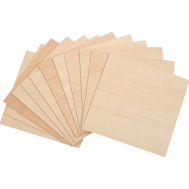























MDF is a popular material in furniture, cabinets, signs, decorations, and DIY projects. It's liked by pros and hobbyists because it's smooth, dense, and cheap.
But cutting MDF neatly isn't easy. It makes a lot of dust, can break at the edges, and needs good tools for detailed tasks. That's why MDF cutting machines are helpful.
This article looks at what these machines are, the choices you have, and why laser cutting is now a top way to work with MDF.

In this article:
- Part 1: Why Do People Need MDF Cutting Machines
- Part 2: 3 Types of MDF Cutting Machines
- Type 1: Manual Cutting Machines
- Type 2: Mechanical Cutting Machines
- Type 3: Laser Cutting Machines
- Part 3: Why Laser Cutter is the Best MDF Cutting Machine
- FAQs: Hot Questions about MDF Cutting Machines
Part 1: Why Do People Need MDF Cutting Machines?
MDF (Medium-Density Fiberboard) is dense, smooth, and uniform, making it a popular material for many woodworking and craft projects. However, its thickness and density also make it difficult to cut cleanly without the right tools. That's why many makers and professionals rely on MDF cutting machines.
Here are the main reasons why specialized cutting machines are commonly used for MDF:
Reason 1: High Precision
Many projects, such as furniture parts or decorative panels, require pieces to fit together perfectly.
Reason 2: Faster Production
Cutting MDF manually can be slow and labor-intensive, while machines greatly improve efficiency.
Reason 3: Consistent Results
When producing multiple pieces, machines ensure every part has the same size and shape.
Reason 4: Cleaner Edges
Proper cutting tools create smoother edges, reducing the need for extra sanding and finishing.
Reason 5: Detailed Designs
Intricate patterns, engravings, and complex shapes require a level of precision that manual tools often cannot achieve.
Using the right MDF cutting machine can significantly improve the quality and efficiency of projects such as custom signs, shelving units, cabinets, speaker boxes, and scale models.
Part 2: 3 Types of MDF Cutting Machines
MDF can be cut using several types of machines, each suited for different project needs and production scales. From basic manual tools to advanced laser systems, every method offers its own advantages in terms of precision, speed, and flexibility. Below are three common types of MDF cutting machines and how they are typically used.
Type 1: Manual Cutting Machines for MDF
Manual cutting machines are one of the most common ways to cut MDF, especially for small workshops, DIY projects, and home improvement tasks. These tools require direct operation by the user and are generally more affordable than automated machines.
Common manual MDF cutting tools include circular saws, jigsaws, and handheld routers. With the right blade and proper setup, these tools can cut MDF boards efficiently and produce clean, accurate edges.
Manual machines are best suited for projects that do not require mass production. They provide flexibility and control, making them ideal for cutting panels, trimming boards, and creating simple shapes.
However, manual cutting requires more skill and time compared to automated systems. Achieving highly detailed patterns or perfectly consistent results across many pieces can be more challenging.
Type 2: Mechanical Cutting Machines for MDF
Mechanical cutting machines use powered blades or rotating tools to cut MDF boards quickly and efficiently. These machines are commonly used in woodworking shops, furniture factories, and professional workshops where higher productivity is required.
Typical mechanical MDF cutting machines include CNC routers, table saws and panel saws. These machines rely on strong motors and sharp cutting tools to slice through MDF boards with greater speed and stability compared to manual tools.
Mechanical cutting systems are suitable for producing large panels, repeated parts, and straight cuts with consistent dimensions. They are widely used in applications such as cabinet manufacturing, shelving systems, interior panels, and furniture components.
However, because MDF generates a large amount of fine dust during mechanical cutting, proper dust collection systems and safety protection are usually required to maintain a clean and safe workspace.
Type 3: Laser Cutting Machines for MDF
Laser cutting machines use a focused laser beam to cut or engrave MDF with high precision. Instead of using physical blades, the laser burns through the material along a programmed path, allowing for extremely accurate and detailed cuts.
Laser cutters are widely used for creating decorative panels, custom signs, models, and intricate craft designs. Because the cutting process is digitally controlled, users can easily produce complex patterns, fine engravings, and repeatable shapes.
Pros
High Precision: Laser cutting machines can create extremely precise cuts, making them ideal for intricate patterns, detailed designs, and fine engravings.
Smooth Edges: The laser burns through the material cleanly, often producing smooth edges that require little or no additional finishing.
Complex Designs: Laser cutters can easily produce complex shapes and detailed decorative elements that are difficult to achieve with traditional cutting tools.
Cutting and Engraving in One Machine: Many laser machines can both cut and engrave MDF in a single workflow, which improves efficiency for creative and decorative projects.
High Repeatability: Because the process is digitally controlled, laser machines can produce identical pieces with consistent accuracy.
Cons
Thickness Limitations: Some laser machines may struggle to cut very thick MDF boards compared to mechanical cutting tools.
Part 3: Why Laser Cutter is the Best MDF Cutting Machine
Comparison of MDF Cutting Machines
| Method | Precision | Speed | Contact | Edge Quality | Complex Designs | Setup Cost |
|---|---|---|---|---|---|---|
| Manual Tools | Low–Medium | Low | Yes | Rough | Limited | Low |
| Mechanical Machines | Medium–High | High | Yes | Moderate | Good (CNC) | Medium–High |
| Laser Cutter | Very High | High | No | Clean & Sealed | Excellent | Medium |
When you look at all the ways to cut MDF, laser cutting comes out on top because:
Reason 1: Extremely High Precision
Laser cutters follow digital design files with exceptional accuracy, allowing them to produce fine lines, intricate patterns, and tightly fitting parts. This level of precision makes them ideal for decorative panels, detailed models, and complex MDF projects.
Reason 2: Non-Contact Cutting Process
Unlike mechanical tools, laser cutters do not physically touch the MDF during cutting. This non-contact process reduces vibration and material stress, resulting in more accurate dimensions and fewer rough edges.
Reason 3: Clean and Sealed Edges
The heat from the laser slightly seals the MDF edges while cutting. This helps prevent fiber splitting and often reduces the need for extra sanding or finishing.
Reason 4: Cutting and Engraving in One Machine
Laser machines can both cut and engrave MDF. Users can add patterns, text, or decorative details directly onto the material before or after cutting, making the workflow more efficient.
Reason 5: Ideal for Custom and Small-Batch Production
Design changes only require updating the digital file—no blade replacement or mechanical adjustments are needed. This flexibility makes laser cutting especially suitable for workshops, studios, and small production runs.
Typical Laser Power for MDF Laser Cutting
(Actual settings may vary depending on the machine, airflow, and material quality.)
| MDF Thickness | Recommended Power | Cutting Approach |
|---|---|---|
| 3 mm | 20W diode laser | Single pass, high speed |
| 6 mm | 40W diode laser | Single pass or slower cut |
| 9–12 mm | 40W–60W diode laser | Multiple passes recommended |
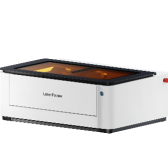
Recommended Popular Laser Cutting Machine for MDF: LaserPecker LX2
Using very high power in a single pass can sometimes cause dark edges or carbon buildup. In many cases, using lower power with multiple passes produces cleaner edges and better overall results. Multi-pass cutting gives you more control over the process, which helps reduce burning and improves edge quality.
If you need a desktop laser cutter that can handle detailed MDF cutting, the LaserPecker LX2 is a practical option for workshops, studios, and small production environments.
Feature 1: Large Working Area
The spacious workspace allows users to process larger MDF boards and panels efficiently.
Feature 2: Interchangeable Laser Modules (20W / 40W / 60W)
Different power modules can be selected based on the thickness of the MDF, providing greater flexibility for various projects.
Feature 3: High Motion Precision
The precise motion system ensures accurate cuts, which is especially important for parts that must fit together tightly.
Feature 4: Built-in Camera Assistance
The integrated camera helps align designs and materials before cutting, improving positioning accuracy.
Feature 5: Adjustable Focus
The adjustable focus mechanism helps maintain the correct cutting depth for different materials and thicknesses.

FAQs: Hot Questions about MDF Cutting Machines
Q1. How Many Teeth Should a Blade Have for Cutting MDF?
For a standard 10-inch table saw blade, a blade with 60–80 teeth is typically recommended for cutting MDF. A higher tooth count produces smoother edges and reduces chipping. While blades with fewer teeth cut faster, they may leave rougher edges. If edge quality is important, using a 60–80 tooth blade is the better choice.
Q2. What Is the Best Saw Blade for Cutting MDF?
The best blade for cutting MDF is usually a carbide-tipped blade with a high tooth count. MDF is dense and abrasive due to the resin and fine fibers used in its composition, which can wear down standard blades quickly. Carbide-tipped blades stay sharp longer and maintain cleaner cuts. Blades designed for plywood or laminate often work well for MDF too.
Q3. What TPI Is Best for Cutting MDF?
If you are using a jigsaw, a blade with around 10–12 teeth per inch (TPI) works well for MDF. Higher TPI blades produce smoother cuts with less tear-out, especially when cutting curves or detailed shapes. Lower TPI blades cut faster but may leave rougher edges.
Q4. Do You Need Pilot Holes in MDF?
Yes, it is recommended to drill pilot holes before inserting screws into MDF. Because MDF is made from compressed fibers, screws driven directly into the material may cause splitting or bulging. Pilot holes help prevent damage and create stronger, more reliable joints.
Q5. What's the Best Tool for Cutting MDF?
The best tool depends on the type of project you are working on:
Table Saw: Best for straight cuts and sheet processing.
Jigsaw: Suitable for curved or irregular shapes.
CNC Router: Ideal for repeated patterns, furniture parts, and production work.
Laser Cutter: Best for intricate designs, detailed engraving, and highly precise cuts.
For projects that require detailed patterns or high accuracy, laser cutters are often the most effective solution.
Q6. Can a CNC Machine Cut MDF?
Yes, CNC routers are widely used to cut MDF. Because MDF has a uniform density and no natural grain, it machines very consistently. CNC cutting is commonly used in furniture production, cabinetry, and decorative panel manufacturing.
Q7. Is MDF Easy to Cut?
Yes, MDF is generally easy to cut because it does not contain a natural wood grain, allowing it to be cut smoothly in any direction. However, MDF produces a large amount of fine dust during cutting, so proper dust collection and safety protection are important.
Conclusion
MDF remains one of the most popular materials for woodworking, DIY projects, and decorative applications. Traditional cutting tools such as saws and routers can still handle many MDF tasks, but modern laser cutters offer higher precision, more design flexibility, and the ability to engrave and cut in a single workflow.
For professionals, hobbyists, and small workshops that require clean edges, intricate patterns, and consistent results, laser cutting machines such as the LaserPecker LX2 provide a strong balance of speed, precision, and efficiency.
Choosing the right MDF cutting machine ultimately depends on your project scale, budget, and the level of finish you expect. However, for highly precise cutting and modern digital fabrication workflows, laser cutting has become one of the most effective solutions.