
























Engraved medals are a time-honored way to celebrate achievements, mark special occasions, or craft personal gifts. Getting crisp, precise results depends on choosing the right engraving machine. The machine you pick will also change your speed, what stuff you can work with, and your long-term costs.
With so many machines available in 2026, finding the best one can be tricky, whether you're a hobbyist, a small shop, or an organization needing accuracy and reliability.
This guide looks at the main types of medal engraving machines, compares them, and shares some top options. Laser engraving systems, especially, offer a lot of flexibility and precision for today's engraving projects.

In this article:
- Part 1: 4 Types of Medal Engraving Machines
- Type 1: Laser Engraving Machine
- Type 2: CNC / Rotary Engraving Machine
- Type 3: Dot Peen Marking Machine
- Type 4: Handheld Engraving Tool
- Part 2: How to Choose the Best Medal Engraving Machine
- Part 3: FAQs about Medal Engraving Machines
Part 1: 4 Best Medal Engraving Machines
Let's check out the tech used to engrave medals, how it all works, and what each machine is best at.
Type 1: Laser Engraving Machine for Medal
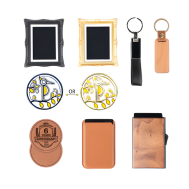
Laser engraving machines use a focused laser beam to alter the surface of a medal based on a digital design file. The process is fully non-contact, meaning the laser changes the material without physical pressure, ensuring consistent, precise results on both flat and curved medal surfaces.
Because the laser follows a programmed path, engraving is fast, repeatable, and well suited for both one-off pieces and batch production.
Why laser engraving works well for medals:
- Produces clean, sharp details and smooth engraving edges
- Maintains high consistency across multiple medals
- Handles fine text, logos, serial numbers, and intricate graphics
- Compatible with a wide range of materials, including metal, wood, acrylic, leather, and stone
Within this category, fiber laser marking machine are a specialized type of laser engraver designed specifically for metals.
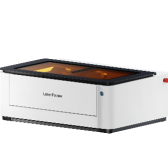
Fiber laser engravers like LaserPecker LP5 use a shorter wavelength that interacts efficiently with metal surfaces, allowing them to mark stainless steel, brass, aluminum, titanium, and other metals directly—often without the need for coatings. They are especially valued for speed, durability, and clarity when engraving small text or logos.
Some advanced laser engraving machines can also perform deep engraving and 3D effects on materials such as wood, stone, and copper medals. This enables layered designs, raised textures, and sculpted details, greatly expanding creative possibilities beyond simple surface marking and making medal engraving more visually impactful.
Type 2: CNC / Rotary Engraving Machine for Medal
These machines carve into the medal using spinning cutters. They're driven by a computer program that guides the tool to create the design.
Here's what they're like:
- Good at controlling depth
- Works on thick or hard stuff
- Often used for signs and badges
Because it involves physical contact, the blades wear down. They also don't give as much detail as laser engraving, especially on small text or logos.
Type 3: Dot Peen Marking Machines
Dot peen machines use a stylus to make tiny dents on a medal. It's used in factories because impressions are tough, and it's easy to program.
The good:
- Marks will last
- No extra stuff needed
The bad:
- Not much detail
- Bad for smooth medal finishes
- Looks rough next to laser marks
This is okay for serial numbers, but not for the fancy look most medals need.
Type 4: Handheld Engraving Tools
These tools, like electric engravers, are controlled by hand. You have to guide the tip while tracing a design.
The good:
- Cheap
- Can be carried around
The bad:
- Takes skill
- Results change
- Slow for big jobs
These are useful for quick fixes, but not for good medal engraving.
Comparison Table of Name Tag Engravers
| Machine Type | Precision | Material Compatibility | Detail Quality | Maintenance | Batch Production | Best Use Case |
|---|---|---|---|---|---|---|
| Laser Engraving | Very High | Metal, wood, acrylic, leather | Excellent | Low | Excellent | Custom & high-quality medal engraving |
| CNC / Rotary | Medium–High | Metal, plastic | Good | Medium | Good | Engraving with depth, industrial engraving |
| Dot Peen Marking | Low–Medium | Metals | Low | Low | Medium | Serial numbers / industrial use |
| Handheld Tools | Low | Most surfaces | Low | High | Poor | Personal adjustments, hobby use |
The comparison shows that while traditional mechanical methods have their place, laser engraving - especially fiber laser engraving, is the most flexible and precise for medal engraving in 2026. Laser systems outperform others when detail, surface finish, and repeatability matter most.
Part 2: How to Choose the Best Medal Engraving Machine
Choosing the right engraving machine depends on how you plan to use it, the materials involved, and the level of precision required.
① Application Scenarios
First, consider how you plan to use the engraving machine. If you want to create memorial medals with logos and names, you'll need a system capable of producing fine details. For industrial uses such as engraving serial numbers on metal parts, simpler marking systems may be sufficient.
② Engraving Precision
Accuracy is essential for medal engraving because names, dates, and small text must remain clear and readable. Laser engraving systems typically provide the highest resolution and the most consistent results for detailed designs.
③ Material Compatibility
Different engraving machines work best with different materials. Laser engravers can process metals and many other materials. CNC systems are effective for cutting or engraving hard surfaces but may struggle with very fine details. Dot peen systems are mainly designed for marking metal surfaces.
④ Production Efficiency and Volume
If you need to produce large quantities of medals, such as for school awards or events, automation becomes important. Laser engraving machines are well suited for batch production thanks to their digital control and fast processing speed, especially compared with manual engraving methods.
⑤ Operating Cost and Maintenance
Mechanical engraving systems require blade replacements and regular calibration. Dot peen markers require less maintenance, but the results may appear rougher. Laser engravers generally experience minimal wear and typically require less ongoing maintenance.
⑥ Ease of Use
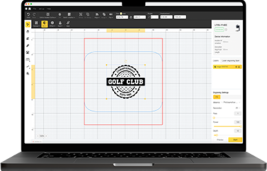
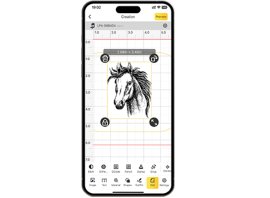
If you have limited technical experience, laser engravers with user-friendly software can make setup much easier compared with CNC programming or manual engraving methods.
Recommended - Best Medal Engraving Machine: LaserPecker LP5
If you plan on engraving medals in 2026, laser engraving machines are often the best choice. They offer high precision, ease of use, flexibility, and long-term value.
The LP5 laser engraving system is a strong option, offering the following advantages:
- High precision and detail: Ideal for small text, detailed logos, and artwork with sharp contrast.
- Consistent results: Each engraved medal maintains the same quality and appearance.
- Batch production friendly: Multiple pieces can be engraved quickly with consistent results.
- Non-contact processing: The laser does not touch the material, helping reduce defects and material waste.
- Wide material compatibility: Works with materials such as leather, wood, acrylic, stainless steel (marking), aluminum, and coated metals.
- Engraving and cutting capability: Allows both engraving and shape cutting in a single workflow.
The LaserPecker LP5 provides a balanced combination of power and accuracy, making it suitable for engraving text, event logos, decorative graphics, and custom medal designs.
Part 4: FAQs about Fabric Cutting Machines
Q1: How Much Does It Cost to Engrave a Medal?
The cost of engraving a medal depends on several factors, including machine time, the material of the medal, and the complexity of the design. For individuals or small businesses planning to engrave medals regularly, investing in a laser engraver can become cost-effective over time.
Q2: What Materials Can Medal Engraving Machines Engrave?
Laser and fiber laser engraving machines can process a variety of metals such as steel, aluminum, brass, and titanium. They can also mark materials like wood, leather, plastic, and coated surfaces. CNC and rotary engraving machines are commonly used for metals and plastics, while dot peen machines are primarily designed for marking metal parts.
Q3: Is Laser Engraving Better Than Rotary Engraving for Medals?
For fine details, small text, logos, or complex designs, laser engraving is often the preferred option because it provides higher precision and cleaner results. Rotary engraving can create deeper cuts, but it generally does not match the level of detail achievable with laser systems.
Q4: How Much Does a Medal Engraving Machine Cost?
Entry-level handheld engraving tools and dot peen markers are usually more affordable. CNC and rotary engraving machines vary widely in price depending on their capabilities. Laser engravers such as the LP5 typically cost more but offer greater versatility and functionality.
Q5: Is Laser Engraving Permanent on Metal Medals?
Yes, laser engraving on metal is generally permanent when performed with proper settings. The laser alters the surface of the metal, creating markings that can withstand normal wear, cleaning, and long-term use.
Conclusion
Picking the right medal engraving machine in 2026 means considering what's important to you: accuracy, what stuff it can work on, how much you need to make, and how easy it is to use. Old-school methods still work fine sometimes, but laser systems, especially fiber laser machines such as the LaserPecker LP5, are usually the best all-around choice. They're great for detailed, consistent, top-notch medal engraving on almost any type of material and design you can think of.
If you get what you need this machine to do, and you check out what different machines can do, you'll be set to pick one that works for you now and can keep up as you do more.